

Napoli (Naples)
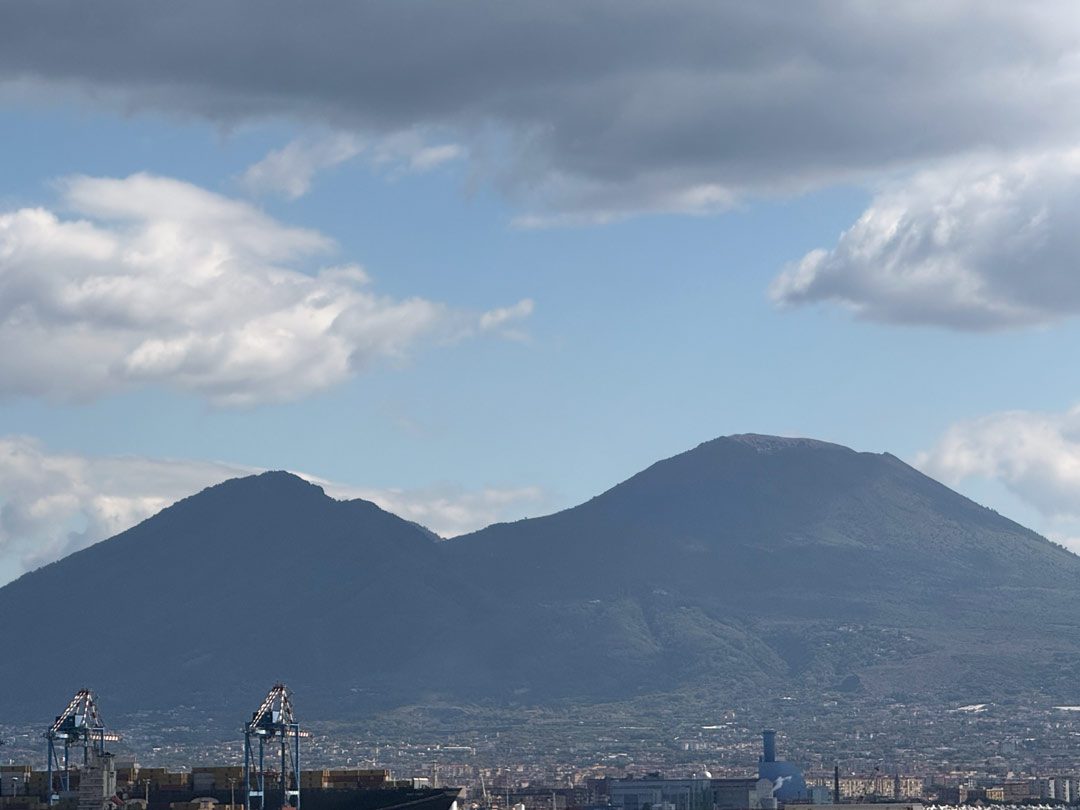
Mount Vesuvius
We docked in Naples, stepping ashore beneath the shadow of Mount Vesuvius into a city layered with history and energy.
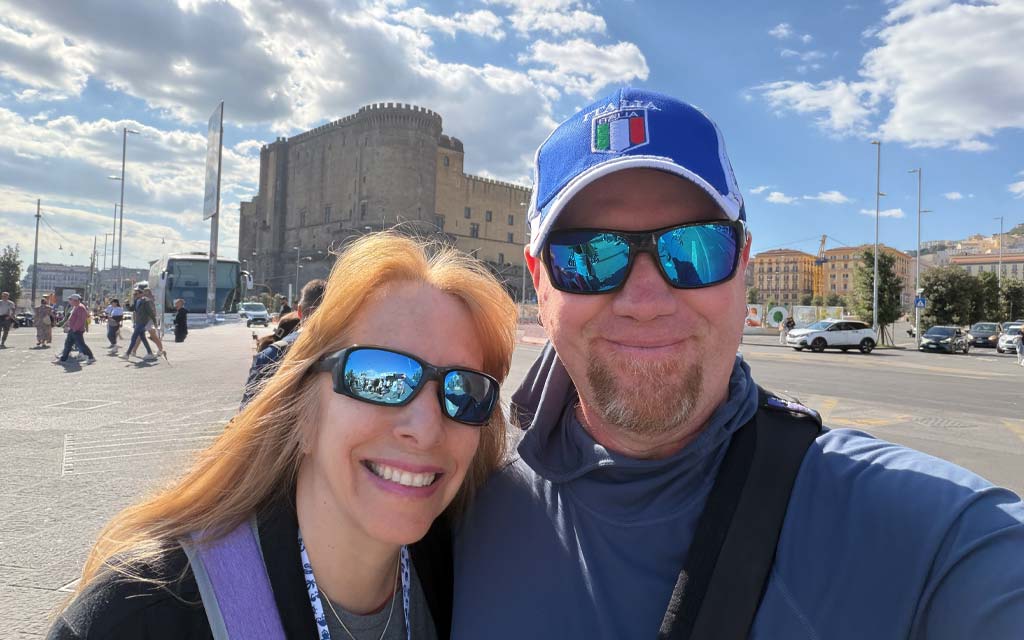
Castel Nuovo in the background

Sailing south from Rome toward Naples, we were eager to experience another layer of Italy’s long history, but the day unfolded differently than expected. Protests were taking place in Naples and in other parts of Europe, and our planned excursion into the heart of the city was canceled. Rather than venture too far from the ship, we chose to remain near the port, taking in what we could at a slower, more cautious pace.
From the waterfront, we could see Mount Vesuvius rising in the distance — calm and almost serene, belying its dramatic past — while the grand sweep of Neapolitan architecture framed the bay in warm tones of stone and stucco. Close to the dock, we spent time exploring the Reperti del Molo Angioino, the exposed archaeological remains discovered during modern port renovations. These ancient structures, once part of Roman harbor installations, quietly remind visitors that Naples has been a working port for over two millennia. Even without venturing deep into the city, standing at the water’s edge between Vesuvius and these archaeological fragments made it clear that Naples carries its history openly — layered, resilient, and always facing the sea.
Where Naples Meets Its Ancient Harbor: The Reperti del Molo Angioino
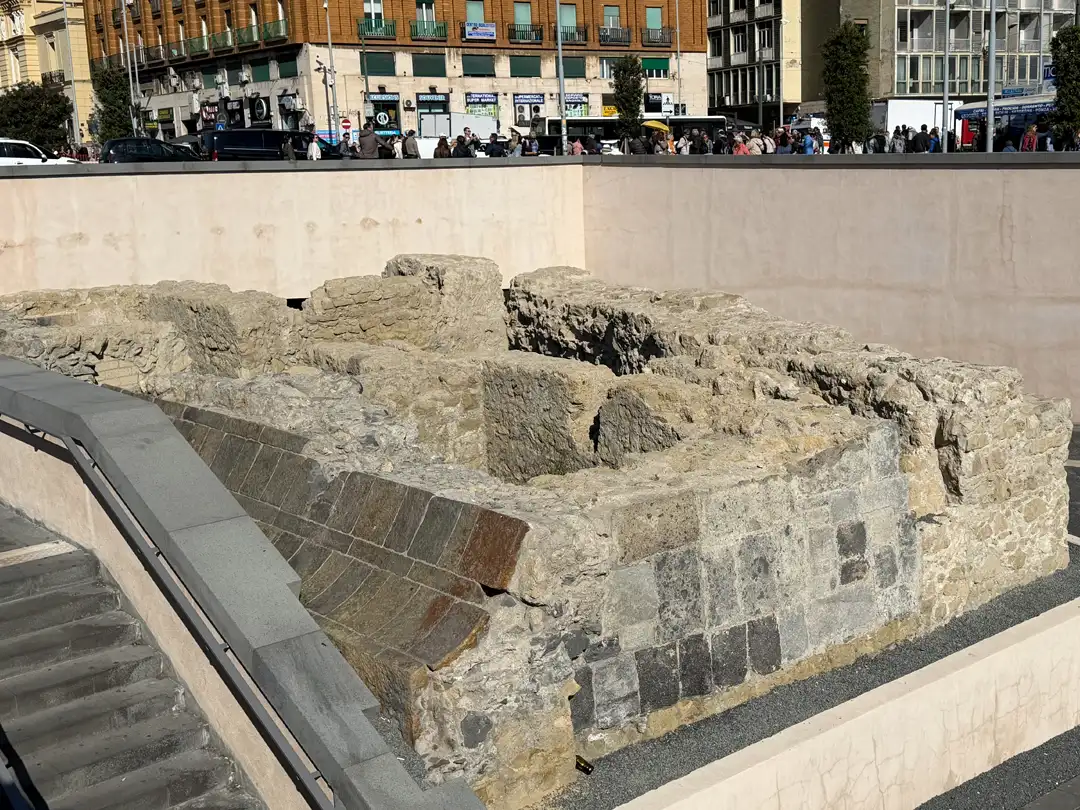
Reperti del Molo Angioino
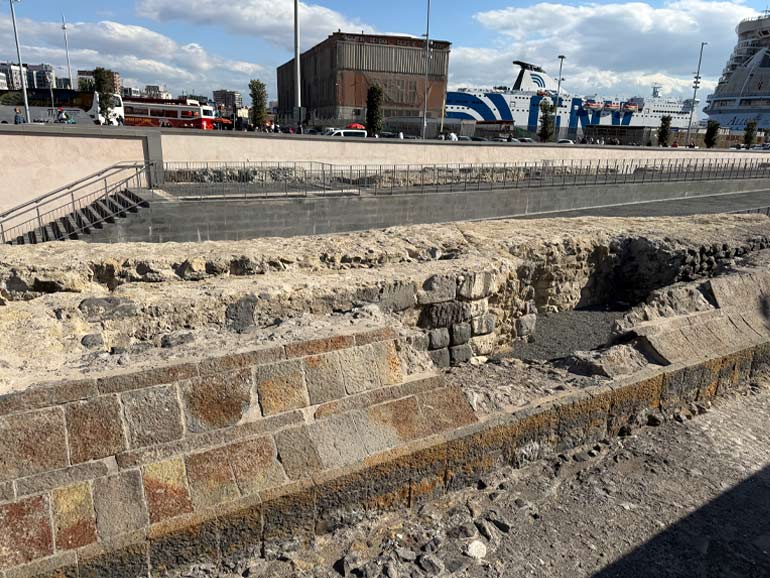
Reperti del Molo Angioino
Just steps from our cruise ship in Naples, what looked at first like a simple block of old stone turned out to be a fragment of the ancient harbor — the Reperti del Molo Angioino. These massive stone walls, now preserved near Piazza Municipio and the looming silhouette of Castel Nuovo, once formed part of the port infrastructure of Roman Neapolis.
In antiquity, the sea actually reached much farther inland, meaning this structure likely stood at the water’s edge, reinforcing docks where merchant vessels unloaded amphorae of wine, olive oil, and grain bound for markets across the empire. During excavations for the Naples Metro, archaeologists uncovered layers of harbor walls, ships preserved in sediment, and centuries of maritime engineering — physical proof that Naples was not just a beautiful coastal city, but a strategic Roman port woven into the trade networks of the Mediterranean.
Naples quietly delivered exactly what we always search for: a tangible connection to the Roman world, hiding in plain sight beside the harbor.
Castel Nuovo and the Naples Waterfront
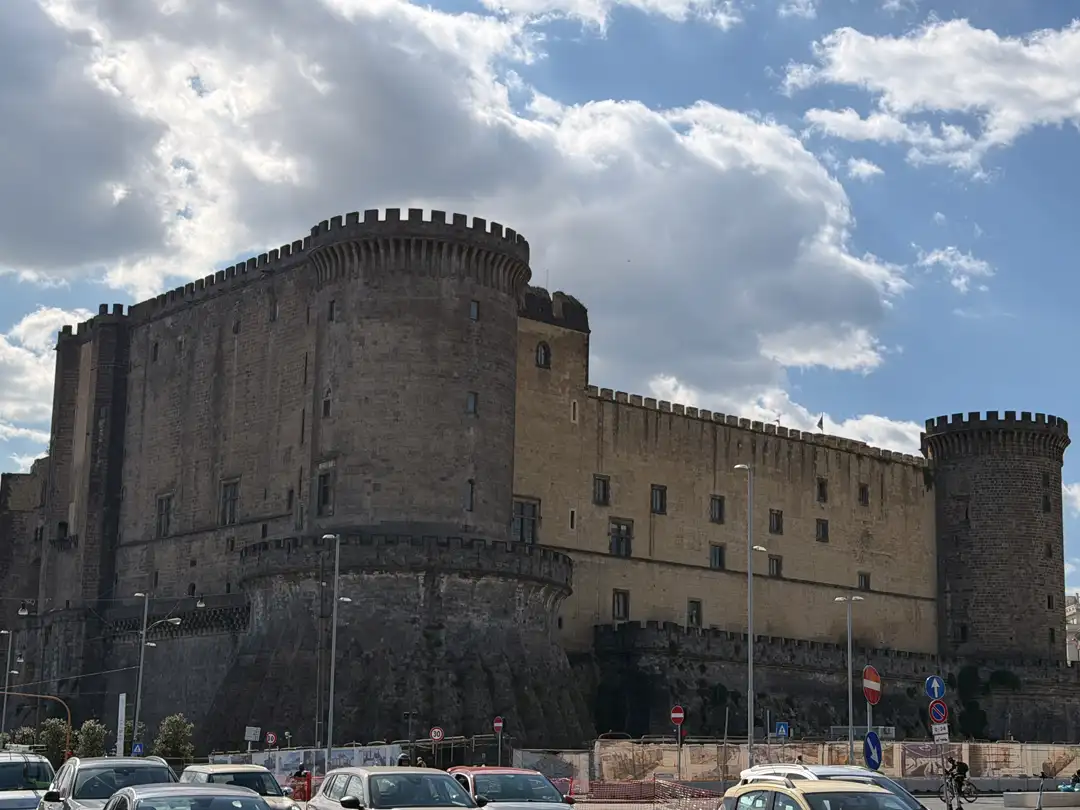
Castel Nuovo
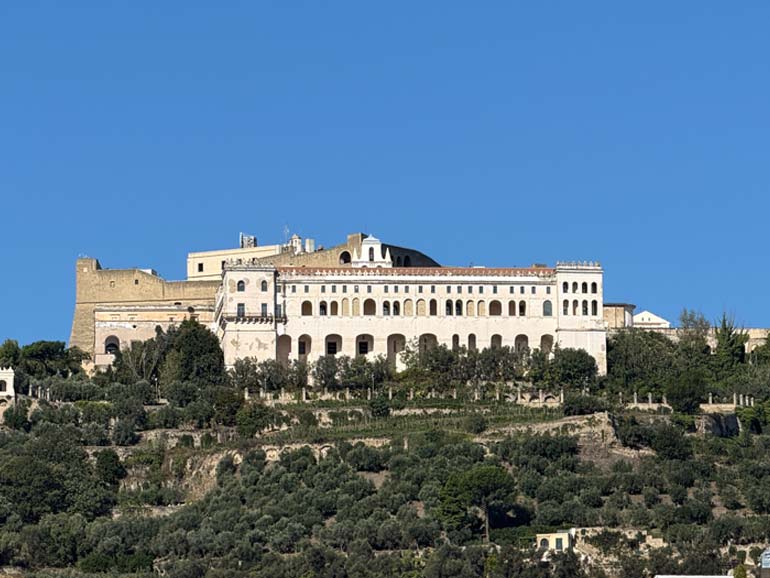
Castel Sant'Elmo
On our mini-excursion near the dock, we stood within view of Castel Nuovo, the imposing medieval fortress also known as Maschio Angioino, its massive round towers guarding the harbor as they have since the 13th century. Built by the Angevin kings, it has long symbolized royal power and Naples’ strategic importance along the Mediterranean. High above the city, we could see Castel Sant Elmo perched dramatically on Vomero Hill, its star-shaped fortress design making it one of the most commanding viewpoints in Naples. Originally constructed in the 14th century and later strengthened by the Spanish, it feels less like a castle and more like a stone crown set atop the city.
Between the sea and the slopes, we admired Naples’ colorful architecture — warm yellows, faded reds, and sun-washed facades layered tightly together — giving the waterfront a lively, almost theatrical backdrop. Even without venturing far, standing there near the port, surrounded by castles, volcano, and centuries of layered construction, it was clear that Naples doesn’t hide its history — it rises above you.
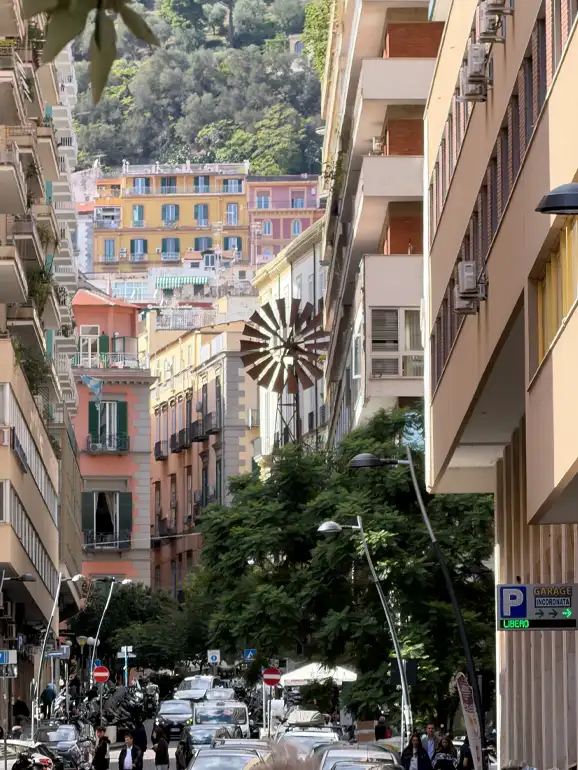
Naples Street View

Palazzo Giordano
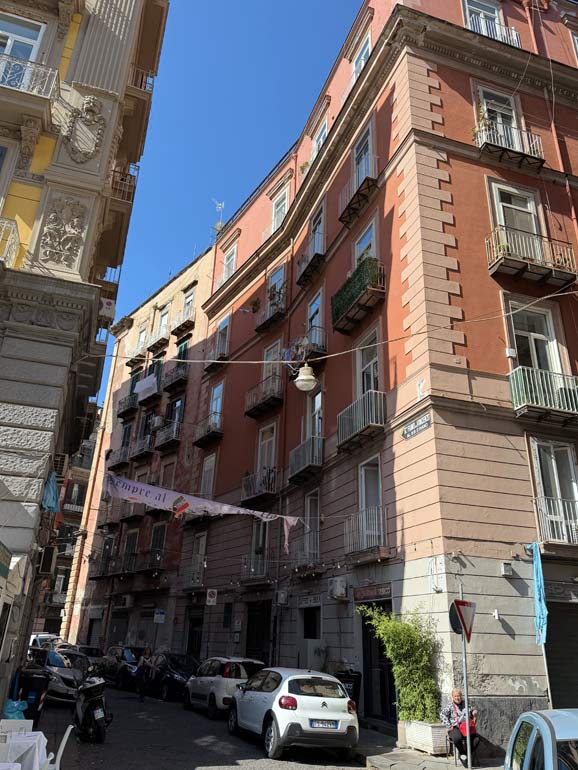
Admiring Naples colorful architecture
From Naples to Taormina
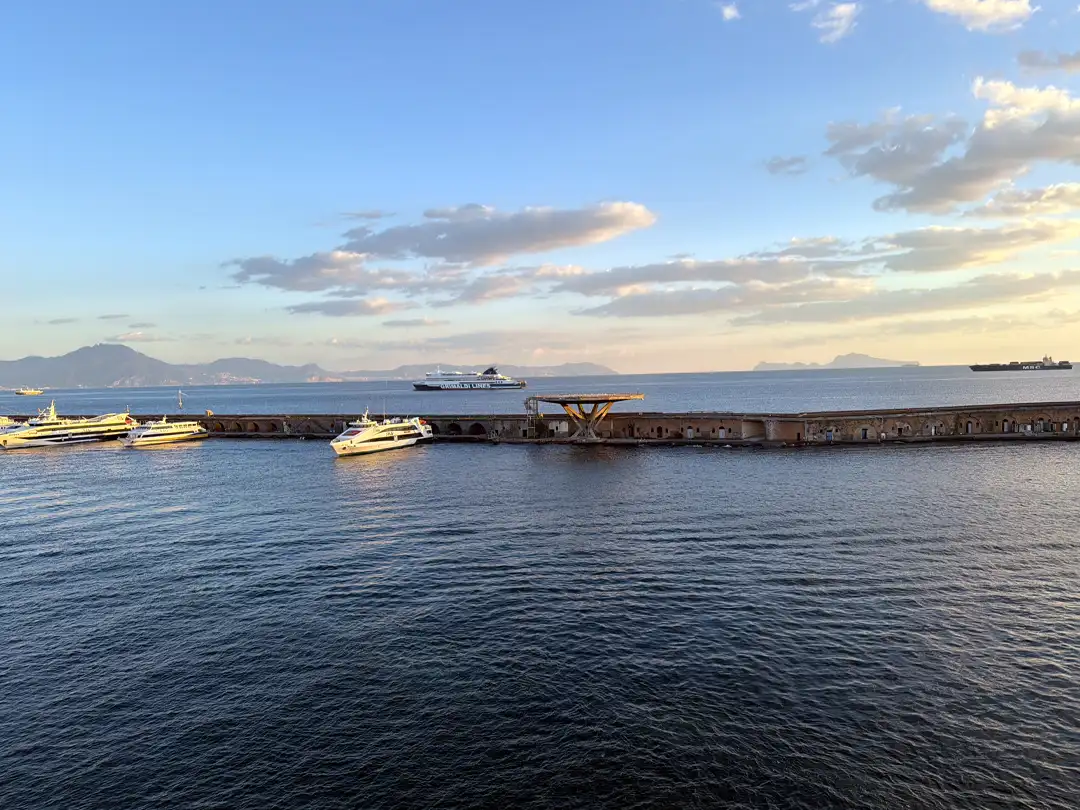
As we returned to the ship, reflecting on our time in Naples, it was remarkable how much history revealed itself even within a short walk of the dock. The exposed remains at Reperti del Molo Angioino speak to layers of harbor construction stretching back to Greek foundations, expanded under Roman engineering, and reinforced through medieval rule — a working port shaped and reshaped for over two millennia. Though the city’s protests altered our plans, they did not dampen our spirits. Naples still offered us Vesuvius on the horizon, castles guarding the bay, and archaeology beneath our feet.
Soon we would sail south to Messina, entering the narrow Strait of Messina, a passage long woven into legend and guarded in ancient Greek mythology by Scylla and Charybdis. It felt fitting — after standing among Greek and Roman ruins in Naples — that in just two more stops we would find ourselves in Greece, following the same mythic and maritime routes that have connected these shores since antiquity.