

Dubrovnik
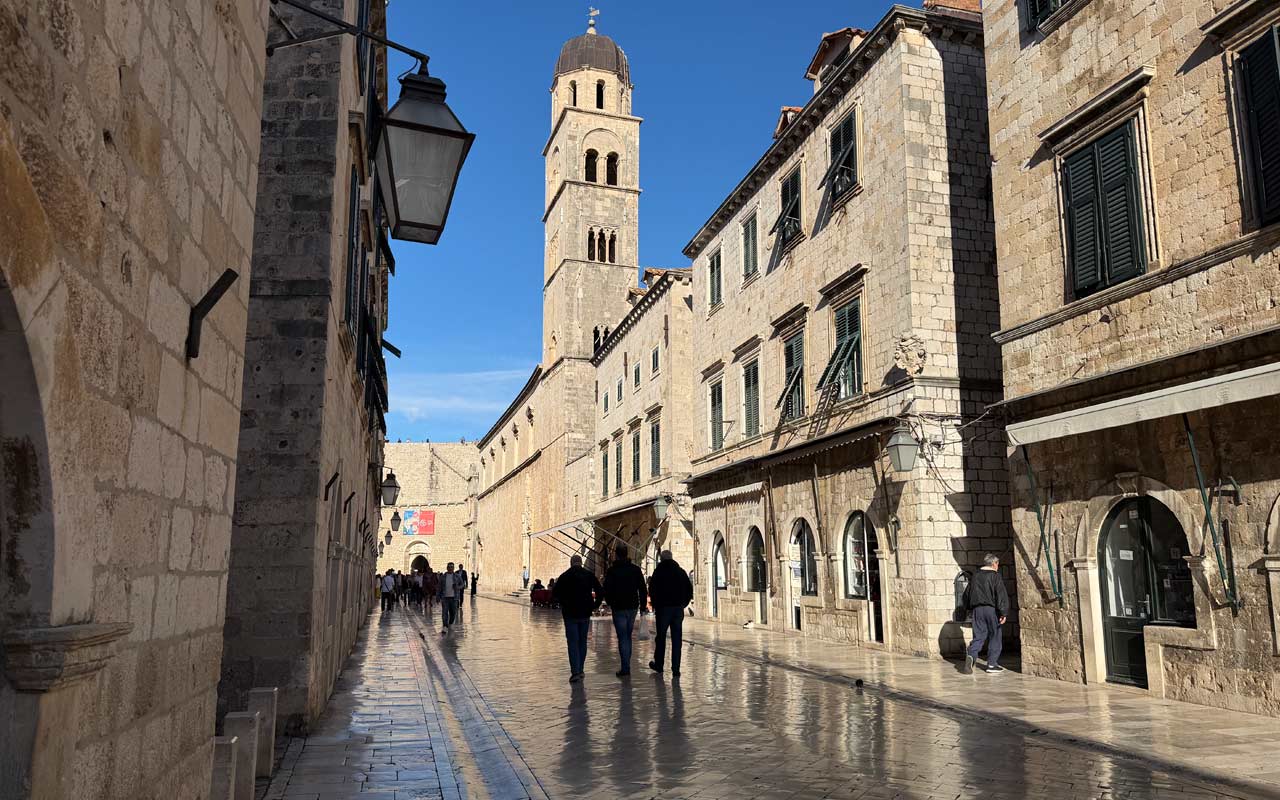
The polished limestone Stradun in the Dubrovnik Old Town
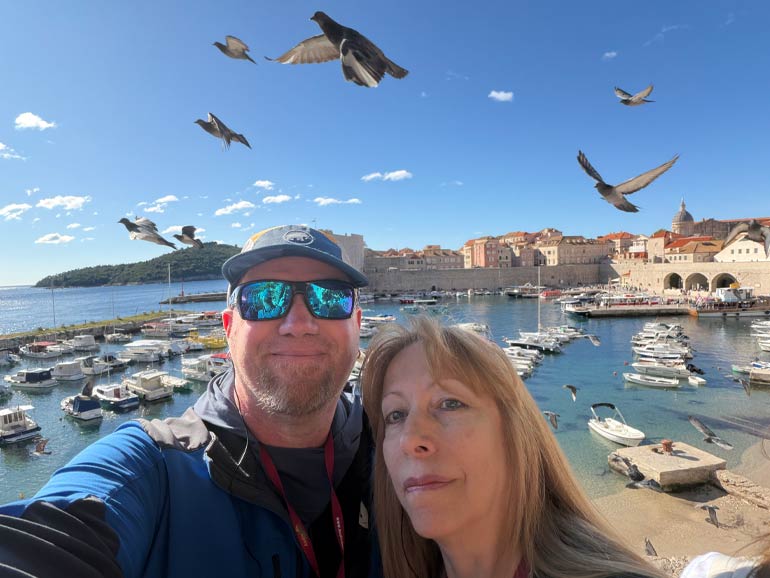
At the Harbour Viewpoint with the Adriatic Sea.
Just arrived from a relaxing beach day in Corfu, Greece, we took a tour bus to Dubrovnik to begin our walking tour of the Old City. Immediately, the city lived up to its nickname, the “Pearl of the Adriatic.”
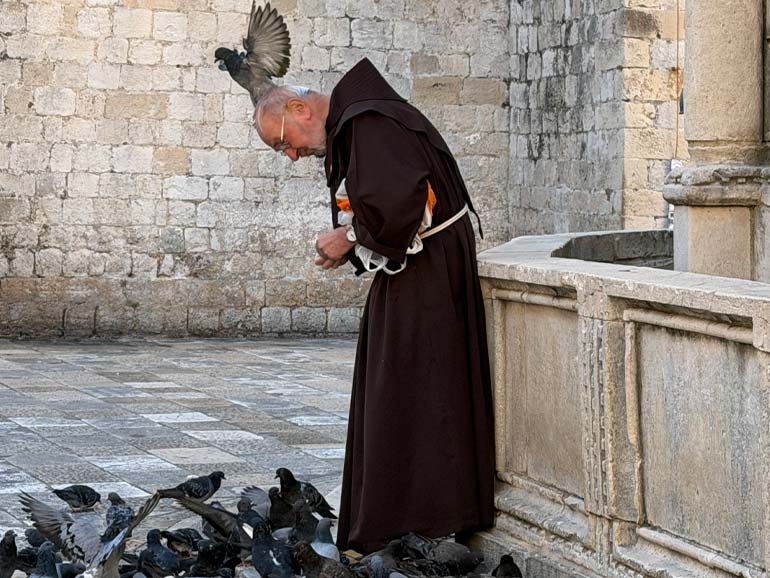
To enter, we crossed the drawbridge, passing beneath the massive stone walls that have guarded this city for centuries. From the moment we stepped onto the main streets, the blend of medieval fortifications and vibrant local life was striking — merchants setting up shops, cafés spilling onto cobbled lanes, and even a Franciscan friar feeding pigeons in a quiet square.
It was easy to see why Dubrovnik has captured the imagination of filmmakers, including those behind Game of Thrones, but for me, it was the history beneath the surface that was most captivating. Every step along the threshold of the Old City felt like walking into centuries of layered life, where medieval streets and modern energy exist side by side.
Old Town of Dubrovnik
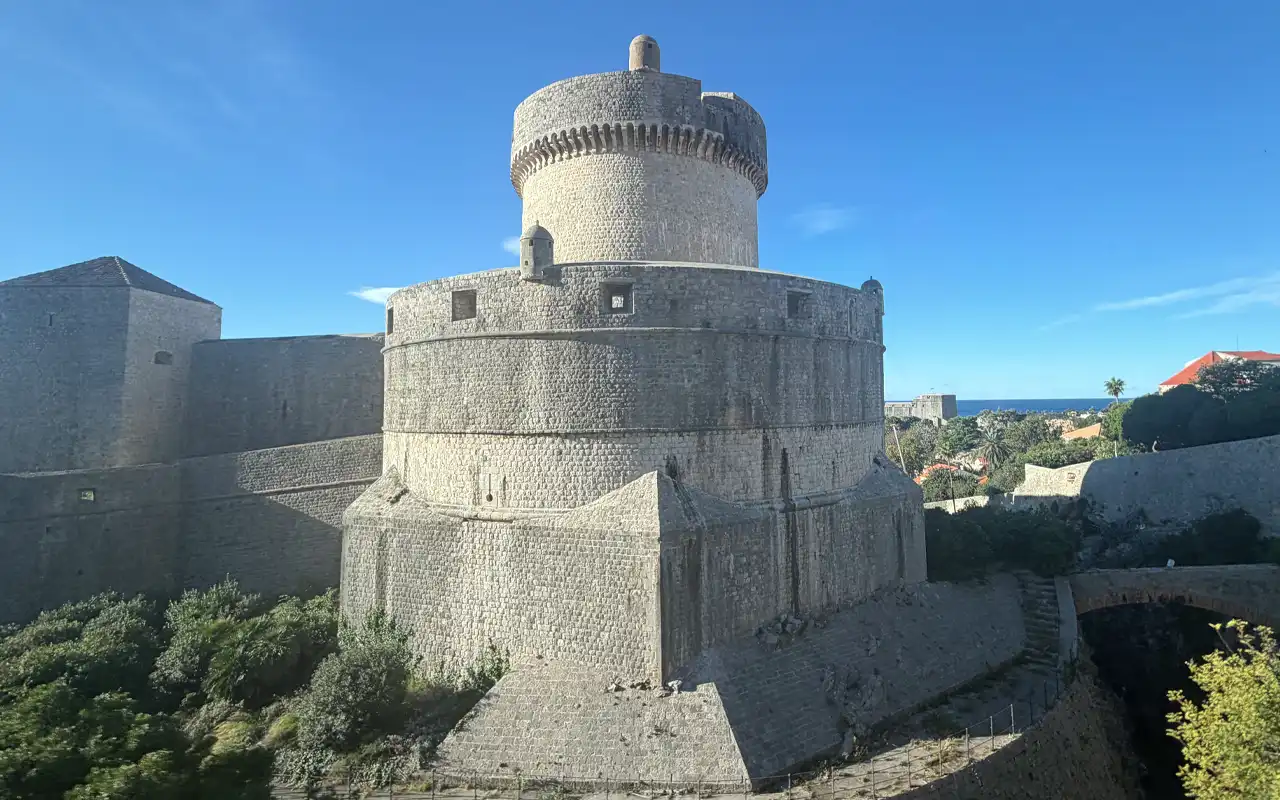
Minčeta Tower (House of the Undying. GOT)
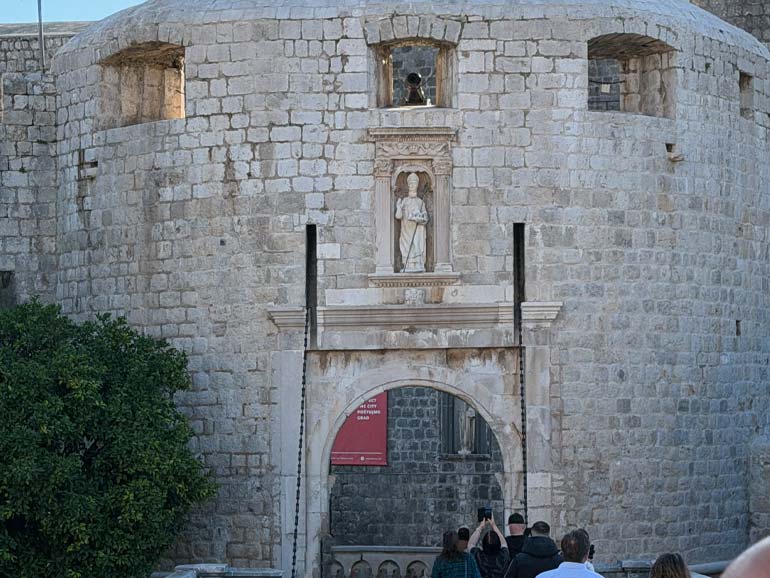
Pile Gate Entrance (Kings Landing GOT)
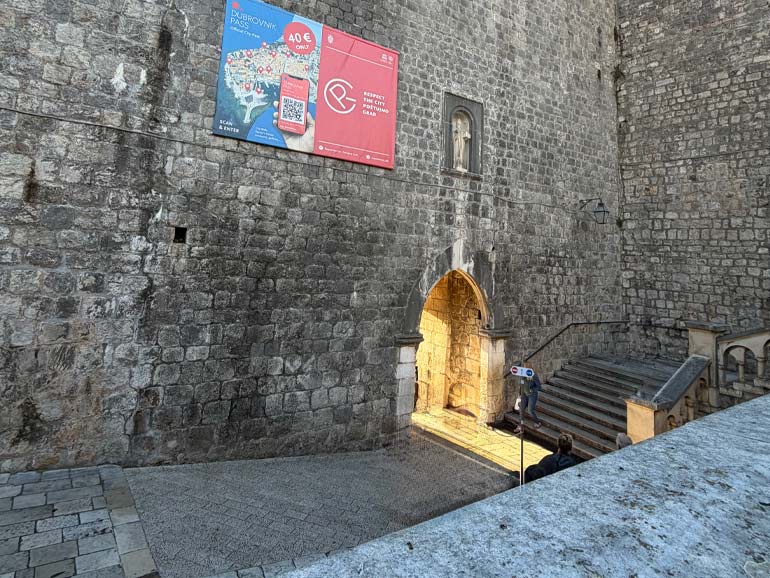
After entering the Pile Gate (Kings Landing GOT)
Onofrio Fountain
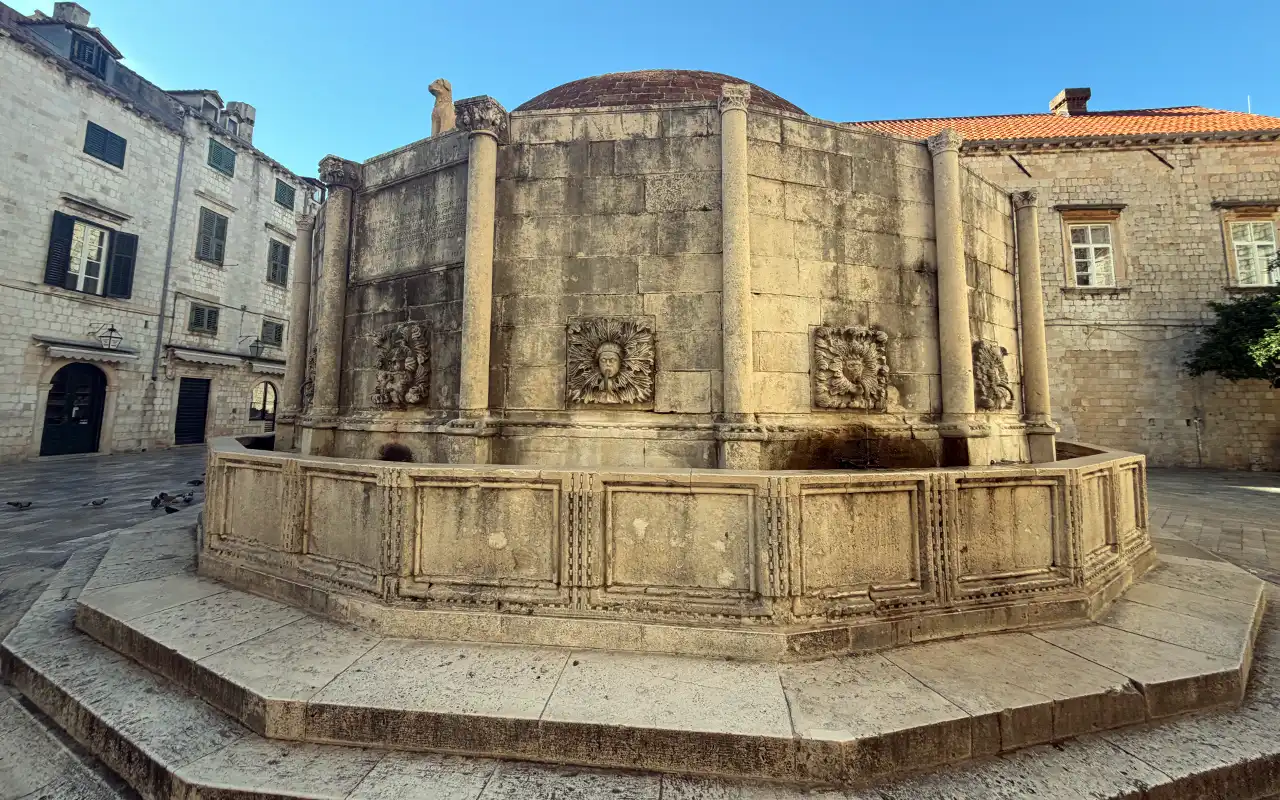
The Onofrio's Fountain stands proudly at the entrance to the Old Town of Dubrovnik, its wide circular basin and carved stone masks offering a cool refuge beneath the Mediterranean sun. Built in the 15th century as part of the city’s remarkable water system, the fountain has long been a natural meeting place for locals and travelers.
When I was there, a friar in a simple brown habit stood beside the fountain feeding pigeons, smiling patiently as they fluttered around him. Some of the bolder birds even landed on his head, balancing there as if it were the most ordinary perch in the world, while others clustered at his feet. On top of the fountain, the small carved statue of a dog—often affectionately called the “Fountain Dog”—rests one the ancient stone, adding a playful and slightly mysterious touch to this beloved landmark.
Walking around the Old City
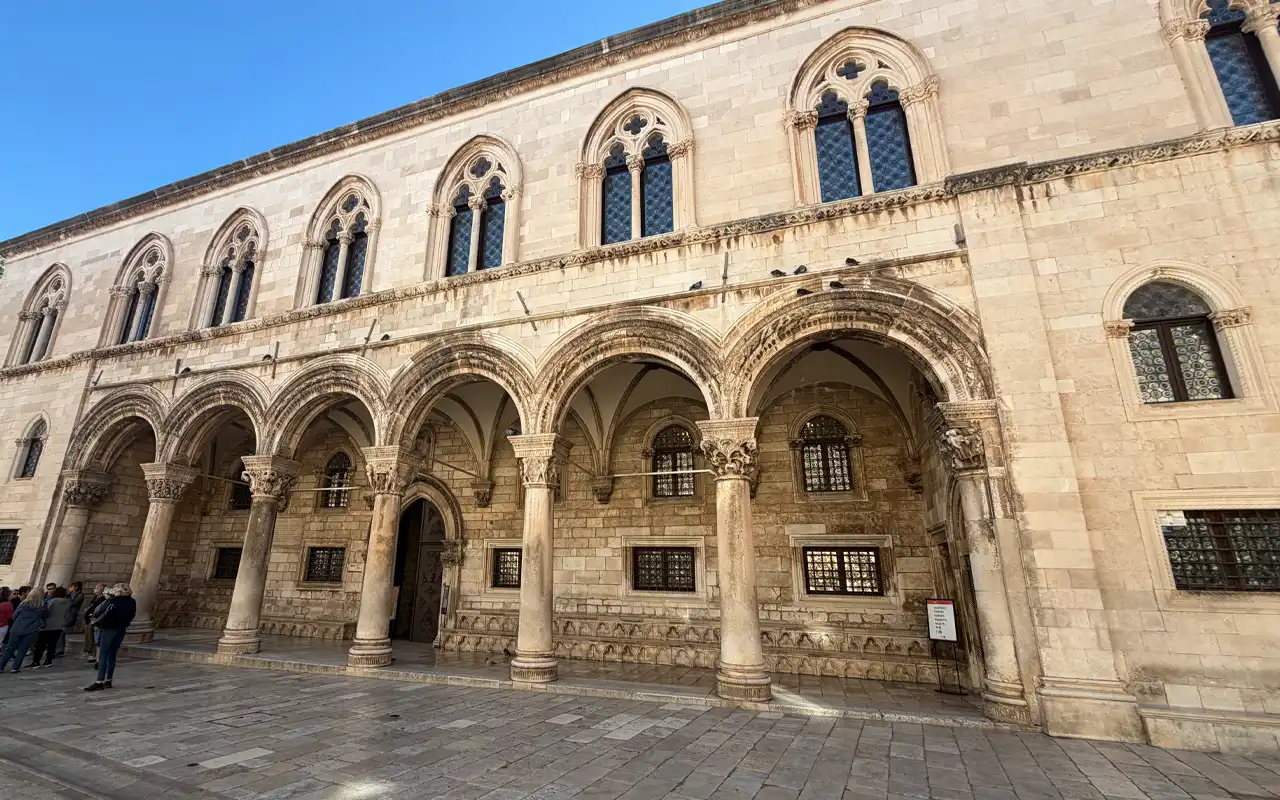
Rector's Palace (Interior was used in GOT)
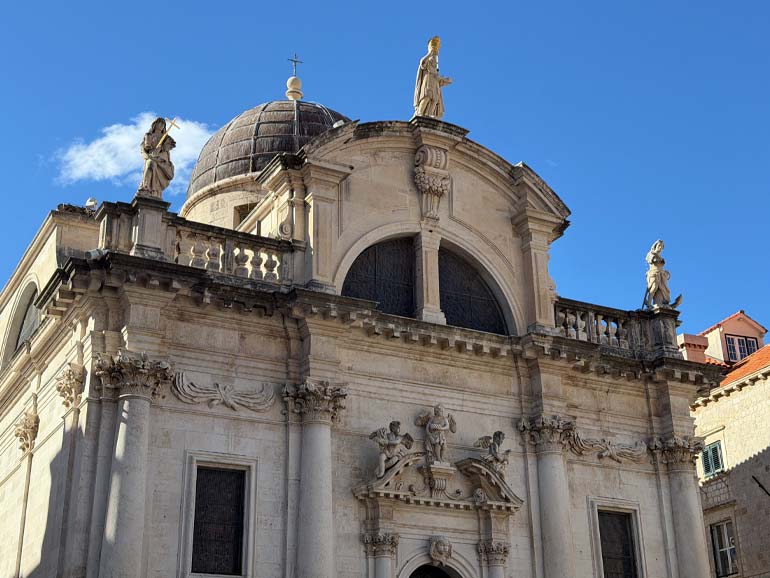
Church of St Blaise
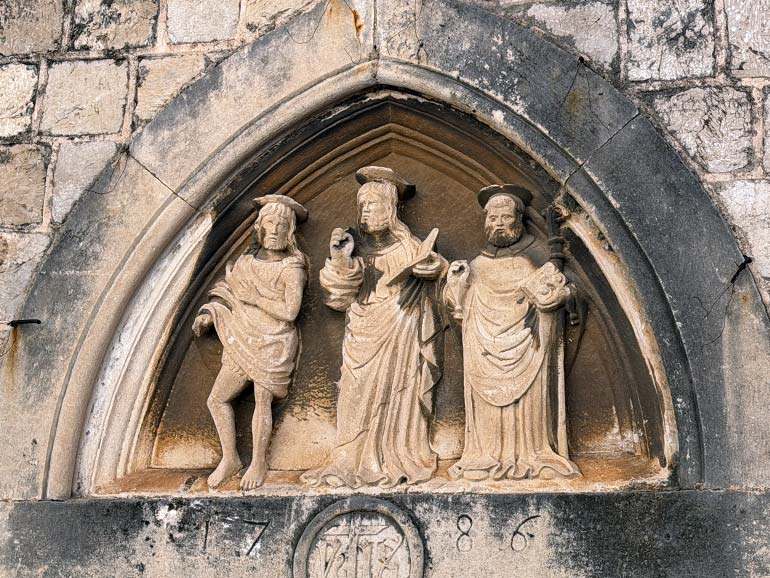
Church of St Blaise
With Dubrovnik behind us, we looked ahead to Split, where Diocletian’s Palace and the ancient Cardo awaited our final walk through history.
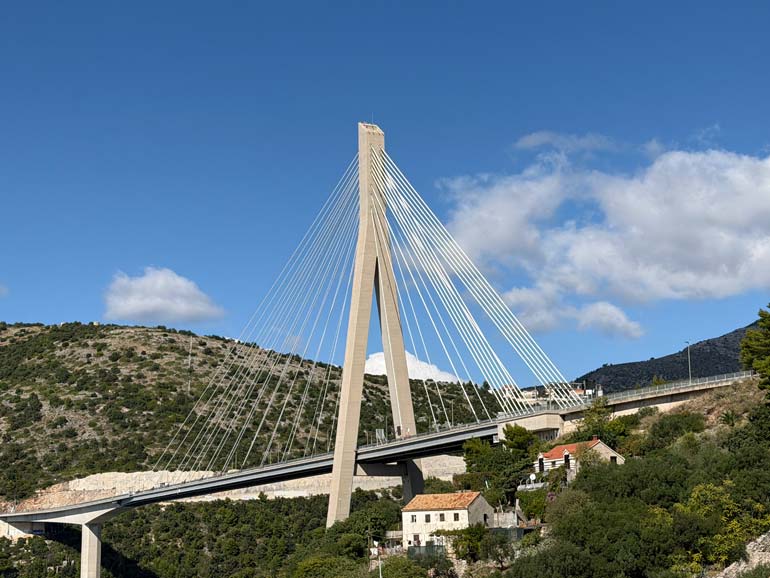
Franjo Tuđman Bridge
As we wrapped up our time in Dubrovnik — walking the Old City, admiring the Rector’s Palace, Sponza Palace, St. Blaise’s Church, the Franciscan Friary, and the iconic Onofrio Fountain, all beneath the watchful presence of the city walls — it felt like a powerful lead-in to our final port. From crossing the drawbridge to wandering the Stradun and soaking in the Adriatic views, Dubrovnik delivered a striking blend of medieval grandeur and coastal beauty. But our journey wasn’t quite over.
The next day, we sailed to Split to explore Diocletian’s Palace and once again trace the lines of the Cardo Maximus and Decumanus, bringing my search for ancient Roman streets full circle before our adventure ultimately concluded with our flight home from Venice.
