

Split
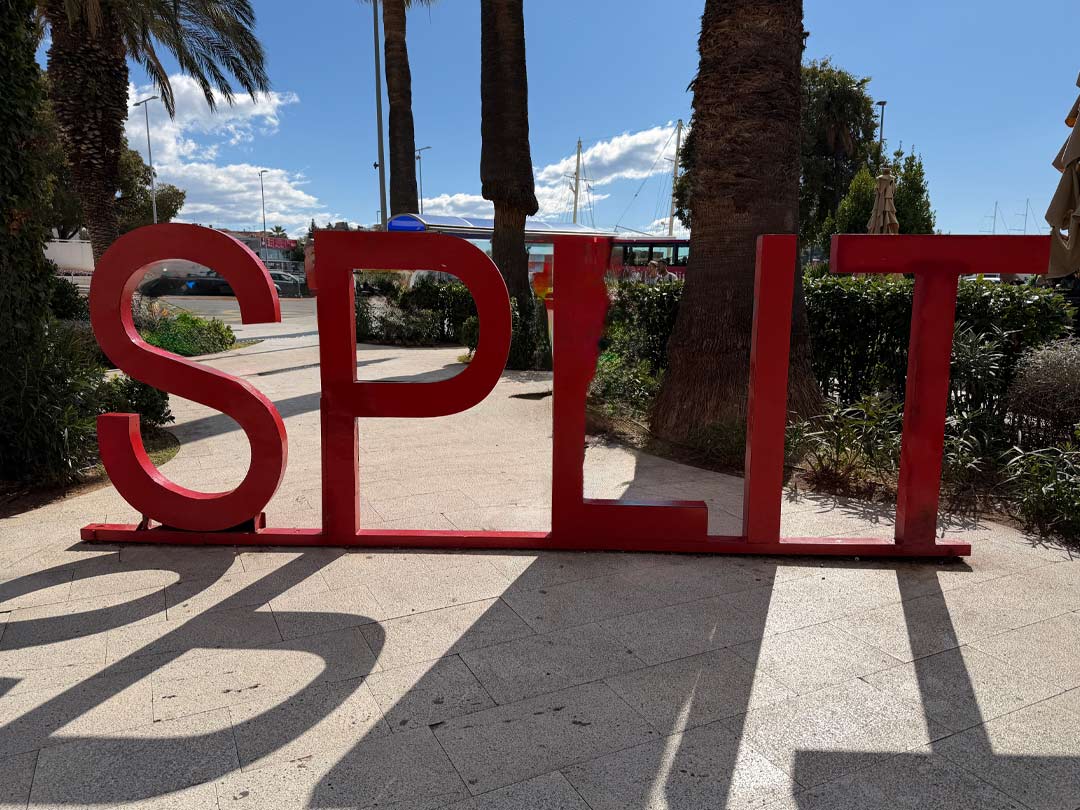
Our last full cruise day
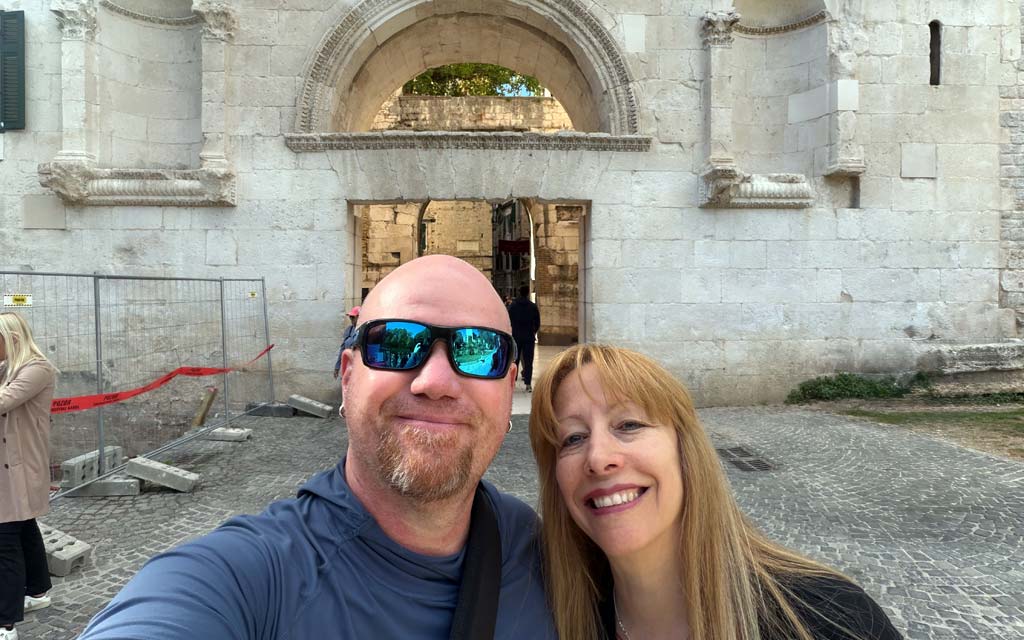
At Diocletian's Palace

Our last full cruise day carried us from Dubrovnik down the Dalmatian coast to Split. It was the only day of the trip without a scheduled excursion, which meant I finally had the freedom to design our own exploration. I knew exactly where we were going. Split isn’t just another Adriatic port — it grew directly out of a Roman imperial complex. Originally founded as part of the Roman province of Dalmatia, the city evolved around the walls of Diocletian's Palace, one of the most remarkably preserved Roman structures in the world. Over the centuries, Roman foundations blended with Byzantine, Venetian, and later Croatian influences, creating a city layered with civilizations. But for me, there was one clear objective: I was on the hunt for the Cardo Maximus.
The palace was built for Emperor Diocletian, who ruled from 284 to 305 AD during one of the most turbulent periods in Roman history. He reorganized the empire through the Tetrarchy, stabilizing its administration and strengthening its borders before doing something almost unheard of — he voluntarily retired. Rather than remain in Rome, Diocletian returned to his homeland of Dalmatia and constructed this massive fortified residence overlooking the Adriatic, choosing Split for its strategic coastal access and personal connection to the region. And on this day, with no tour guide and no schedule, I intended to walk those ancient Roman roads.
Diocletian's Palace
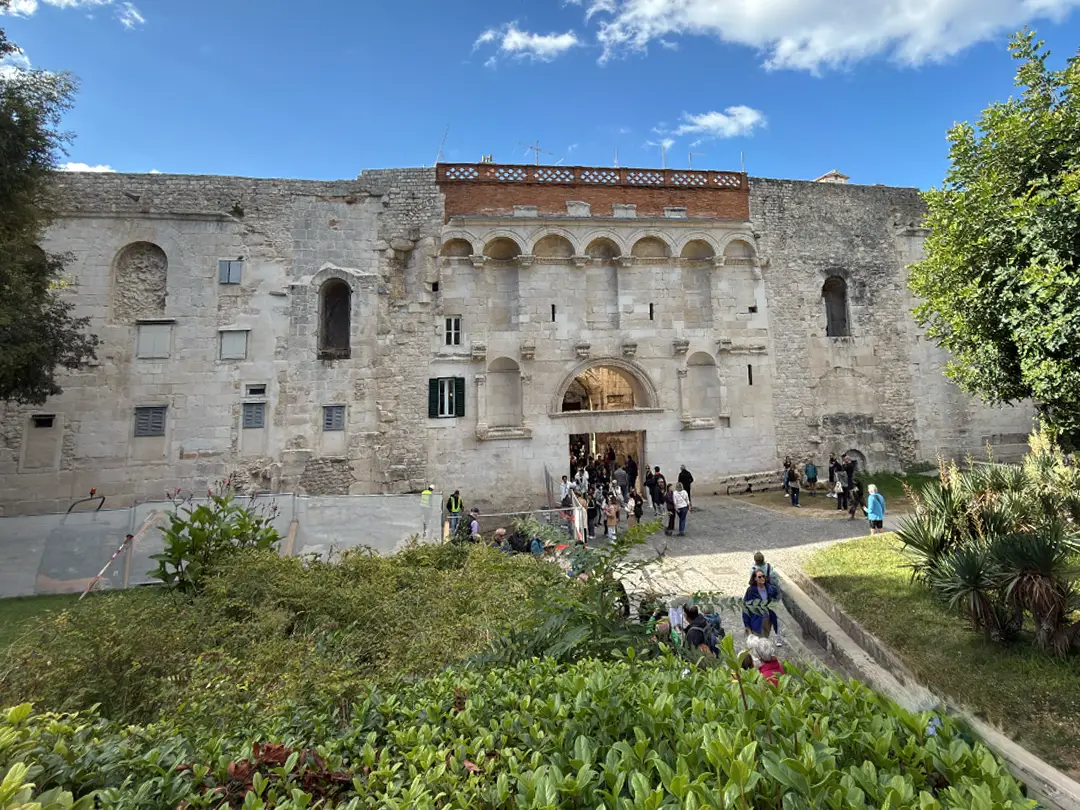
Golden Gate Entrance (Porta Septemtrionalis)
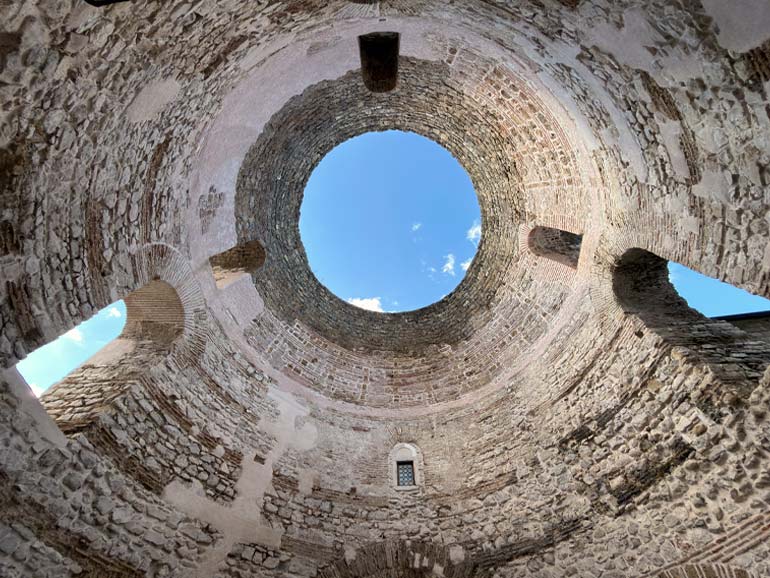
Diocletian Palace Vestibule
Recognized as a UNESCO World Heritage Site, UNESCO has designated the palace for its extraordinary preservation and historical significance.
From our cruise ship, we entered Diocletian's Palace through the South (Sea) Gate, the very entrance that once connected Emperor Diocletian directly to the Adriatic. Walking in from the waterfront felt symbolic — stepping from modern Split straight into the heart of a 1,700-year-old Roman complex. From there, we moved inward along the ancient axis toward the Vestibule, its circular stone chamber opening dramatically toward the palace interior.
Emerging into the Peristyle, where the Cardo and Decumanus intersection defines the palace’s ancient Roman street grid, the precision of Roman urban planning became unmistakable. Later, seeing the Golden Gate from both inside and outside gave me a sense of how the emperor himself would have entered from the north, reinforcing the palace’s deliberate symmetry.
What stopped me in my tracks, however, was the Black Granite Egyptian Sphinx standing watch over the Peristyle. While the palace dates to the late 3rd and early 4th century AD, the sphinx is far older — carved in Egypt roughly 3,500 years ago during the era of the pharaohs. Ancient Rome already feels distant in time, yet this artifact was ancient even to the Romans. In that moment, the layers of history felt staggering: Egyptian stone, Roman planning, and modern Croatian life occupying the same courtyard.
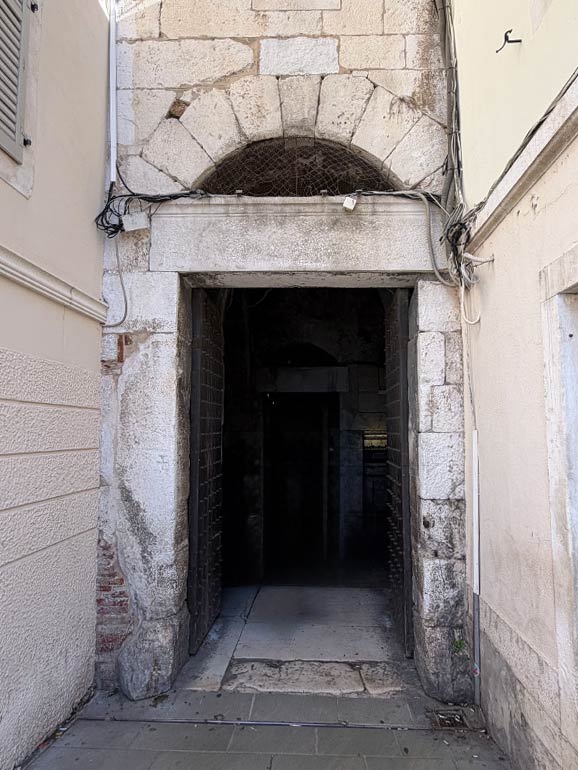
Bronze Gate Porta Meridionalis
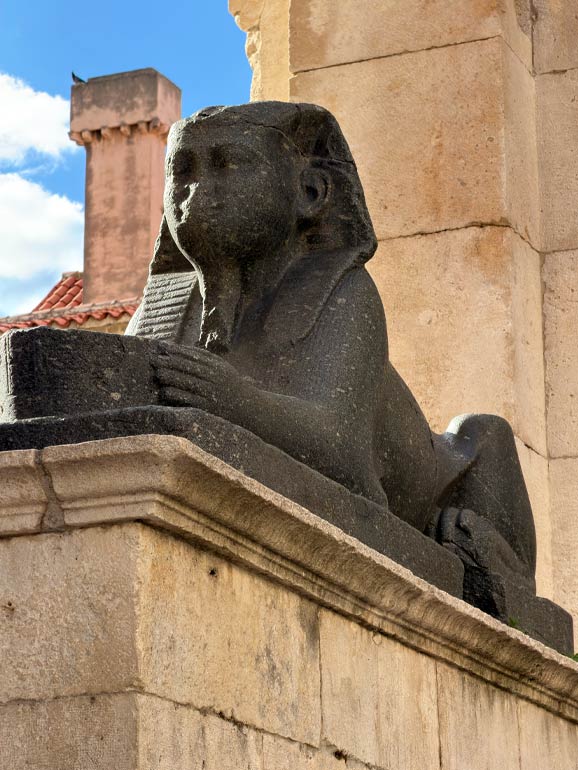
Black Granite Egyptian Sphinx
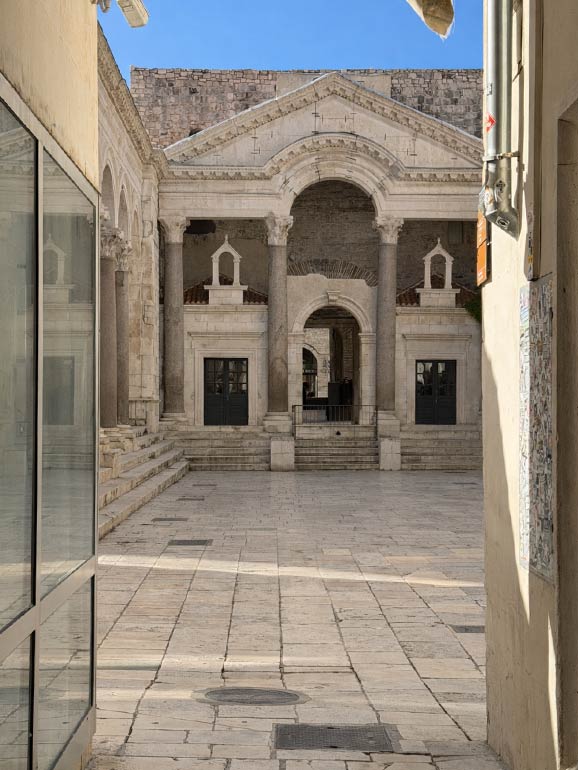
Peristyle
Walking the Cardo Maximus Through a Roman Palace in Split
The Cardo-Decumanus Series. Original AI-Generated iconography for gordoneaton.com
We entered Diocletian’s Palace through the South Gate along the waterfront and stepped directly onto the ancient Roman street that once guided movement through the imperial complex. Walking north toward the Peristyle, we were following the palace’s Cardo Maximus, the main north–south axis that connected the sea gate to the heart of the emperor’s residence. At the Peristyle, this street intersects with the east–west Decumanus, forming the classic Roman crossroad where ceremonial, religious, and civic life once converged. Surrounded by towering columns and stone arches, it’s easy to imagine how this carefully planned grid organized the movement of soldiers, citizens, and imperial officials nearly seventeen centuries ago.
Roman Street Grid
Ancient City: Spalatum (Diocletian’s Palace)
Cardo Maximus: North–south street from the South Gate to the Peristyle
Decumanus Maximus: East–west street crossing the Peristyle
Status: Archaeologically preserved
Mapped on: Cardo Maximus Map
Temple of Jupiter
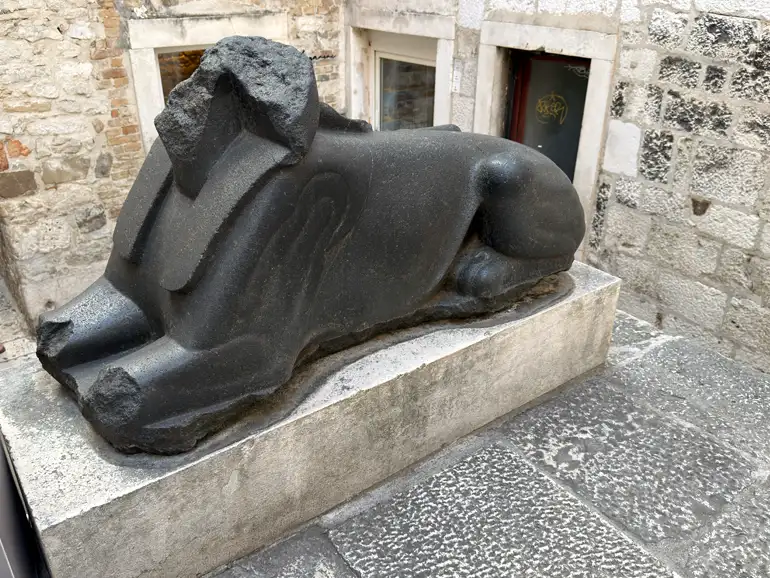
Headless Egyptian Sphinx
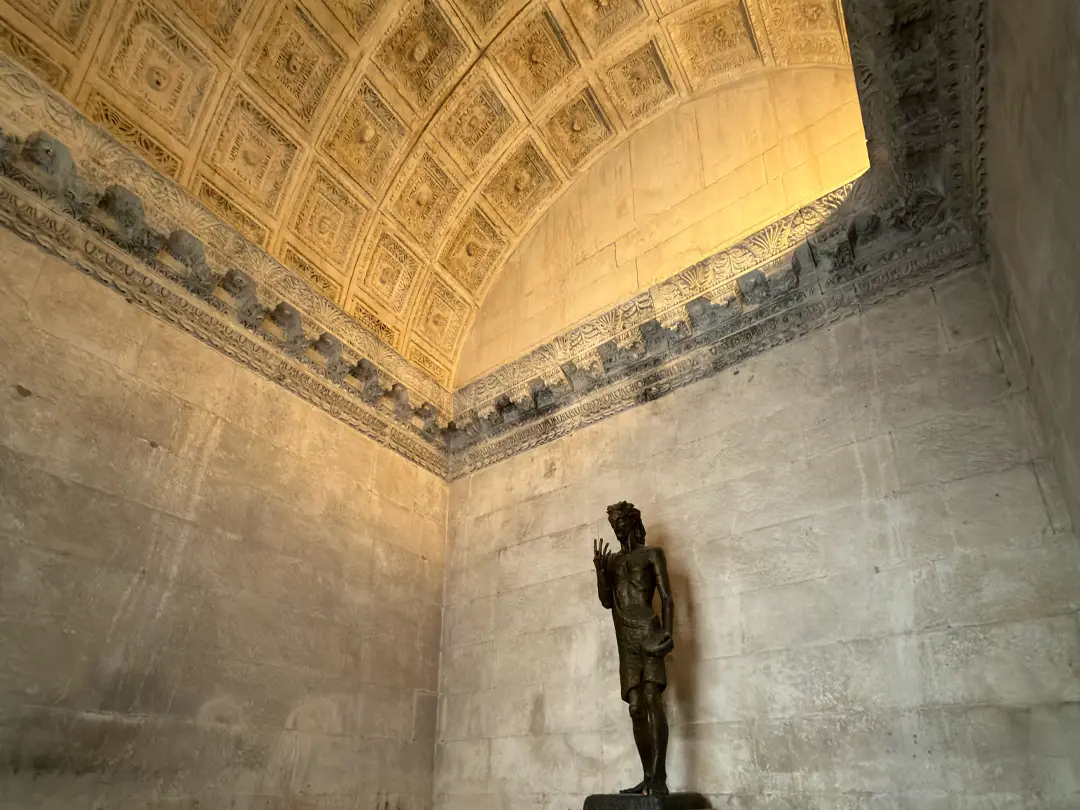
Just off the Peristyle stands the compact yet powerful Temple of Jupiter (Split), originally dedicated to Jupiter, the chief deity of Rome. Its carved coffered ceiling and solid stone doorway reflect how deeply religion was embedded in Roman civic life. Positioned near the intersection of the Cardo and Decumanus, the temple reinforces that Roman urban planning placed sacred space at the very center of the city.
Inside, I was immediately struck by the dramatic statue near the entrance. I later learned it was John the Baptist, added when the temple was converted into a Christian baptistery. I didn’t recognize him at first — the intense expression and dim light made the figure feel almost intimidating. Just outside stands a black granite Egyptian sphinx, carved nearly 3,500 years ago during the reign of Pharaoh Thutmose III — already ancient when the Romans brought it here. Its damaged head is a reminder that symbols change meaning over time. In this small space, the juxtaposition of three belief systems — Egyptian, Roman, and Christian — converges in a way that feels both layered and alive.
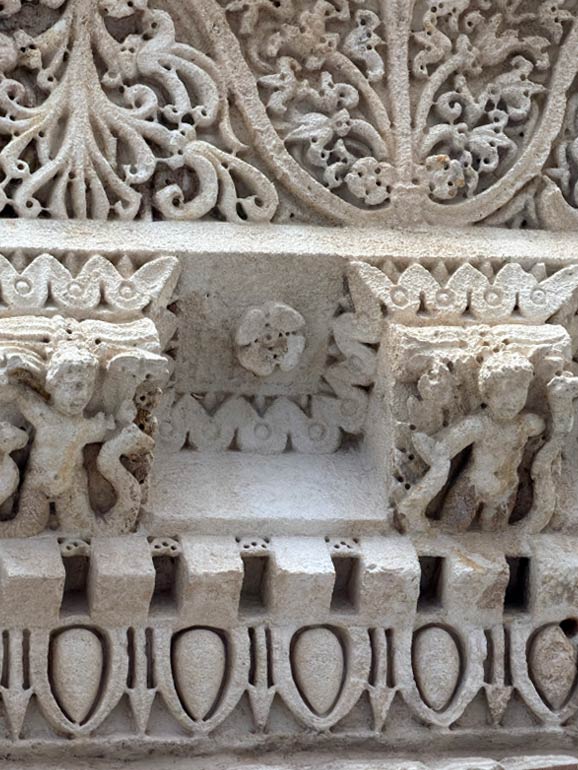
Carved Roman Figures
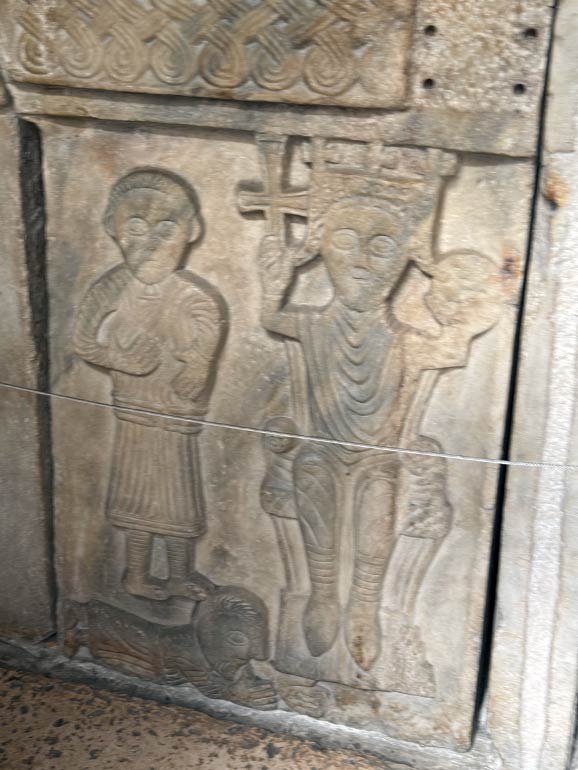
Croatian king
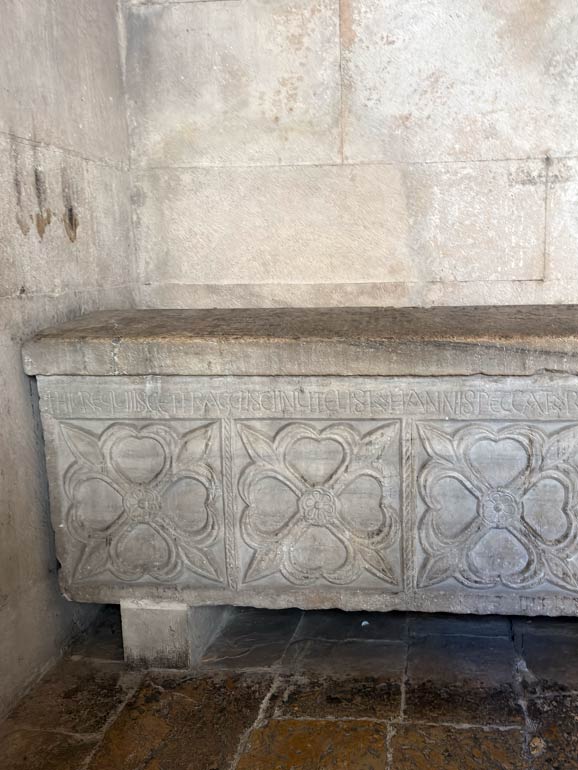
Archbishop Lovren sarcophagus
Split Additional Photos
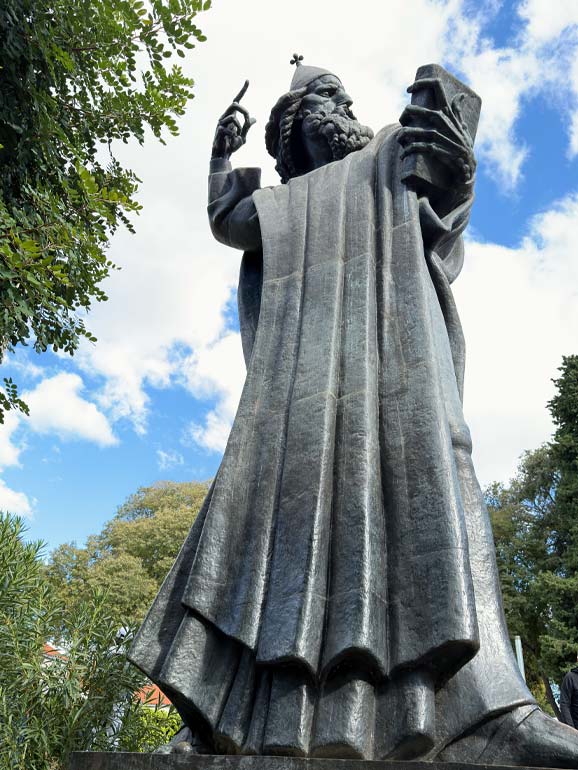
Gregory of Nin (Rub his big toe for good luck)
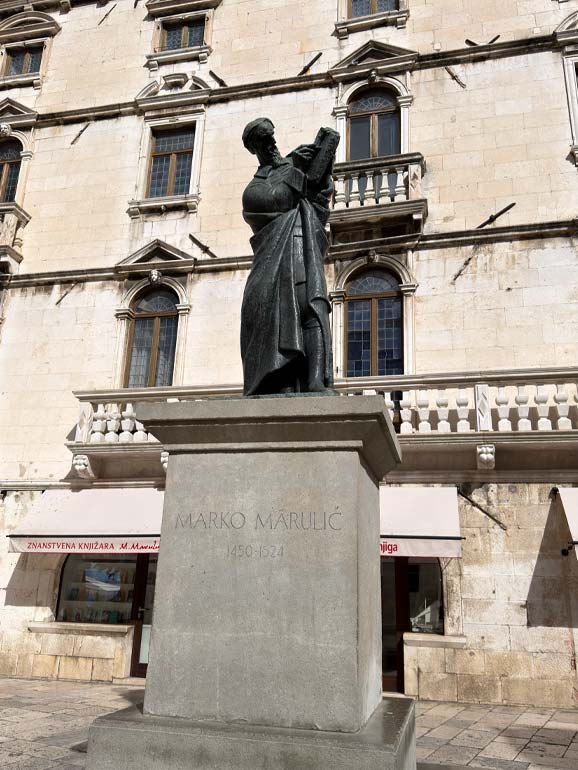
MARKO MARULIĆ
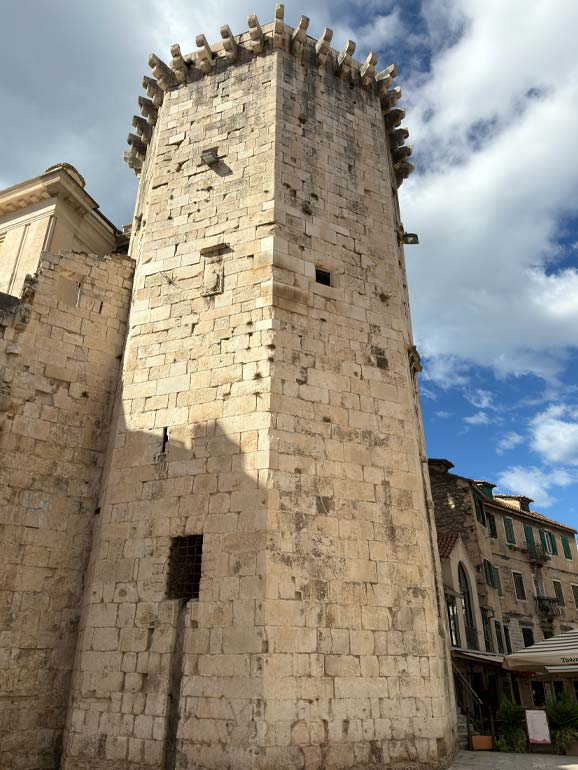
Split Architecture
Cruising Through History: Exploring the Ancient World.
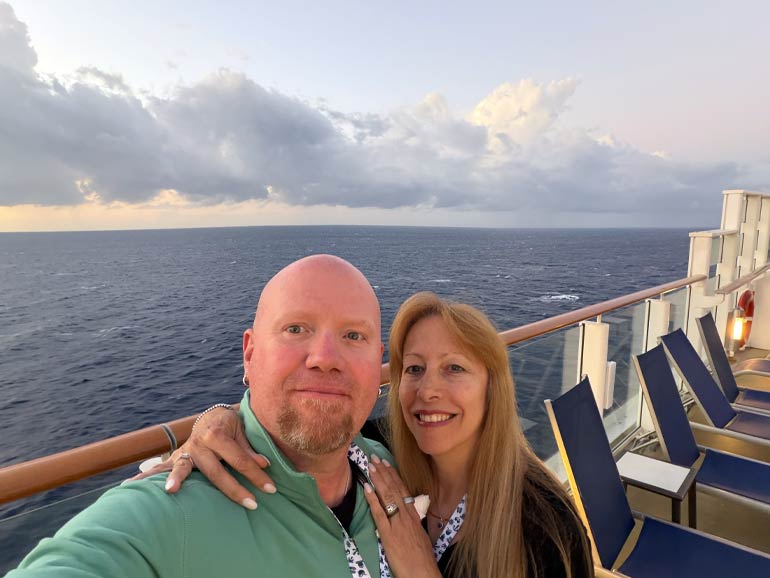
Our two-week cruise journey took us from Barcelona to Palma de Mallorca, along the French Riviera to Cannes, through Florence, Rome, and Naples, on to Taormina, Malta, Corfu, Dubrovnik, and finally Split. Along the way, I walked many Cardo Maximus and Decumanus Maximus, explored ancient Roman ruins, marveled at medieval and Greek layers of history, and even swam in the Mediterranean.
In Florence, the Basilica of Santa Croce and Palazzo Vecchio revealed centuries of civic and artistic life, while Rome dazzled with the Colosseum, Trevi Fountain, and Pantheon. Taormina offered sweeping views from Piazza IX Aprile, and in Split, walking through the South (Sea) Gate into Diocletian’s Palace and along the Cardo Maximus brought everything full circle. Egyptian, Roman, and Christian histories overlapped in courtyards, temples, and statues, reminding me that history is never static — it layers, reshapes, and lives on. This adventure was more than a cruise; it was a journey through time, and I will continue to follow the roads that shaped civilizations, uncovering the stories they still tell today.