


Cardo Maximus Map: Find Ancient Roman Streets in Historic Cities
Walk the line of the empire: discover where ancient Rome meets modern streets.
Welcome to the Cardo Maximus page. If you’ve already read “Chasing the Cardo Maximus: How Rome’s Roads Reshaped My Travels,” you know why this ancient Roman road became so meaningful to me. If not, I recommend reading that article first before exploring the guide below.
The Cardo Maximus was the main north–south street in ancient Roman cities, forming the structural backbone of Roman urban planning. First formalized in Rome’s original Roman street grid, this system of intersecting Cardos and decumani became the blueprint for cities across the empire.
From imperial foundations to colonial outposts, Roman planners exported a consistent urban model that still shapes modern streets today. This map helps visitors locate these ancient streets, showing preserved, traced, and reconstructed routes—ensuring you never miss the Cardo again.
Table of Contents
What Is the Cardo Maximus?
The Cardo Maximus was the primary north–south artery of the Roman urban world. More than just a road, it served as the central axis of civic life, connecting vital markets, temples, and administrative hubs.
In the logic of Roman city planning, the Cardo intersected with the Decumanus Maximus (the east–west axis) to create the city’s structural backbone. This precise intersection—the Groma—typically marked the location of the Roman Forum, the political and commercial heart of the colony. Today, these ancient survey lines remain visible across Europe, North Africa, and the Middle East, revealing how an imperial blueprint continues to shape modern communities two thousand years later.

Visual reconstruction and Roman grid infographic created with Google Gemini (Nano Banana 2)
How the Roman Street Grid Worked
The Cardo (North–South Axis)
The Cardo served as the main thoroughfare, guiding traffic, trade, and social life along a predictable north–south path. Markets lined its sides, temples and public buildings flanked it, and processions moved along its length during religious or civic festivals.
By centralizing movement, the Cardo became the lifeline of Roman urban life. Soldiers, merchants, and citizens all followed its course, making it the heart of commerce and connection.
The Decumanus (East–West Axis)
Intersecting the Cardo, the Decumanus Maximus ran east–west, forming a perpendicular axis that organized the city into clearly defined blocks. Together, Cardo and Decumanus created a predictable, orthogonal grid, allowing both planning and efficient navigation.
In many cases, the intersection of these two main streets housed the forum, the civic and commercial center, reinforcing the idea that streets weren’t just functional—they directed life itself.
Why Roman Cities Used a Grid System
The grid served multiple purposes:
- Military Logistics: enabling rapid movement of troops.
- Trade Efficiency: lining markets along predictable paths.
- Urban Management: organizing city blocks for easy administration.
- Scalable Planning: allowing expansions while keeping the original structure intact.
By understanding the Cardo Maximus, you begin to see why the modern streets of cities like Barcelona, Florence, and Jerusalem still echo a 2,000-year-old design.
The Empire in Situ: Case Studies in Continuity
The Roman urban formula wasn't just a theory; it is a physical reality you can still touch. Across the former empire, this pattern provided a consistency that allowed commerce and culture to flow seamlessly between distant provinces.
- Split, Croatia: Explore the world’s most intact intersection within the walls of Diocletian’s Palace. [See the Split Guide]
- Florence, Italy: Trace the Roman skeleton that still dictates the flow of Renaissance traffic beneath the Via Calimala. [See the Florence Guide]
- Mdina, Malta: Discover the hidden remnants of the Melite street layout preserved in the "Silent City."
The Cardo Maximus and Decumanus Maximus of Barcelona


A view down Carrer del Bisbe, the Decumanus Maximus. While the famous bridge is a later Neo-Gothic addition, the street beneath it follows the exact east–west axis laid down by Augustan surveyors in 15 BC.
Interactive Map: The Imperial Compass
Subtitle: Discover the 44-Country Grid that Directed the Ancient World.
This map is designed to help you explore the legacy of ancient Roman urban planning in a practical and visual way. Verified across 44 countries, our map highlights the persistent geometry of the empire categorized by its current state of documentation and preservation:
- Living Streets – Ancient alignments still functioning as primary modern roads today.
- Fully Preserved – Clearly visible Roman paving, foundations, or colonnades, such as the Cardo Maximus in Split.
- Persistent Geometry – Ancient routes confirmed through urban morphology and the enduring footprint of later city layouts, as seen in Florence.
- Archaeological – Precise routes identified through institutional excavation and documented ruins.
How to Read the Grid
As you explore the map, look for how the empire adapted its Imperial Compass to the landscape. You will find Cardo-dominant cities preserving the north-south spine, Hybrid cities where Rome adjusted to older cultures, and the Intersections—the exact points where the Groma was placed. Stand at these coordinates, and you stand where Roman life once converged.
Map Usage & Integrity Disclosure
The Imperial Compass synthesizes 2,000 years of urban history into a modern adventure guide. While all street alignments are verified against institutional archaeological records and primary field documentation, they represent historical reconstructions subject to the natural evolution of the city.
Users are responsible for their own safety and must respect local laws, traffic regulations, and private property while exploring these urban anchors.
This mapping project is informed by specialized archaeological coursework, including Roman Architecture through Yale University. For a full breakdown of data provenance, evidence classifications, and verified credentials, see the [Sources & Research]
Field Verification & Logistics
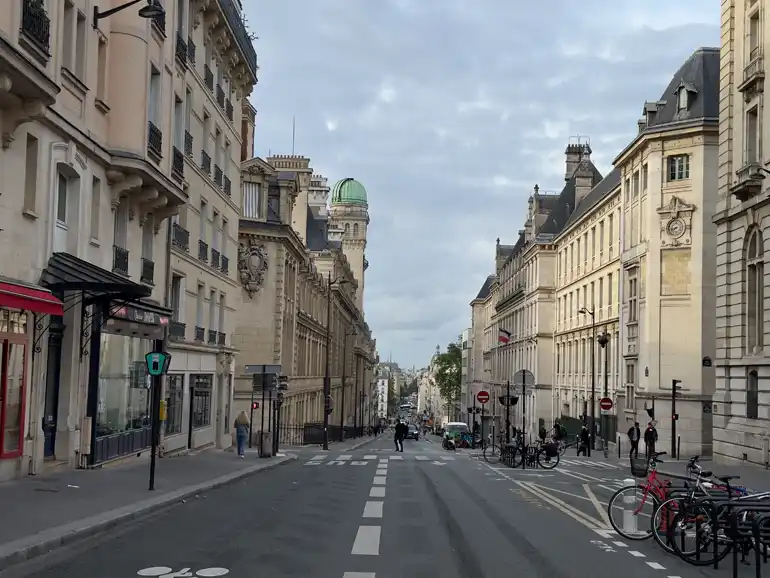
Paris (Lutetia)
Location: Paris, France
GPS: 48° 50’ 49.2” N 2° 20’ 35.622” E
Modern Cardo Name: Rue Saint-Jacques
Modern Decumanus Name: Rue Soufflot
Status: ✅ Persistent Geometry / Field Verified
Verification Date: May 28, 2024
Note: The modern Rue Saint-Jacques follows the exact alignment of the Cardo Maximus of Roman Lutetia. At the intersection of the Rue Saint-Jacques and Rue Soufflot, you are standing at the 'Zero Point' of Roman Lutetia. This junction of the Cardo Maximus and Decumanus Maximus served as the anchor for the city's grid and marked the entrance to the Great Forum, the monumental heart of Roman administration in Gaul.
Survey Note: GPS coordinates were obtained on-site using iPhone geotagging.
Documentation: Primary Field Photography by Gordon Eaton.
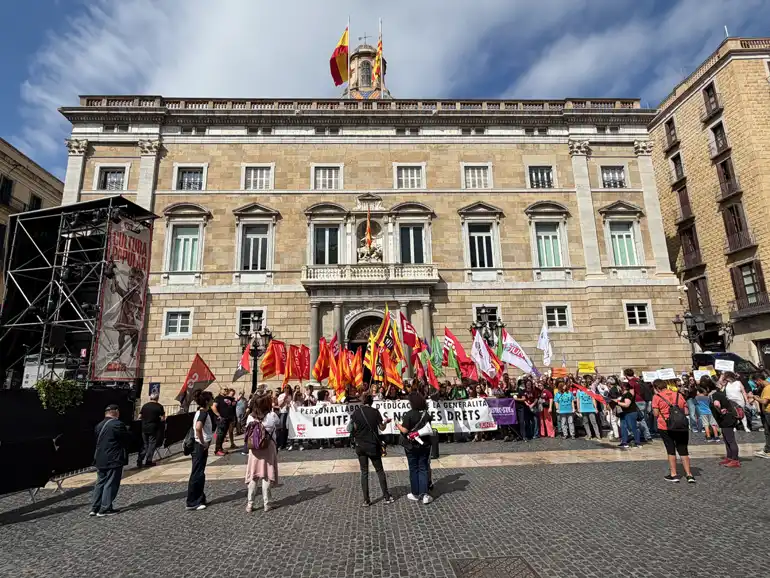
Barcelona (Barcino)
Location: Barcelona, Spain
GPS: 41° 22’ 57.732” N 2° 10’ 37.698” E
Modern Cardo Name: Carrer de la Llibreteria
Modern Decumanus Name: Carrer del Bisbe
Status: ✅ Persistent Geometry / Field Verified
Verification Date: September 27, 2025
Note: This point represents the Groma, the primary surveying hub of the Roman colony Barcino. Situated at the highest point of Mount Tàber, it marks the intersection of the city's main thoroughfares. Recent 2026 archaeological findings have confirmed the monumental scale of the Forum here, revealing an east-west orientation that defined the city's civic and religious life for centuries.
Survey Note: GPS coordinates were obtained on-site using iPhone geotagging.
Documentation: Primary Field Photography by Gordon Eaton.
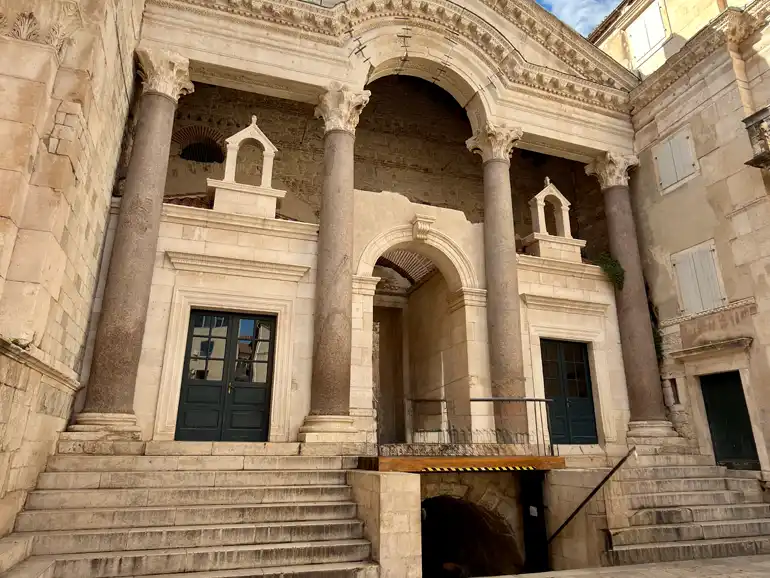
Split (Spalatum)
Location: Split, Croatia (Dioletian's Palace)
GPS: 43° 30’ 29.208” N 16° 26’ 24.702” E
Modern Cardo Name: Dioklecijanova ulica
Modern Decumanus Name: Poljana kraljice Jelene / Krešimirova
Status: ✅ Persistent Geometry / Field Verified
Verification Date: October 8, 2025
Note: At the heart of Diocletian's Palace, these coordinates mark the monumental junction of the Cardo Maximus and Decumanus Maximus. This central courtyard, known as the Peristyle, served as the intersection between the city’s military barracks to the north and the imperial residence to the south. It remains the most iconic preserved Roman square in the world.
Survey Note: GPS coordinates were obtained on-site using iPhone geotagging.
Documentation: Primary Field Photography by Gordon Eaton.
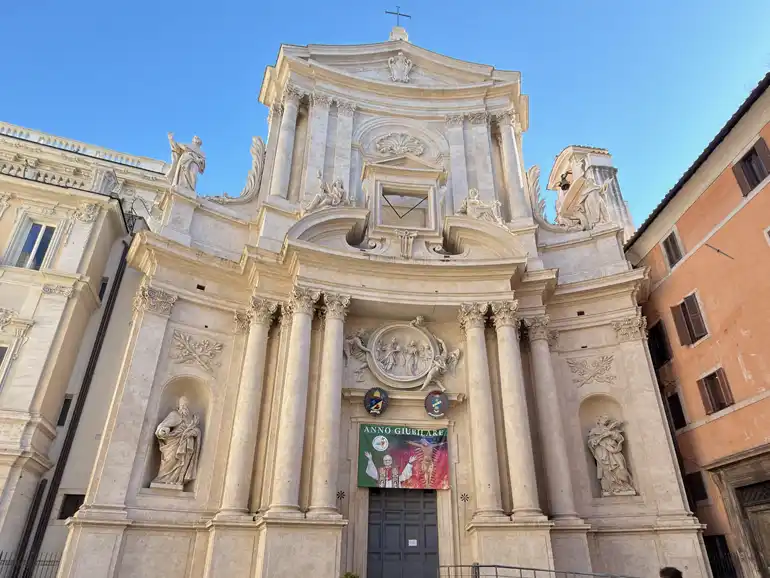
Rome (Roma)
Location: Roma (Rome), Italy
GPS: 41° 53’ 54.99” N 12° 28’ 53.472” E
Modern Cardo Name: Via del Corso
Status: ✅ Persistent Geometry / Field Verified
Verification Date: October 2, 2025
Note: Standing before the facade of San Marcello al Corso, you are positioned on the ancient Via Lata, the primary Cardo Maximus of Rome’s Campus Martius. This ceremonial spine has maintained its alignment for two millennia, serving as the city's gateway to the north. While the Baroque facade is 17th-century, the foundations beneath it rest on Roman commercial structures that once defined this vital trade corridor.
Survey Note: GPS coordinates were obtained on-site using iPhone geotagging.
Documentation: Primary Field Photography by Gordon Eaton.
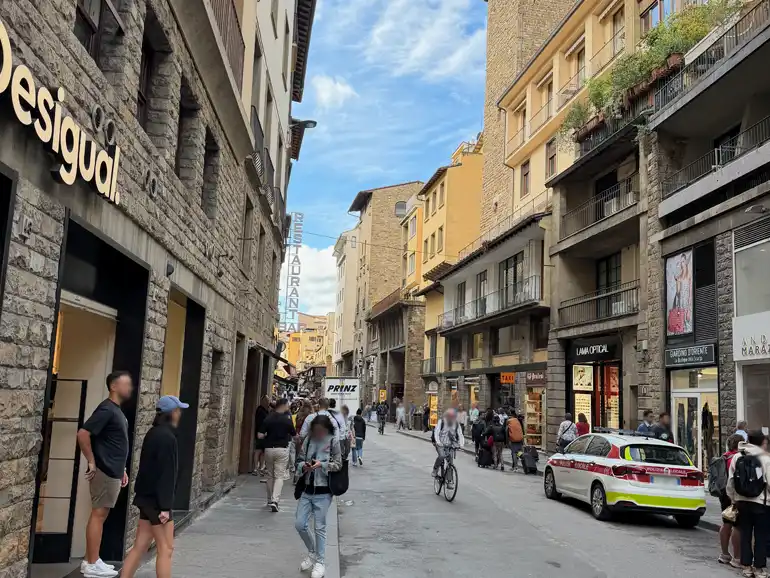
Florence (Florentia)
Location: Firenze (Florence), Italy
GPS: 43°46'09.4"N 11°15'14.8"E
Modern Cardo Name: Via Roma, Via Calimala, and Via Por Santa Maria
Status: ✅ Persistent Geometry / Field Verified
Verification Date: October 1, 2025
Note: Looking south along Via Por Santa Maria, the camera follows the final descent of the Cardo Maximus. This segment served as the vital 'artery' connecting the Roman city center to its primary life-line: the bridge over the Arno. Every modern building in this frame still adheres to the 1st-century BC survey line that funneled travelers and trade from the southern provinces into the heart of the colony.
Survey Note: GPS coordinates were obtained on-site using iPhone geotagging.
Documentation: Primary Field Photography by Gordon Eaton.
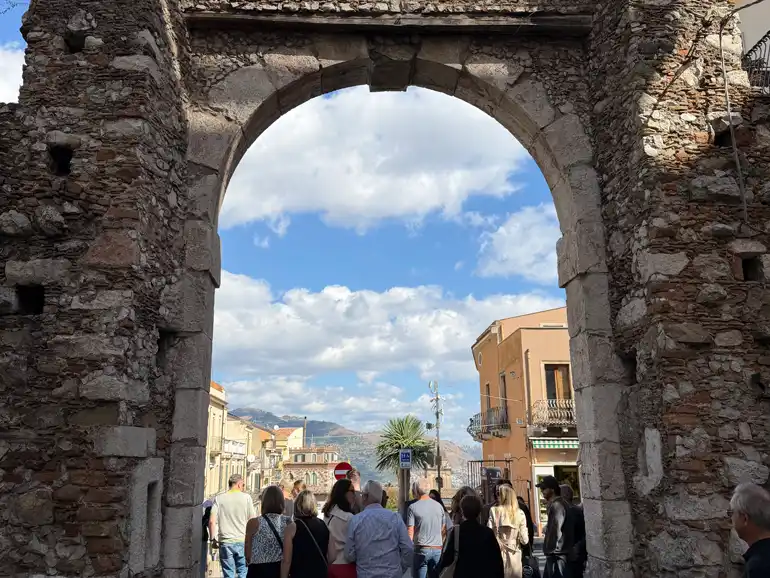
Taormina (Tauromenium)
Location: Taormina, Italy
GPS: 37° 51’ 15.678” N 15° 17’ 19.668” E
Modern Decumanus Name: Corso Umberto
Status: ✅ Persistent Geometry / Field Verified
Verification Date: October 4, 2025
Note: This point marks the heart of the Decumanus Maximus, the primary east-west spine of Taormina. Following the ancient Via Valeria, this thoroughfare connects the city's main gates and serves as the anchor for the Roman urban grid, adapted here to the dramatic Sicilian topography.
Survey Note: GPS coordinates were obtained on-site using iPhone geotagging.
Documentation: Primary Field Photography by Gordon Eaton.
Walk the Line of the Empire
Discover the precise urban anchors where the original Roman survey still dictates the rhythm and flow of the modern streets you walk today.
Explore the Data
Click the red (+) icons below to unlock the urban anchors for each country. Inside, you will find our verified GPS coordinates, field photography, and the modern street names that still follow the original Roman survey.
From the Atlantic coast of Spain to the deserts of Jordan, the Roman grid was more than just a layout—it was a standardized language of power and efficiency. This project tracks the survival of that language across 44 countries, identifying the exact coordinates where the ancient Cardo Maximus remains the living spine of the modern world.
Italy — Ancient Roman Urban Grids
| Roman Site | Dominant Axis | Modern Day Equivalent | Coordinates | Independent Verification Source |
|---|---|---|---|---|
| Special Hub: The Eternal City (Superimposed Grids) | ||||
| Roma (Rome) |
Traceable | Via del Corso (Ancient Via Lata) / Via dei Fori Imperiali | 41.89920, 12.48250 | Turismo Roma: Imperial Fora Survey |
| Region: Northern Italy (Gallic Foundations) | ||||
| Augusta Praetoria (Aosta) |
Full Grid | Via Porta Praetoria / Via de Tillier | 45.73715, 7.32048 | Aosta Valley Tourism |
| Augusta Taurinorum (Torino) |
Full Grid | Via Garibaldi / Via Porta Palatina | 45.07228, 7.68341 | MuseoTorino: Roman Plan |
| Bononia (Bologna) |
Full Grid | Via Ugo Bassi / Via dell'Indipendenza | 44.49441, 11.34182 | Salaborsa Archaeological Audit |
| Verona (Verona) |
Full Grid | Corso Porta Borsari / Via Cappello | 45.44215, 10.99751 | Verona Cardo-Decumanus Survey |
| Ticinum (Pavia) |
Full Grid | Strada Nuova / Corso Cavour | 45.18525, 9.15545 | Lombardia Historical Sites |
| Placentia (Piacenza) |
Full Grid | Via Venturini / Corso Vittorio Emanuele | 45.05252, 9.69344 | Archeologia Piacenza |
| Comum (Como) |
Full Grid | Via Indipendenza / Via Cantù | 45.81055, 9.08385 | Visit Como: Roman Heritage |
| Aquileia (Aquileia) |
Full Grid | Via Giulia Augusta / Decumanus Galla | 45.76945, 13.36485 | Aquileia Foundation |
| Brixia (Brescia) |
Traceable | Via dei Musei / Piazza del Foro | 45.53985, 10.22450 | Brescia Musei: Roman Park |
| Tergeste (Trieste) |
Traceable | Via del Teatro Romano / Via Cavana | 45.64825, 13.77145 | Trieste Romana Guide |
| Mediolanum (Milano) |
Fragmented | Via San Giovanni sul Muro / Piazza degli Affari | 45.46420, 9.19000 | Civico Museo Archeologico Milano |
| Patavium (Padova) |
Fragmented | Piazza delle Erbe / Palazzo della Ragione | 45.40645, 11.87680 | Padova Musei Civici |
| Alba Pompeia (Alba) |
Traceable | Via Vittorio Emanuele / Via Maestra | 44.69945, 8.03485 | Alba Sotterranea Survey |
| Augusta Bagiennorum (Bene Vagienna) |
Full Grid | Decumanus Maximus (Archaeological Site) | 44.55125, 7.85445 | Piedmont Archaeological Park |
| Forum Cornelii (Imola) |
Full Grid | Via Emilia / Via Appia | 44.35345, 11.71445 | Musei Civici di Imola |
| Vercellae (Vercelli) |
Traceable | Corso Libertà / Via San Cristoforo | 45.32445, 8.42125 | Vercelli Roman History Audit |
| Region: Central & Adriatic (Tuscany, Latium & Marches) | ||||
| Florentia (Firenze) |
Full Grid | Via degli Speziali / Via Roma | 43.77145, 11.25416 | Feel Florence: Roman Origins |
| Luca (Lucca) |
Full Grid | Via Fillungo / Via Santa Croce | 43.84288, 10.50285 | Lucca Archaeological Records |
| Pistoriae (Pistoia) |
Full Grid | Via dei Fabbri / Via Cavour | 43.93175, 10.91780 | Pistoia Comune History |
| Fanum Fortunae (Fano) |
Full Grid | Corso Matteotti / Via Arco d'Augusto | 43.84435, 13.01758 | Fano Archeologica |
| Ariminum (Rimini) |
Full Grid | Corso d’Augusto (Decumanus Maximus) | 44.06085, 12.56685 | Rimini Turismo: Roman Itinerary |
| Ostia (Ostia Antica) |
Full Grid | Decumanus Maximus / Cardo Maximus | 41.75545, 12.29125 | Parco Archeologico di Ostia Antica |
| Asculum (Ascoli Piceno) |
Full Grid | Corso Mazzini (Decumanus) | 42.85440, 13.57500 | Ascoli Piceno: Historical Survey |
| Spoletium (Spoleto) |
Traceable | Arco di Druso / Via dei Duchi | 42.73425, 12.73695 | Spoleto Roman City Tour |
| Aretium (Arezzo) |
Traceable | Via dell'Orto / Via San Domenico | 43.46655, 11.88245 | Comune di Arezzo: Storia |
| Sutrium (Sutri) |
Traceable | Via Cassia Segment / Etruscan-Roman Grid | 42.24245, 12.22245 | Sutri: Borgo Autentico |
| Ancona (Ancona) |
Fragmented | Via del Comune / Trajan Area | 43.61670, 13.51670 | Ancona Turismo: Roman Period |
| Interamna Nahars (Terni) |
Fragmented | Corso Vecchio / Piazza della Repubblica | 42.56395, 12.64140 | Umbria Archeologica |
| Hispellum (Spello) |
Traceable | Via Giulia / Via Consolare | 42.99125, 12.67125 | Umbria Tourism: Roman Spello |
| Tarracina (Terracina) |
Full Grid | Piazza del Municipio (Forum Emilianum) | 41.29125, 13.24945 | Terracina Archaeological Museum |
| Region: Southern Italy & Islands | ||||
| Neapolis (Napoli) |
Full Grid | Via dei Tribunali / Via Duomo | 40.85175, 14.25812 | Napoli: Historical Center UNESCO |
| Pompeii (Pompeii (Scavi)) |
Full Grid | Via dell'Abbondanza / Via Stabiana | 40.75115, 14.48455 | Parco Archeologico Pompei |
| Herculaneum (Ercolano (Scavi)) |
Full Grid | Decumanus Maximus / Cardo III | 40.80615, 14.34755 | Parco Archeologico Ercolano |
| Paestum (Capaccio Paestum) |
Full Grid | Via Sacra / Cardo Maximus | 40.41955, 15.00515 | Parco Archeologico Paestum |
| Selinus (Selinunte) |
Full Grid | Acropolis Main Street North-South | 37.58355, 12.82525 | Parco Archeologico di Selinunte |
| Agrigentum (Agrigento) |
Full Grid | Decumanus Maximus (Valley Segment) | 37.29085, 13.58625 | Valle dei Templi Survey |
| Beneventum (Benevento) |
Traceable | Corso Garibaldi / Arch of Trajan | 41.13110, 14.77750 | Benevento Heritage Office |
| Syracusae (Siracusa) |
Traceable | Via della Maestranza / Via Roma | 37.06085, 15.29345 | Ortigia Island Survey |
| Tauromenium (Taormina) |
Traceable | Corso Umberto (Decumanus Maximus) | 37.85245, 15.28725 | Sicily Cultural Heritage |
| Luceria (Lucera) |
Fragmented | Piazza Duomo / Roman Amphitheater | 41.51115, 15.33335 | Puglia Archeologica |
| Acerrae (Acerra) |
Traceable | Via G. Canano / Corso Vittorio Emanuele | 40.94315, 14.37125 | Campania Archaeological Heritage |
| Pola (Pula, Sardinia) |
Full Grid | Cardo / Decumanus (Nora Archaeological Park) | 38.98545, 9.01625 | Nora Archaeological Site |
Hispania (Spain, Portugal)
| Roman Site | Dominant Axis | Modern Day Equivalent | Coordinates | Independent Verification Source |
|---|---|---|---|---|
| Hispania Tarraconensis (Eastern & Northern Spain) | ||||
| Caesaraugusta (Zaragoza, Spain) |
Full Grid | Decumanus (Calle Mayor) / Cardo (Calle Don Jaime I) | 41.65645, -0.87815 | Museo del Foro de Caesaraugusta |
| Barcino (Barcelona, Spain) |
Full Grid | Decumanus (Carrer del Bisbe) / Cardo (Carrer de la Llibreteria) | 41.38335, 2.17685 | MUHBA - Museu d'Història de Barcelona |
| Tarraco (Tarragona, Spain) |
Traceable | Decumanus (Carrer de la Merceria) / Cardo (Carrer Major) | 41.11825, 1.25715 | Tarragona Turisme: Roman Heritage |
| Valentia (Valencia, Spain) |
Full Grid | Cardo (Calle del Salvador) / Decumanus (Calle de Caballeros) | 39.47585, -0.37505 | L'Almoina Archaeological Centre |
| Gerunda (Girona, Spain) |
Traceable | Carrer de la Força (Cardo Maximus) | 41.98615, 2.82585 | Girona City History Museum |
| Complutum (Alcalá de Henares, Spain) |
Full Grid | Decumanus Maximus (Archaeological Park) | 40.48425, -3.38585 | Complutum Archaeological Site |
| Palma (Palma de Mallorca, Spain) |
Fragmented | Calle Bonaire / Ajuntament (Forum) | 39.56960, 2.65020 | Visit Palma: Roman Foundations |
| Empuriae (Empúries, Spain) |
Full Grid | Decumanus Maximus (Ruined Site) | 42.13335, 3.11675 | MAC - Empúries |
| Lusitania & Baetica (Portugal & Southern/Western Spain) | ||||
| Emerita Augusta (Mérida, Spain) |
Full Grid | Cardo (Calle Santa Eulalia) / Decumanus (Calle Sagasta) | 38.91615, -6.34615 | Consorcio Ciudad Monumental de Mérida |
| Conímbriga (Condeixa-a-Nova, Portugal) |
Full Grid | Cardo Maximus / Decumanus (Archaeological Site) | 40.09915, -8.49085 | Museu de Conímbriga |
| Cáparra (Guijo de Granadilla, Spain) |
Full Grid | Tetrapylon Intersection (Cardo/Decumanus) | 40.16615, -6.09945 | Cáparra Archaeological Site |
| Aeminium (Coimbra, Portugal) |
Traceable | Cryptoporticus Base (Below Machado de Castro) | 40.20915, -8.42615 | Museu Nacional de Machado de Castro |
| Italica (Santiponce, Spain) |
Full Grid | Cardo Maximus (Nova Urbs) / Decumanus | 37.44315, -6.04615 | Conjunto Arqueológico de Itálica |
| Corduba (Córdoba, Spain) |
Traceable | Calle Claudio Marcelo / Calle Capitulares | 37.88445, -4.77615 | Córdoba Archaeological Museum |
| Hispalis (Sevilla, Spain) |
Traceable | Calle Mármoles / Calle Abades | 37.38845, -5.99125 | Antiquarium de Sevilla |
| Baelo Claudia (Bolonia, Spain) |
Full Grid | Decumanus Maximus (Ensenada) | 36.08945, -5.77395 | Conjunto Arqueológico Baelo Claudia |
| Gallaecia & Asturica (Northwestern Spain) | ||||
| Asturica Augusta (Astorga, Spain) |
Full Grid | Cardo (Calle Los Sitios) / Decumanus (Calle de la Rúa) | 42.45715, -6.05615 | Astorga Roman Route |
| Lucus Augusti (Lugo, Spain) |
Full Grid | Rúa Nova / Rúa de San Pedro | 43.01125, -7.55615 | Lugo Roman Wall & City Site |
| Bracara Augusta (Braga, Portugal) |
Full Grid | Rua do Souto (Cardo) / Rua de D. Paio Mendes (Decumanus) | 41.55035, -8.42675 | Museu de Arqueologia D. Diogo de Sousa |
| Liberalitas Julia (Évora, Portugal) |
Full Grid | Rua de Valdevinos / Rua de Santa Isabel | 38.57255, -7.90705 | UNESCO: Historic Centre of Évora |
| Legio (León, Spain) |
Full Grid | Calle Ancha (Decumanus Maximus) | 42.59895, -5.56705 | Centro del León Romano |
Transalpine Gaul (France, Belgium, Switzerland, Luxembourg, Monaco)
| Roman Site | Dominant Axis | Modern Day Equivalent | Coordinates | Independent Verification Source |
|---|---|---|---|---|
| Gallia Narbonensis (Southern France) | ||||
| Nemausus (Nîmes, France) |
Full Grid | Decumanus (Rue de la Madeleine) / Cardo (Rue de l'Aspic) | 43.83665, 4.36005 | Nîmes Roman History Audit |
| Arelate (Arles, France) |
Full Grid | Decumanus (Rue de la République) / Cardo (Rue de l'Hôtel de Ville) | 43.67665, 4.62775 | Arles Archaeological Heritage |
| Arausio (Orange, France) |
Full Grid | Decumanus Maximus / Cardo (Ancient Theatre Axis) | 44.13585, 4.80865 | Théâtre Antique d'Orange Survey |
| Vienna (Vienne, France) |
Traceable | Temple of Augustus/Livia Square (Forum Anchor) | 45.52645, 4.87525 | Vienne: Museé Gallo-Romain |
| Forum Iulii (Fréjus, France) |
Traceable | Rue de l'Hôtel de Ville (Decumanus Line) | 43.43315, 6.73715 | Fréjus Historic Archives |
| Gallia Lugdunensis & Lutetia (Central/Northern France) | ||||
| Lutetia (Paris, France) |
Traceable | Cardo (Rue Saint-Jacques) / Decumanus (Rue des Écoles) | 48.84755, 2.34445 | Crypte Archéologique de l'Île de la Cité |
| Lugdunum (Lyon, France) |
Traceable | Rue de la Bombarde / Rue de l'Antiquaille | 45.75945, 4.82125 | Lugdunum - Musée et Théâtres Romains |
| Autessiodurum (Auxerre, France) |
Traceable | Rue Joubert (Ancient Cardo Alignment) | 47.79585, 3.57125 | Auxerre Museum of Art & History |
| Augustodunum (Autun, France) |
Full Grid | Cardo (Rue de l'Arquebuse) / Decumanus (Rue de la Grille) | 46.95005, 4.29865 | Autun: Ville d'Art et d'Histoire |
| Gallia Belgica & Helvetia (Low Countries & Switzerland) | ||||
| Augusta Raurica (Augst, Switzerland) |
Full Grid | Decumanus Maximus / Cardo (Archaeological Park) | 47.53335, 7.72225 | Augusta Raurica Museum |
| Aventicum (Avenches, Switzerland) |
Full Grid | Main Street Grid (N-S / E-W Segments) | 46.88335, 7.04125 | Site et Musée Romains d'Avenches |
| Augusta Treverorum (Trier, Germany (Historic Belgica)) |
Full Grid | Simeonstraße (Cardo) / Karl-Marx-Straße (Decumanus) | 49.75965, 6.64415 | UNESCO: Roman Monuments in Trier |
| Bagacum Nerviorum (Bavay, France) |
Full Grid | Intersection of 7 Roman Roads (Forum Hub) | 50.29755, 3.79125 | Forum Antique de Bavay |
Northern Frontiers (UK, Netherlands, Germany, Austria, Liechtenstein)
| Roman Site | Dominant Axis | Modern Day Equivalent | Coordinates | Independent Verification Source |
|---|---|---|---|---|
| Britannia (United Kingdom) | ||||
| Londinium (London, UK) |
Traceable | Cannon Street (Decumanus) / Gracechurch Street (Cardo) | 51.51235, -0.08335 | Museum of London: Roman City Plan |
| Deva Victrix (Chester, UK) |
Full Grid | Northgate St (Cardo) / Eastgate St (Decumanus) | 53.19045, -2.89165 | Chester Roman Heritage Audit |
| Eboracum (York, UK) |
Traceable | Stonegate (Via Praetoria) / Petergate (Via Principalis) | 53.96055, -1.08335 | York Archaeological Trust |
| Corinium Dobunnorum (Cirencester, UK) |
Traceable | Tower Street / Lewis Lane Alignment | 51.71645, -1.96645 | Corinium Museum Archive |
| Venta Belgarum (Winchester, UK) |
Full Grid | High Street (Decumanus) / St. George’s St (Cardo) | 51.06335, -1.31225 | Winchester City Council Archaeological Record |
| Germania Inferior & Superior (Netherlands & Germany) | ||||
| Colonia Claudia Ara Agrippinensium (Cologne, Germany) |
Full Grid | Hohe Straße (Cardo) / Schildergasse (Decumanus) | 50.93665, 6.95755 | Römisch-Germanisches Museum |
| Mogontiacum (Mainz, Germany) |
Traceable | Große Bleiche (Decumanus alignment) | 50.00005, 8.27115 | Mainz Archaeological Heritage |
| Noviomagus Batavorum (Nijmegen, Netherlands) |
Traceable | Burchtstraat / Valkhof Hub | 51.84755, 5.86335 | Museum Het Valkhof |
| Xanten (Colonia Ulpia Traiana) (Xanten, Germany) |
Full Grid | Archaeological Park Grid (Maximus Axis) | 51.66665, 6.44445 | LVR-Archäologischer Park Xanten |
| Noricum & Pannonia (Austria) | ||||
| Vindobona (Vienna, Austria) |
Traceable | Graben (Decumanus) / Tuchlauben (Cardo) | 48.20815, 16.37125 | Wien Museum: Roman Excavations |
| Juvavum (Salzburg, Austria) |
Traceable | Residenzplatz / Domplatz intersection | 47.79815, 13.04615 | Salzburg Museum - Roman Findings |
| Aguntum (Dölsach, Austria) |
Full Grid | Decumanus Maximus (Excavated Artery) | 46.82815, 12.82225 | Museum Aguntum |
The Danubian Basin (Hungary, Romania, Bulgaria, Serbia, Croatia, Slovenia, Slovakia, Moldova, Ukraine)
| Roman Site | Dominant Axis | Modern Day Equivalent | Coordinates | Independent Verification Source |
|---|---|---|---|---|
| Pannonia (Hungary & Slovenia) | ||||
| Aquincum (Budapest, Hungary) |
Full Grid | Decumanus Maximus / Cardo (Archaeological Park) | 47.56415, 19.04865 | Aquincum Museum & Archaeological Park |
| Emona (Ljubljana, Slovenia) |
Full Grid | Slovenska cesta (Cardo) / Rimska cesta (Decumanus) | 46.04615, 14.50125 | City Museum of Ljubljana: Roman Emona |
| Savaria (Szombathely, Hungary) |
Traceable | Garden of Ruins (Main Roman Road segment) | 47.23055, 16.62125 | Savaria Museum Archive |
| Dalmatia (Croatia) | ||||
| Salona (Solin, Croatia) |
Full Grid | Cardo Maximus / Decumanus (Archaeological Site) | 43.53945, 16.48335 | Archaeological Museum in Split |
| Parentium (Poreč, Croatia) |
Full Grid | Cardo Maximus / Decumanus (Ancient Streets) | 45.22725, 13.59415 | Poreč Heritage Museum |
| Iader (Zadar, Croatia) |
Full Grid | Calle Larga (Decumanus) / Cardo (Archaeological Anchor) | 44.11615, 15.22415 | Zadar Archaeological Museum |
| Spalatum (Split, Croatia) |
Full Grid | Cardo (Diocletian's Palace) / Decumanus | 43.50815, 16.44025 | Diocletian's Palace UNESCO Audit |
| Moesia & Dacia (Serbia, Bulgaria, Romania) | ||||
| Singidunum (Belgrade, Serbia) |
Traceable | Uzun Mirkova (Decumanus) / Tadeuša Košćuška (Cardo) | 44.82125, 20.45025 | Belgrade City Museum: Roman Singidunum |
| Viminacium (Kostolac, Serbia) |
Full Grid | Main Decumanus (Excavated Roman City) | 44.73665, 21.23025 | Viminacium Archaeological Park |
| Philippopolis (Plovdiv, Bulgaria) |
Full Grid | Cardo (Central Excavated Artery) / Forum Axis | 42.14315, 24.74865 | Ancient Plovdiv Municipal Institute |
| Serdica (Sofia, Bulgaria) |
Traceable | Ancient Serdica Complex (Cardo/Decumanus Cross) | 42.69755, 23.32125 | Regional History Museum - Sofia |
| Apulum (Alba Iulia, Romania) |
Traceable | Principia Site (Castrum Grid) | 46.06815, 23.57125 | National Museum of the Union |
| Ulpia Traiana Sarmizegetusa (Sarmizegetusa, Romania) |
Full Grid | Decumanus Maximus (Archaeological Site) | 45.51665, 22.78335 | Sarmizegetusa National Museum |
The Hellenic World (Greece, Cyprus, Albania, North Macedonia, Malta, Montenegro, Bosnia and Herzegovina)
| Roman Site | Dominant Axis | Modern Day Equivalent | Coordinates | Independent Verification Source |
|---|---|---|---|---|
| Achaea & Macedonia (Greece & N. Macedonia) | ||||
| Thessalonica (Thessaloniki, Greece) |
Full Grid | Egnatia Street (Decumanus Maximus) / Agias Sofias (Cardo) | 40.63335, 22.94445 | Thessaloniki UNESCO World Heritage Survey |
| Patrae (Patras, Greece) |
Full Grid | Agiou Nikolaou (Cardo) / Maizonos (Decumanus Alignment) | 38.24665, 21.73445 | Ephorate of Antiquities of Achaea |
| Corinthus (Ancient Corinth, Greece) |
Full Grid | Lechaion Road (Cardo Maximus) / Decumanus E-W | 37.90585, 22.87945 | ASCSA: Corinth Excavations |
| Heraclea Lyncestis (Bitola, N. Macedonia) |
Full Grid | Main Street (Cardo) / Decumanus Maximus segment | 41.01125, 21.34225 | Institute for Protection of Monuments - Bitola |
| Nicopolis (Preveza, Greece) |
Full Grid | North-South Cardo / East-West Decumanus Maximus | 39.00815, 20.73335 | Archaeological Museum of Nicopolis |
| Epirus & Dalmatia South (Albania, Montenegro, Bosnia) | ||||
| Buthrotum (Butrint, Albania) |
Traceable | Roman Forum Street (Cardo) / Decumanus | 39.74415, 20.01945 | Butrint National Park Foundation |
| Dyrrachium (Durrës, Albania) |
Traceable | Egnatia Way Entrance (Decumanus Anchor) | 41.31315, 19.44725 | Durrës Archaeological Museum |
| Doclea (Podgorica, Montenegro) |
Full Grid | Cardo Maximus / Decumanus (Archaeological Site) | 42.46665, 19.26665 | Museums and Galleries of Podgorica |
| Mogorjelo (Čapljina, Bosnia and Herzegovina) |
Full Grid | Cardo / Decumanus (Roman Villa Rustica Site) | 43.09945, 17.70125 | Commission to Preserve National Monuments |
| The Islands (Cyprus & Malta) | ||||
| Paphos (Paphos, Cyprus) |
Full Grid | Nea Paphos Street Grid (Cardo/Decumanus) | 34.75665, 32.40865 | Department of Antiquities, Cyprus |
| Melite (Mdina/Rabat, Malta) |
Traceable | Triq San Pawl (Main Axis Alignment) | 35.88585, 14.40335 | Heritage Malta: Domvs Romana |
Anatolia & Caucasus (Turkey, Armenia, Georgia, Azerbaijan)
| Roman Site | Dominant Axis | Modern Day Equivalent | Coordinates | Independent Verification Source |
|---|---|---|---|---|
| Asia & Bithynia (Western & Northern Turkey) | ||||
| Ephesus (Selçuk, Turkey) |
Full Grid | Curetes Street (Decumanus segment) / Marble Road (Cardo) | 37.93915, 27.34125 | Austrian Archaeological Institute: Ephesus Survey |
| Nicaea (İznik, Turkey) |
Full Grid | Atatürk Caddesi (Cardo) / Kılıçaslan Caddesi (Decumanus) | 40.42865, 29.71865 | İznik Museum & Archaeological Site |
| Pergamon (Bergama, Turkey) |
Traceable | Lower City Grid (Main North-South Axis) | 39.12125, 27.18335 | DAI: Pergamon Excavations |
| Hierapolis (Pamukkale, Turkey) |
Full Grid | Frontinus Street (Cardo Maximus) | 37.92725, 29.12725 | Hierapolis Missione Archeologica Italiana |
| Galatia & Cilicia (Central & Southern Turkey) | ||||
| Ancyra (Ankara, Turkey) |
Traceable | Augustus Temple Axis / Ulus Historic Center Alignment | 39.94415, 32.85525 | Ankara University Roman Studies |
| Tarsus (Tarsus, Turkey) |
Full Grid | Roman Road of Tarsus (Excavated Cardo) | 36.91665, 34.89505 | Tarsus Museum of Archaeology |
| Antiochia ad Orontem (Antakya, Turkey) |
Traceable | Kurtuluş Caddesi (Ancient Cardo Maximus Alignment) | 36.20125, 36.16125 | Hatay Archaeology Museum |
| Sagalassos (Ağlasun, Turkey) |
Full Grid | Lower Agora Axis / Colonnaded Street | 37.67665, 30.52125 | Sagalassos Archaeological Research Project |
| The Caucasus (Georgia, Armenia, Azerbaijan) | ||||
| Gonio-Apsaros (Gonio, Georgia) |
Full Grid | Castrum Grid (Main Excavated Internal Road) | 41.57225, 41.57335 | Gonio-Apsaros Museum-Reserve |
| Artaxata (Artashat, Armenia) |
Traceable | Hill 1 / Lower City Grid Segments | 39.88335, 44.67615 | National Academy of Sciences of Armenia |
The Levant & Arabia (Syria, Lebanon, Jordan, Israel, Palestine, Saudi Arabia)
| Roman Site | Dominant Axis | Modern Day Equivalent | Coordinates | Independent Verification Source |
|---|---|---|---|---|
| Syria & Lebanon | ||||
| Apamea (Apamea, Syria) |
Full Grid | Cardo Maximus (2km Colonnaded Street) | 35.41915, 36.39865 | UNESCO: Apamea (Afamia) |
| Palmyra (Palmyra, Syria) |
Full Grid | Great Colonnade (Decumanus Maximus) | 34.55125, 38.26865 | UNESCO: Site of Palmyra |
| Berytus (Beirut, Lebanon) |
Traceable | Cardo Maximus (Roman Baths Area) / Decumanus | 33.89665, 35.50125 | Beirut Heritage Trail: Roman Berytus |
| Heliopolis (Baalbek, Lebanon) |
Traceable | Propylaea Axis / Hexagonal Court Alignment | 34.00665, 36.20415 | Baalbek Archaeological Audit |
| Jordan (The Decapolis) | ||||
| Gerasa (Jerash, Jordan) |
Full Grid | Cardo Maximus (Colonnaded) / South Decumanus | 32.27225, 35.89125 | Jerash Archaeological Project |
| Gadara (Umm Qais, Jordan) |
Full Grid | Decumanus Maximus (Basalt Paved) | 32.65415, 35.67945 | Umm Qais Heritage Site |
| Philadelphia (Amman, Jordan) |
Traceable | Roman Nymphaeum / Hashemite Plaza Axis | 31.95125, 35.93335 | Jordan Department of Antiquities |
| Israel & Palestine | ||||
| Aelia Capitolina (Jerusalem) |
Full Grid | Cardo Maximus (Jewish Quarter) / Decumanus (David St) | 31.77665, 35.23125 | Tower of David Museum: Roman Jerusalem |
| Scythopolis (Beit She'an, Israel) |
Full Grid | Palladius Street (Cardo) / Silvanus Street (Decumanus) | 32.50225, 35.50125 | Beit She'an National Park |
| Caesarea Maritima (Caesarea, Israel) |
Full Grid | Cardo Maximus / Decumanus (Harbor Hub) | 32.50125, 34.89125 | Caesarea Development Corporation |
| Neapolis (Nablus, Palestine) |
Traceable | Al-Nasr Street (Ancient Decumanus Alignment) | 32.22125, 35.26125 | Nablus Old City Conservation |
| Arabia (Saudi Arabia) | ||||
| Hegra (Mada'in Salih, Saudi Arabia) |
Traceable | Residential Area Grid (Nabataean-Roman) | 26.79125, 37.95125 | Royal Commission for AlUla |
The Maghreb (Africa) Egypt, Libya, Tunisia, Algeria, Morocco
| Roman Site | Dominant Axis | Modern Day Equivalent | Coordinates | Independent Verification Source |
|---|---|---|---|---|
| Aegyptus (Egypt) | ||||
| Antinoöpolis (Sheikh 'Ibada, Egypt) |
Traceable | Cardo Maximus / Decumanus (Hadrianic Grid) | 27.81125, 30.88125 | Antinoöpolis Foundation Survey |
| Alexandria (Alexandria, Egypt) |
Traceable | Canopic Way (Decumanus Maximus) / Cardo (N-S) | 31.19815, 29.91925 | CEAlex: Centre d'Études Alexandrines |
| Cyrenaica & Africa Proconsularis (Libya & Tunisia) | ||||
| Leptis Magna (Khoms, Libya) |
Full Grid | Cardo Maximus (Colonnaded) / Decumanus Maximus | 32.63665, 14.28865 | UNESCO: Archaeological Site of Leptis Magna |
| Sabratha (Sabratha, Libya) |
Full Grid | Decumanus Maximus / Cardo (Near Theatre) | 32.80525, 12.48335 | UNESCO: Archaeological Site of Sabratha |
| Thysdrus (El Jem, Tunisia) |
Full Grid | Grid surrounding the Amphitheatre hub | 35.29665, 10.70665 | UNESCO: Amphitheatre of El Jem |
| Sufetula (Sbeitla, Tunisia) |
Full Grid | Decumanus Maximus / Cardo (Forum Entrance) | 35.23945, 9.12415 | Sbeitla Archaeological Site Audit |
| Dougga (Thugga) (Dougga, Tunisia) |
Full Grid | Decumanus Maximus / Cardo (Colonnaded) | 36.42225, 9.21945 | UNESCO: Dougga / Thugga |
| Numidia & Mauretania (Algeria & Morocco) | ||||
| Thamugadi (Timgad, Algeria) |
Full Grid | Decumanus Maximus / Cardo Maximus (Trajanic Groma) | 35.48525, 6.46725 | UNESCO: Timgad |
| Cuicul (Djémila, Algeria) |
Full Grid | Cardo Maximus / Decumanus (Severan Expansion) | 36.31945, 5.86865 | UNESCO: Djémila |
| Tipasa (Tipaza, Algeria) |
Full Grid | Decumanus Maximus (Maritime Route) | 36.59125, 2.44125 | UNESCO: Tipasa |
| Volubilis (Meknes, Morocco) |
Full Grid | Decumanus Maximus (Colonnaded) / Cardo | 34.07225, -5.55415 | UNESCO: Archaeological Site of Volubilis |
| Lixus (Larache, Morocco) |
Traceable | Industrial District Grid / Upper City Cardo | 35.20125, -6.11125 | Lixus Archaeological National Site |
Frequently Asked Questions About the Cardo Maximus
1. What is a Cardo Maximus?
A Cardo Maximus was the main north–south street in an ancient Roman city. It formed the central axis of the Roman grid system and typically intersected with the east–west Decumanus Maximus at the forum, the civic and commercial heart of the city.
2. Did every Roman city have a Cardo Maximus?
Most planned Roman cities — especially colonies and military settlements — were built using a grid system that included a primary Cardo Maximus and Decumanus Maximus. Older cities incorporated into the Roman Empire sometimes adapted existing street layouts rather than rebuilding them entirely.
3. Where did the Cardo Maximus originate?
The grid system was formalized in ancient Rome and refined through Roman military camp planning (castra). From there, it was exported across the empire as new cities were founded throughout Europe, North Africa, and the Near East.
4. What was the purpose of the Roman grid system?
The Roman grid system allowed planners to rapidly design new cities, organize military colonies, manage land distribution, and create efficient transportation and administrative networks across the empire. Its standardized structure made expansion and governance more systematic and scalable.
5. Where can you still see a Cardo Maximus today?
While exceptionally preserved examples exist in cities like Split and Florence, our research has identified traceable segments of the Roman grid in over 44 countries.
6. What is the difference between the Cardo and the Decumanus?
The Cardo ran north to south, while the Decumanus ran east to west. Their intersection typically marked the civic center of the city, where the forum and major public buildings were located.
7. Why is the Cardo Maximus important?
The Cardo Maximus represents one of the most influential urban planning systems in history. Its grid structure shaped cities across the Roman Empire and continues to influence modern street layouts today.
Personal Note
I built the Cardo Maximus Map out of a personal frustration. During the past couple of years of traveling through historic Roman centers, I realized there wasn't a single, reliable resource to help explorers find the original urban spine of the city—the 'skeleton' often hidden beneath centuries of development.
This map is the result of that search: a comprehensive guide to help you find the Cardo, whether it's a living street in Barcelona or a traced alignment in Florence. Please note: while I have verified these locations against archaeological data, the city is a living thing; accessibility and local conditions can change.
Research Integrity & Legal Disclaimer
1. Purpose of Data The information provided on the Cardo Maximus Map and within Sources is intended for historical research, educational synthesis, and modern adventure purposes. While every effort is made to ensure the accuracy of Roman street alignments, urban geography is subject to "historical drift" caused by centuries of reconstruction, natural disasters, and urban evolution.
2. Independent Verification The identification of specific modern streets as ancient Cardines or Decumani is based on a three-tier triangulation of academic urban morphology, institutional archaeological records (e.g., UNESCO, Soprintendenza, and peer-reviewed journals), and primary field documentation. However, these alignments represent historical reconstructions and should not be used for legal, land-surveying, or official construction purposes.
3. Limitation of Liability Gordon Eaton and associated entities are not liable for any inaccuracies in the data or for any actions taken based on the information provided on this website. Adventurers are encouraged to follow all local laws, respect private property, and prioritize personal safety when conducting "ground-truthing" or field exploration.
4. Intellectual Property & Citations All citations and references to third-party archaeological databases and academic institutions are provided under Fair Use for the purpose of research and attribution. We claim no ownership over the foundational archaeological facts discovered by these institutions. Original cinematography, field photography, and the specific synthesis of this map remain the intellectual property of the Gordon Eaton brand.
5. Scholarly Inquiry History is a living dialogue. If you represent an academic or archaeological institution and wish to provide updated data or corrections to a specific site, please contact us via email: