

Cannes
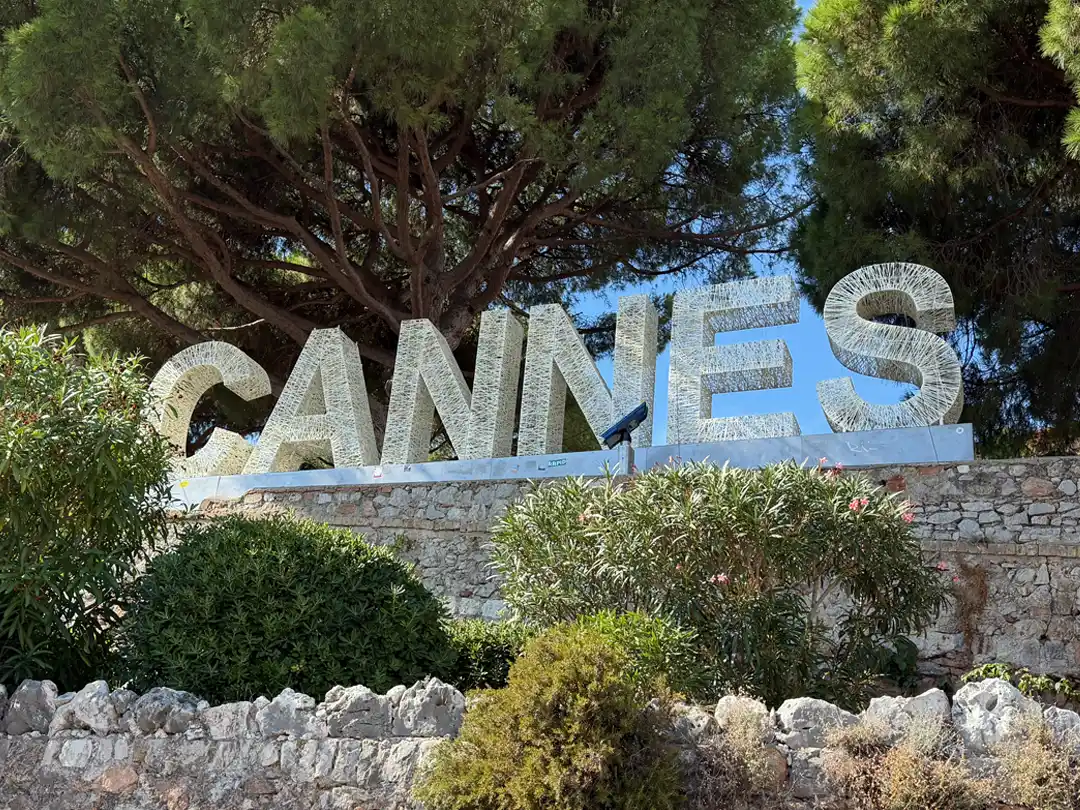
Cannes sign at the top of Le Suquet hill
We anchored off Cannes and arrived by tender, ready to step into its Riviera glamour.
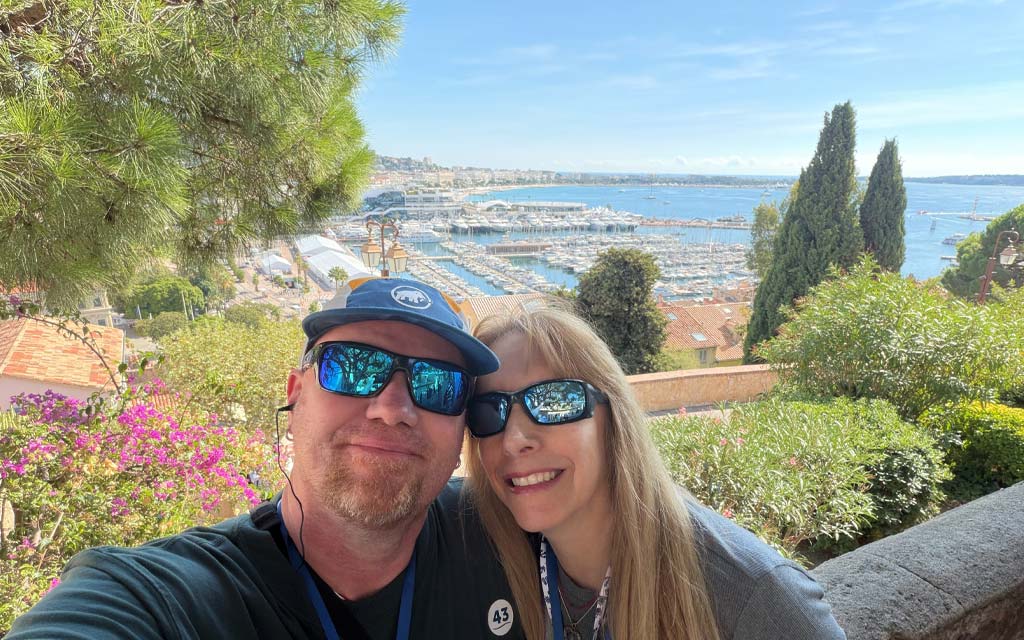
Our selfie with the Cannes port in the background.

After Palma de Mallorca, our next stop was Cannes and I was excited to finally see the French Riviera in person. Long before red carpets and luxury yachts, this shoreline began as an ancient Ligurian settlement, later touched by Greek traders and then folded into the Roman coastal network before evolving again under medieval fortifications. Unlike some of the cities we’ve explored, Cannes does not preserve a formal Roman Cardo or Decumanus — it grew organically on its hillside rather than from a rigid imperial grid.
Our plan was simple: climb to the top of Le Suquet to visit Notre-Dame de l Esperance and the old clock tower, wander the narrow streets filled with small shops and cafés, and then descend toward the waterfront and the home of the Cannes Film Festival, where medieval stone gives way to modern glamour.
We arrived by tender, gliding across the calm blue waters of the Bay of Cannes under bright sunshine, which made the approach feel cinematic from the very start. Along the shoreline, sandy beaches stretched beside elegant promenades. And just inland, the bustling Marche Forville offered a taste of everyday Riviera life — fresh produce, seafood, and the kind of market energy that connects modern visitors to centuries of Mediterranean trade.
From Ship to Shore: Tendering Into Cannes
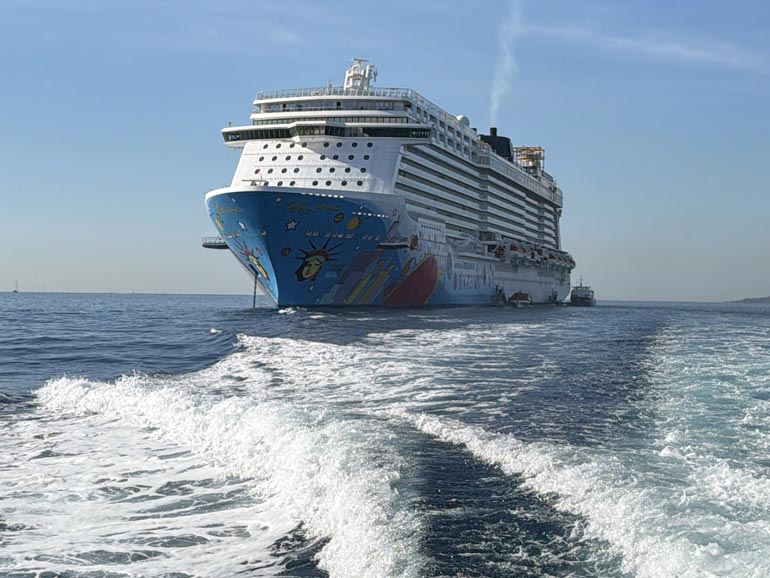
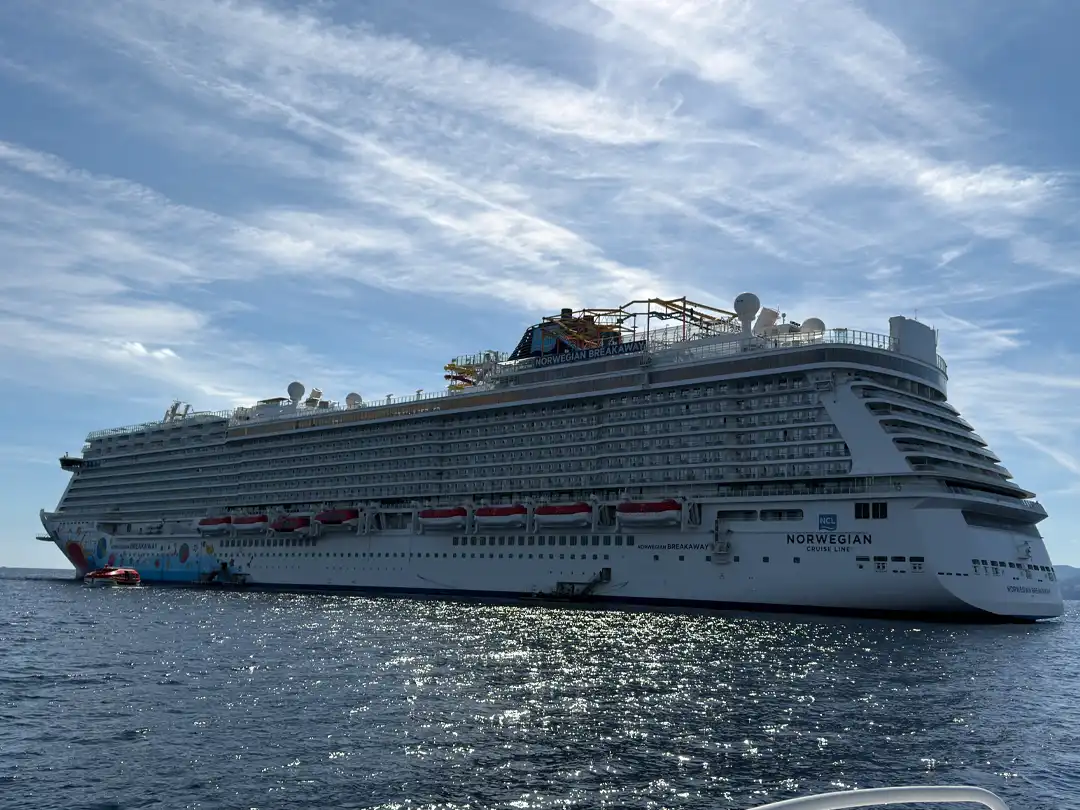
The view of our cruise ship from the Tender Boat
Because the water off Cannes is too shallow for large cruise ships to dock, we had to take a tender boat ashore — a smaller vessel holding about 200 passengers at a time that shuttles guests from ship to port. I’ll admit, I was excited. Stepping down from a floating high-rise into a compact boat instantly changes the scale of the experience.
It felt more nautical, more connected to the sea. Under a bright sun and calm waters in the Bay of Cannes, the short ride was smooth and unhurried. With the coastline ahead and the hills of Le Suquet rising in the distance, it felt less like disembarking and more like arriving — the way travelers have approached this harbor for centuries, by boat.
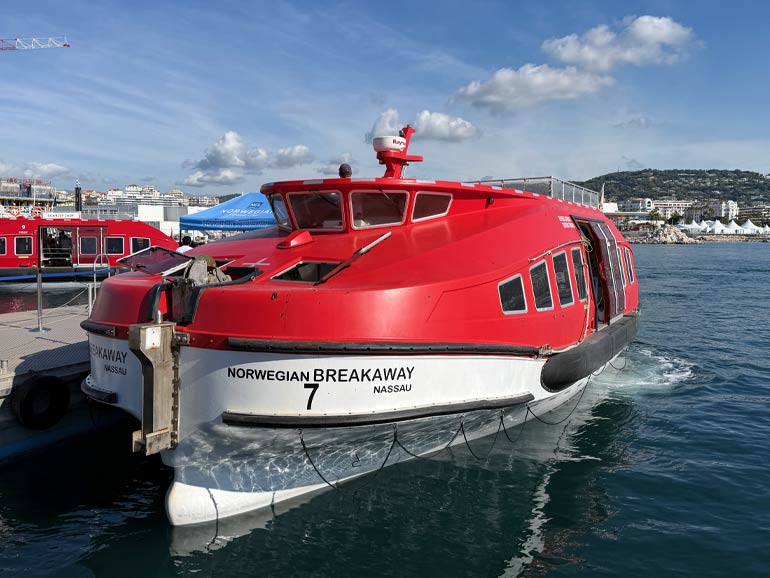
Norwegian Tender Boat
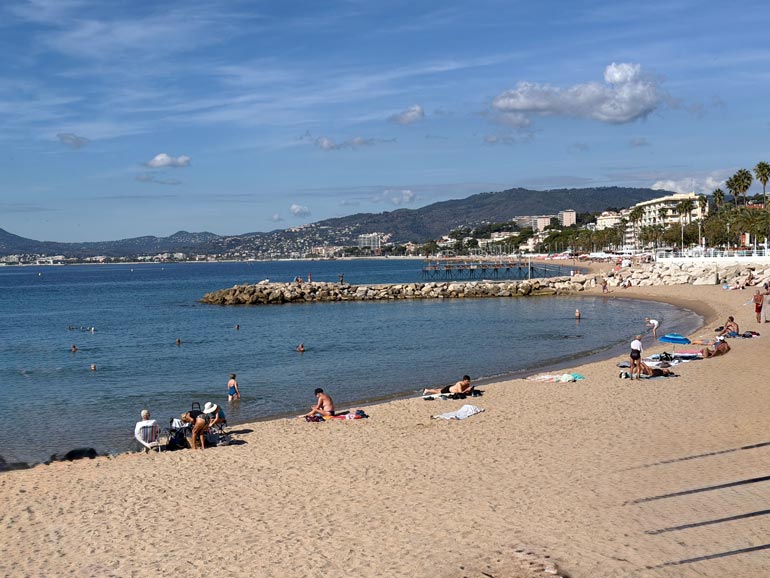
Cannes Beach
From Harbor to Hilltop: Le Suquet
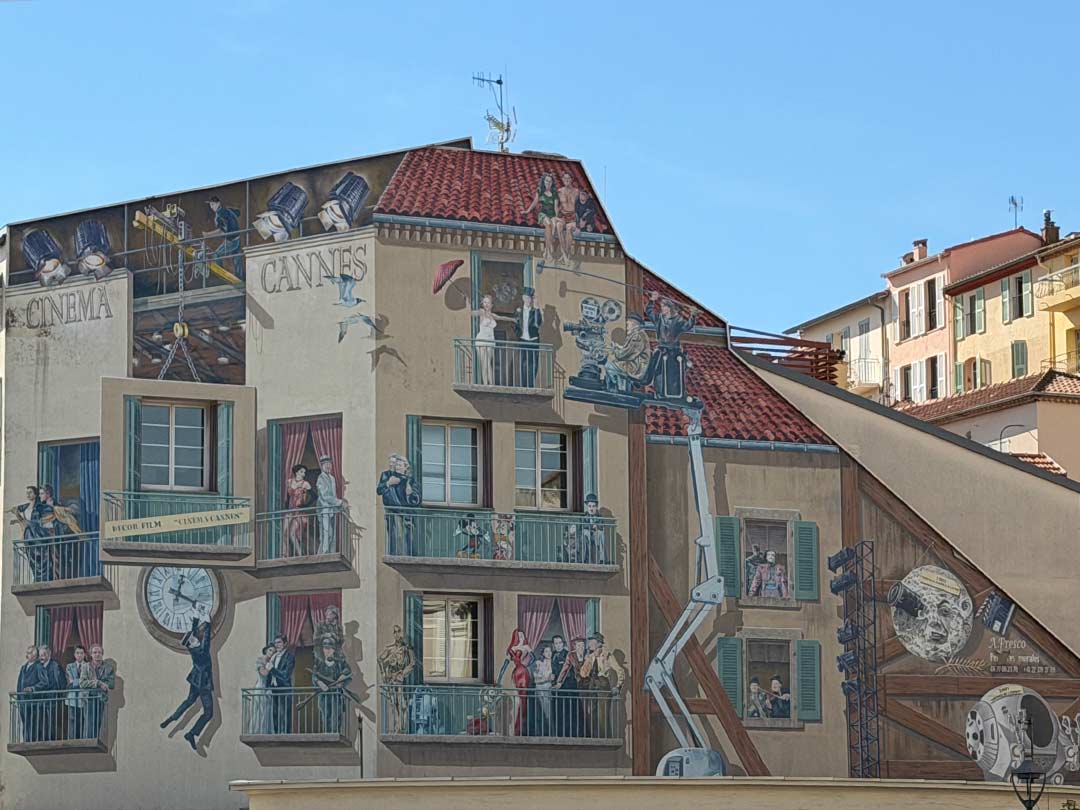
Les Murs Peints - The Painted Walls (How many films can you name?)
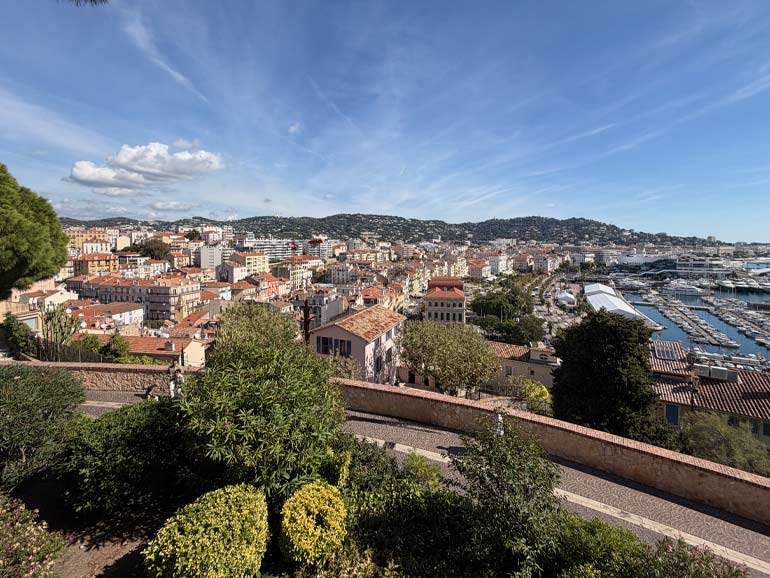
Looking across Cannes
Climbing into Le Suquet (Old Town), the modern Riviera slowly gives way to stone lanes and steep steps that feel far older than the film murals below. Along the way, we passed several of the famous Les Murs Peints — large painted walls celebrating cinema history — a colorful reminder that Cannes proudly layers art over antiquity.
At the summit stands Notre-Dame de l Esperance, a Gothic church built in the 16th century on one of the highest points of the old town. Inside, the air felt cool and quiet, the stone walls simple but dignified, offering a peaceful contrast to the energy of the waterfront below. Just steps away rises the medieval Tour du Suquet at Place de la Castre, its clock tower watching over the harbor as it has for centuries.
From this vantage point, you can see the curve of the bay, the beaches, the marina, and beyond — a view that reminds you why this hill mattered long before Cannes became synonymous with glamour.
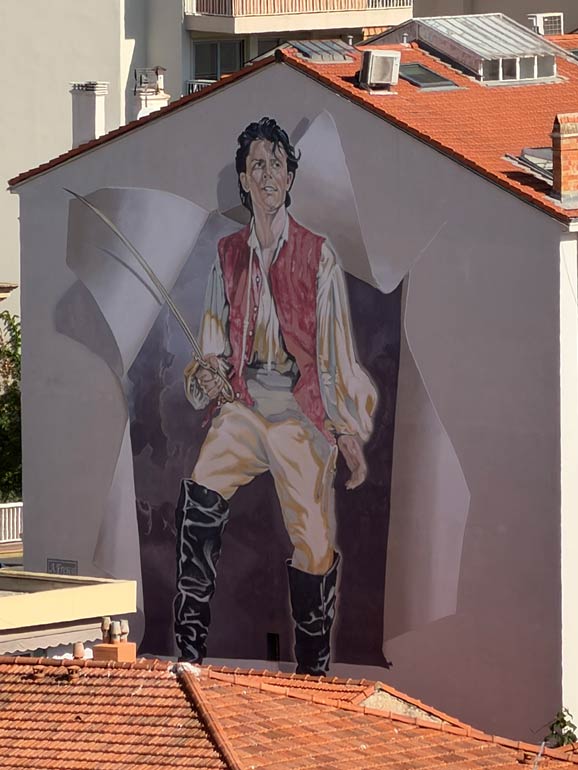
Film Mural
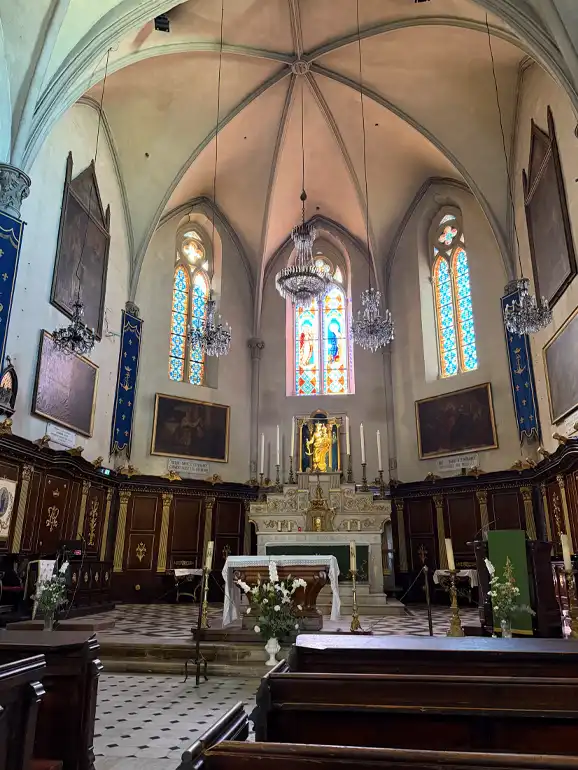
Inside of Notre Dame de l'Esperance
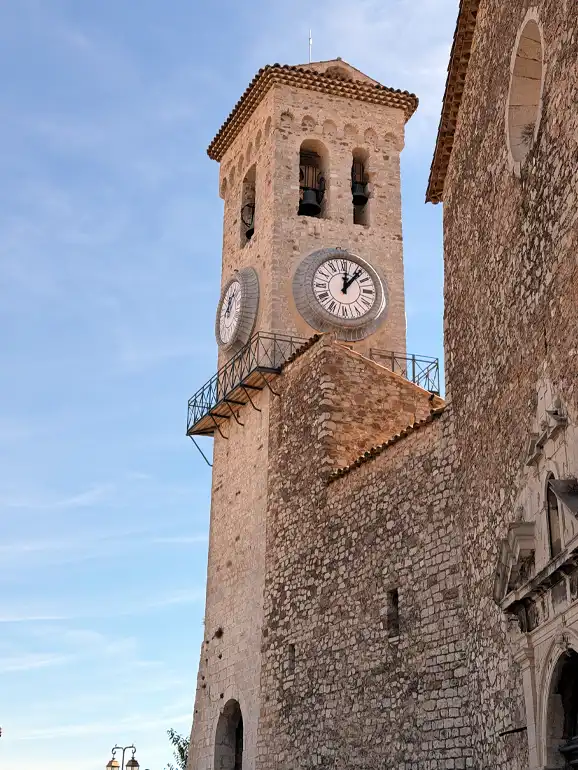
Place de la Castre Clock Tower
Markets and Cobblestones in Le Suquet
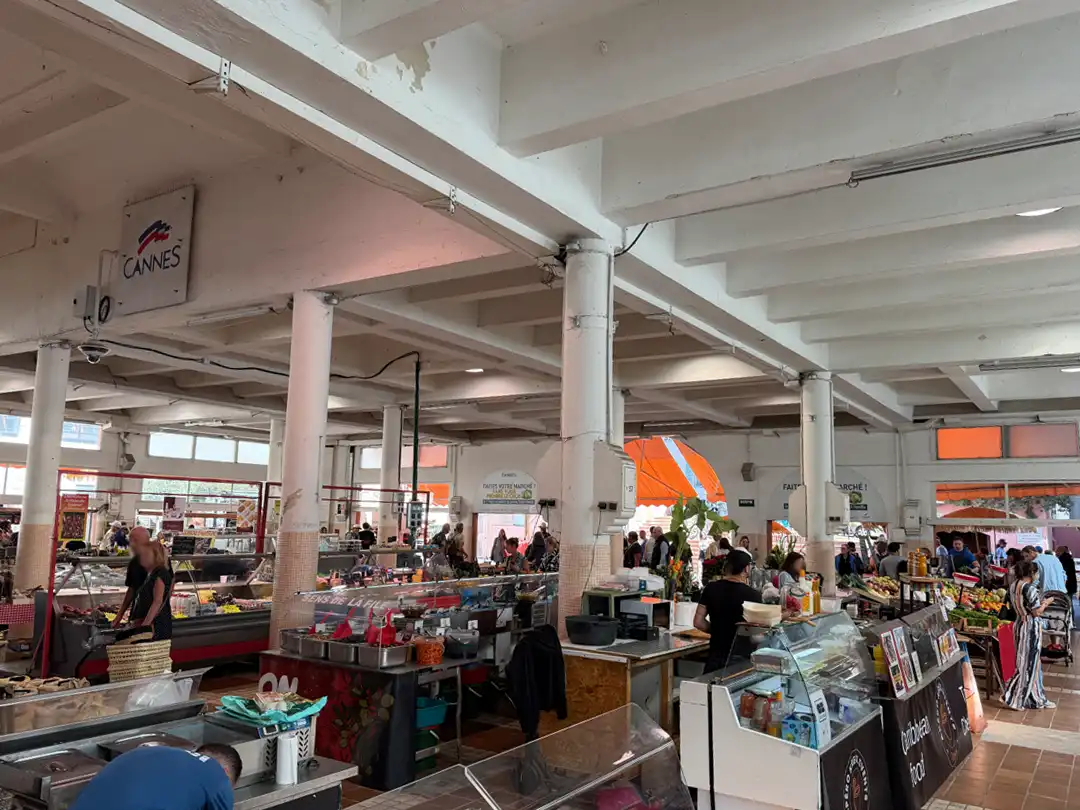
The famous Marché Forville
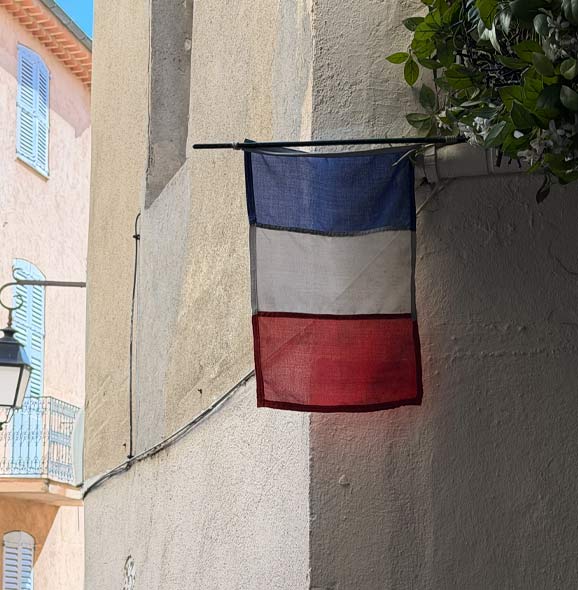
Descending from the hilltop, Le Suquet softens from stone ramparts to café tables and shopfronts, where everyday Riviera life replaces medieval watchpoints. A stop at Marche Forville ,where we had fresh baklava, captures the heartbeat of the neighborhood — stalls overflowing with olives, cheeses, fresh seafood, and produce that feels unmistakably Mediterranean.
Just beyond the market, we wandered along Rue Meynadier a narrow cobbled pedestrian street lined with bakeries, small boutiques, and family-run eateries tucked beneath shuttered windows. We had a wonderful lunch at La Farigoule and Orangina, our favorite European soda. It’s the kind of street where you slow down without meaning to.
Along the way, we noticed a colorful ceramic mosaic from Poterie Ceramique du Colombier, a reminder of the region’s strong artistic and pottery traditions — Vallauris, just nearby, became famous for ceramics in the 20th century. Here in Le Suquet, shopping and eating aren’t just tourist activities; they feel like the continuation of a marketplace culture that has sustained this hillside community for centuries.
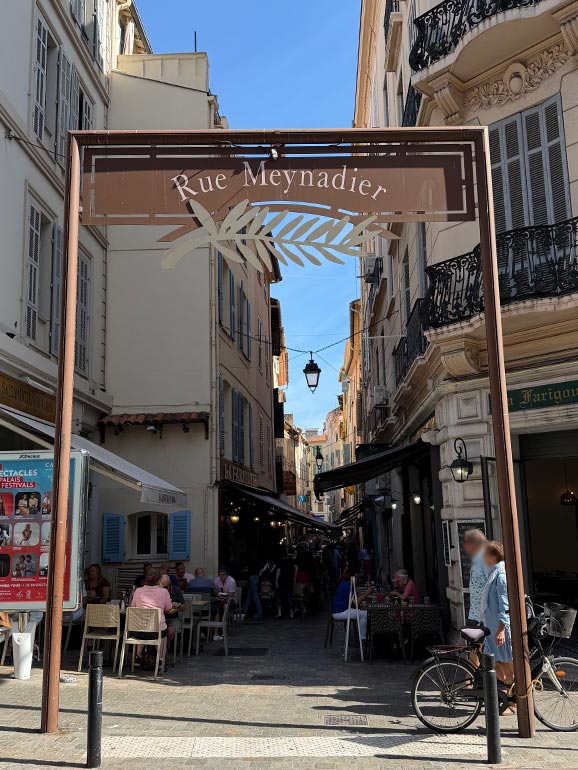
Rue Meynadier
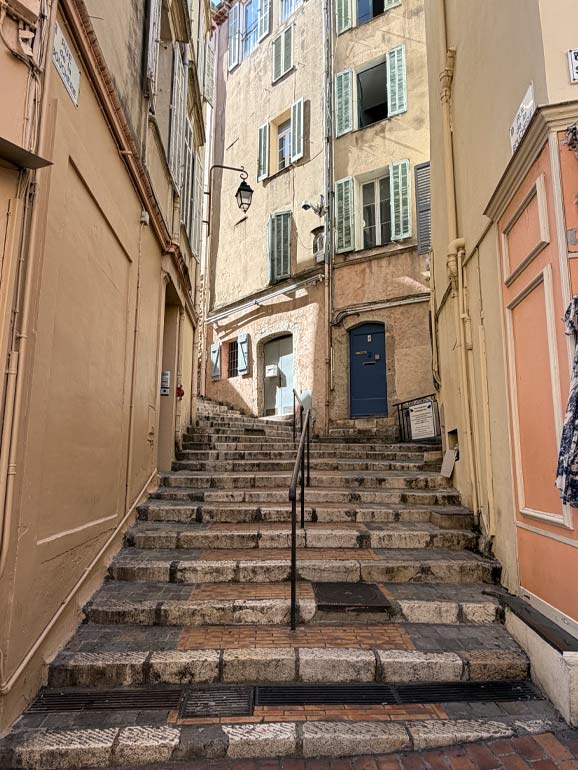
Narrow cobbled walking streets
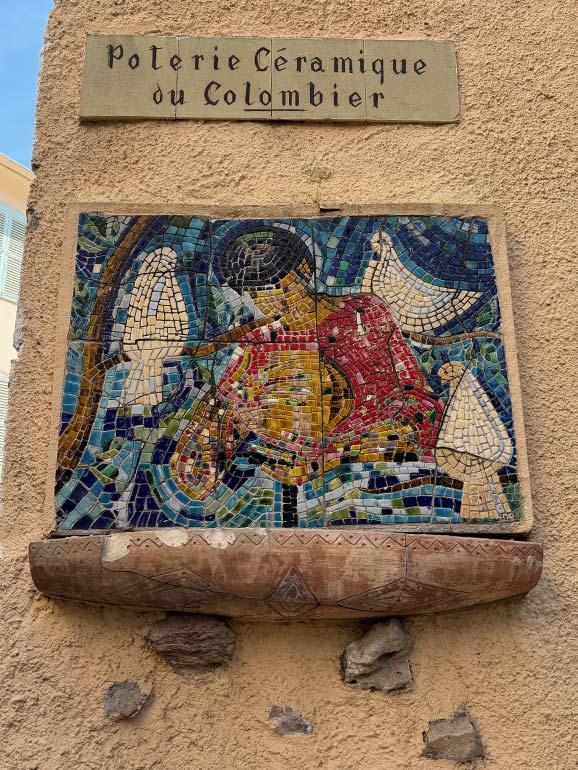
Poterie Céramique du Colombier
The Palais des Festivals: Home of the Red Carpet
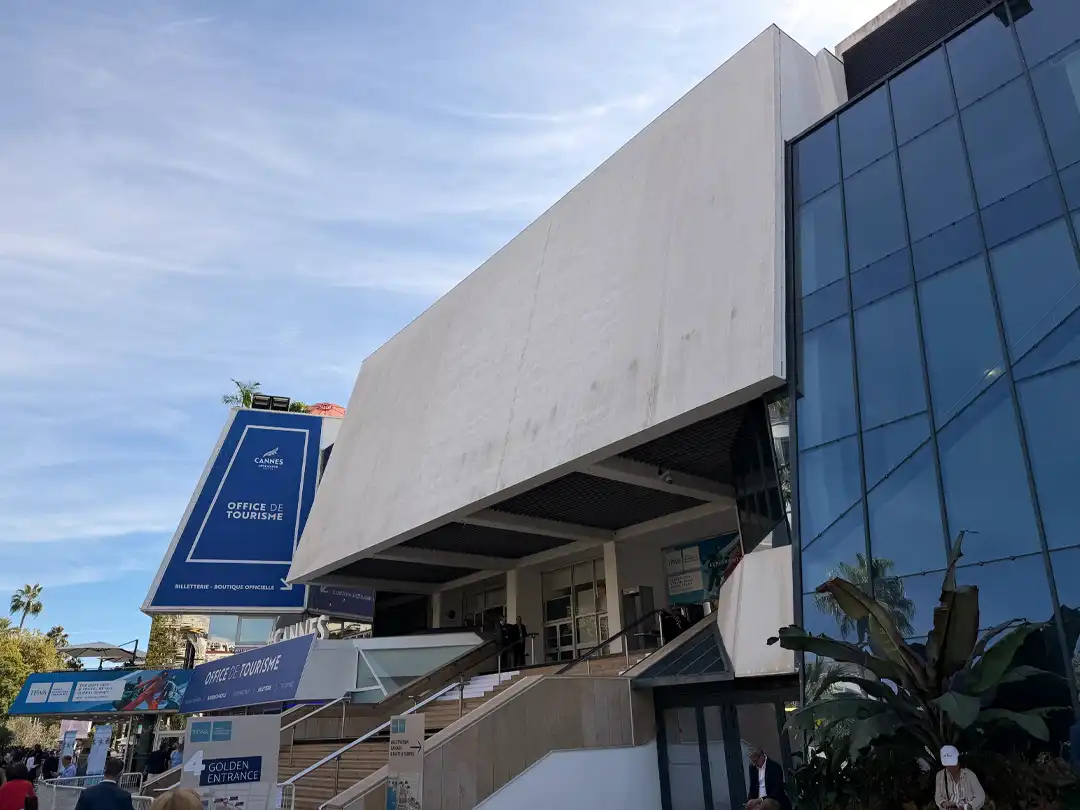
Palais des Festivals et des Congrès
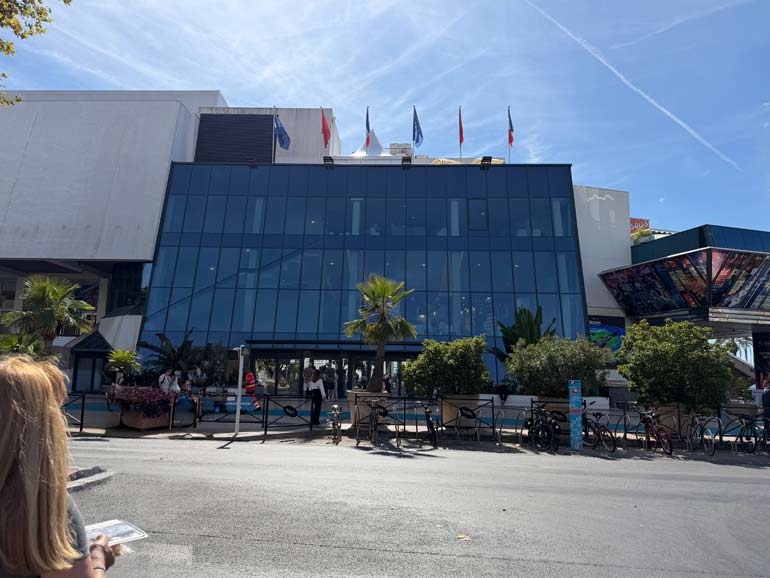
To complete our day excursion of Cannes, we made our way along the La Croisette to the iconic Palais des Festivals et des Congres, the modern stage of the Cannes Film Festival. Standing before its broad steps, it’s easy to imagine the flash of cameras and the sweep of evening gowns during festival season. But as a documentary filmmaker, I found myself looking past the red carpet to the technicians and storytellers behind the scenes—the same focus on authentic, field-verified narrative that drives my own documentary film production.
Just outside, we followed the Allee des Etoiles du Cinema, Cannes’ version of a Walk of Fame, where handprints from international film stars are set into the pavement.
Nearby, the Monument to Cinematography rises as a tribute to the art that reshaped this once-quiet fishing harbor into a global symbol of glamour. It’s a striking contrast — from medieval hilltop stones in Le Suquet to a waterfront devoted to cinema — proof that Cannes has reinvented itself as dramatically as any film it celebrates.
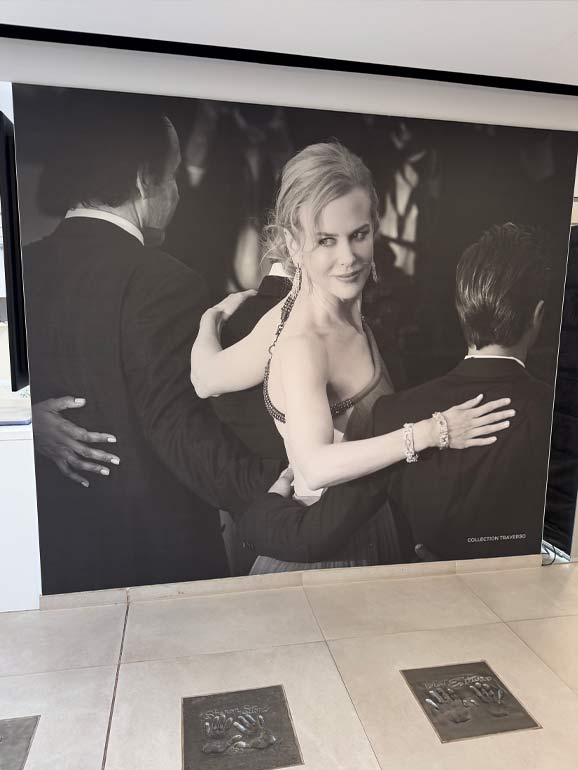
Cannes Walk of Fame
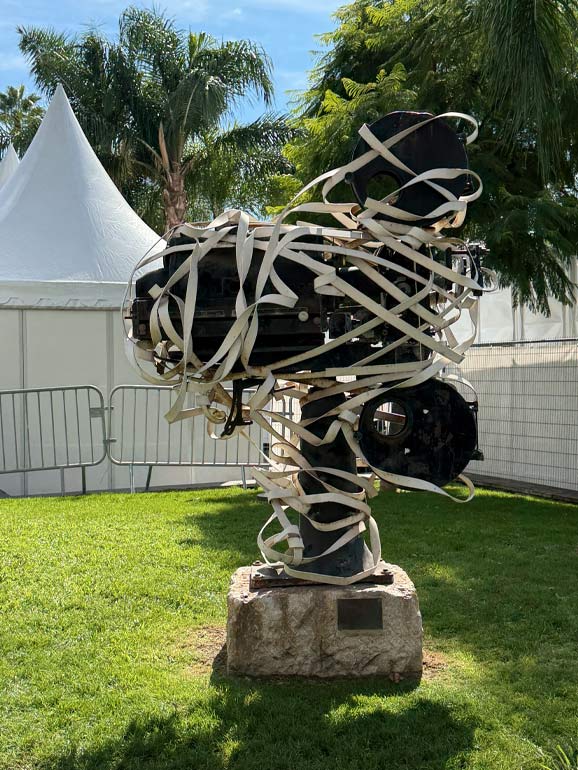
Monument to Cinematography by Max Carter
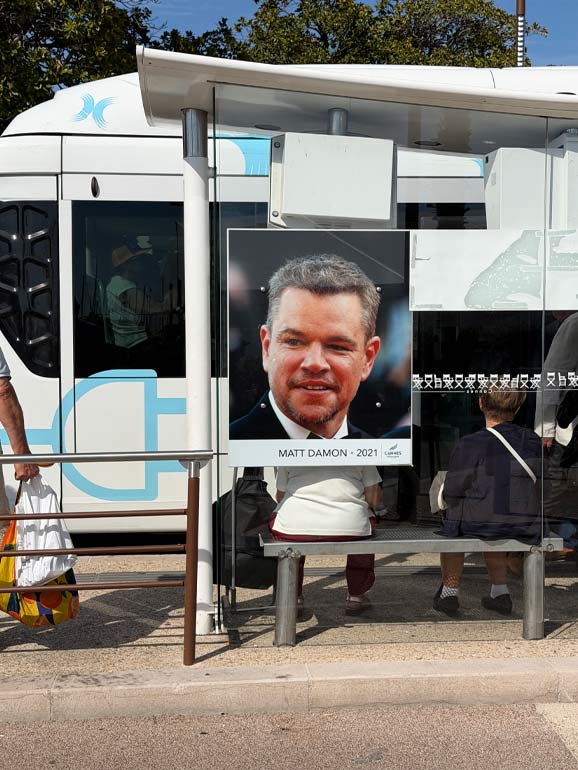
2021 Cannes Promotional Poster
Back to the Ship and Onward to Italy.
As our day adventure in Cannes was coming to an end, we made our way back toward the ship, retracing our steps along Boulevard de la Croisette before boarding the tender once again.
The ride back felt quieter and more reflective as the hill of slowly receded behind us. Cannes had revealed itself in layers — Ligurian beginnings, Greek influence, Roman presence without a rigid grid, medieval stone, bustling markets, and the polished glamour of cinema.
As our ship turned east toward Italy, I was already thinking about Florence, an ancient Roman settlement where the Cardo Maximus and Decumanus of Florence still quietly shape the city’s streets — another coastline, another chapter of history, and another ancient axis waiting to be traced beneath modern footsteps.