

Cub Lake hike in Rocky Mountain National Park. This is part of my 40 years of hiking in Rocky Mountain National Park Series.
Winter hiking in Rocky Mountain National Park can be both enjoyable and dangerous. Bring the 10 essentials, extra gear to stay warm, always monitor the weather conditions and current avalanche conditions. Be prepared to turn around if conditions worsen.
Details:
- 8620 Feet
- Round Trip Distance: 4.87 Miles
- Elevation Gain: 620 feet
- Difficulty: easy
- Route: Cub Lake Trail
- Time: Less than 2 hours
- Date Hiked: Feb 21, 2020
For more information about hiking in the winter, please visit the Rocky Mountain National Park website.
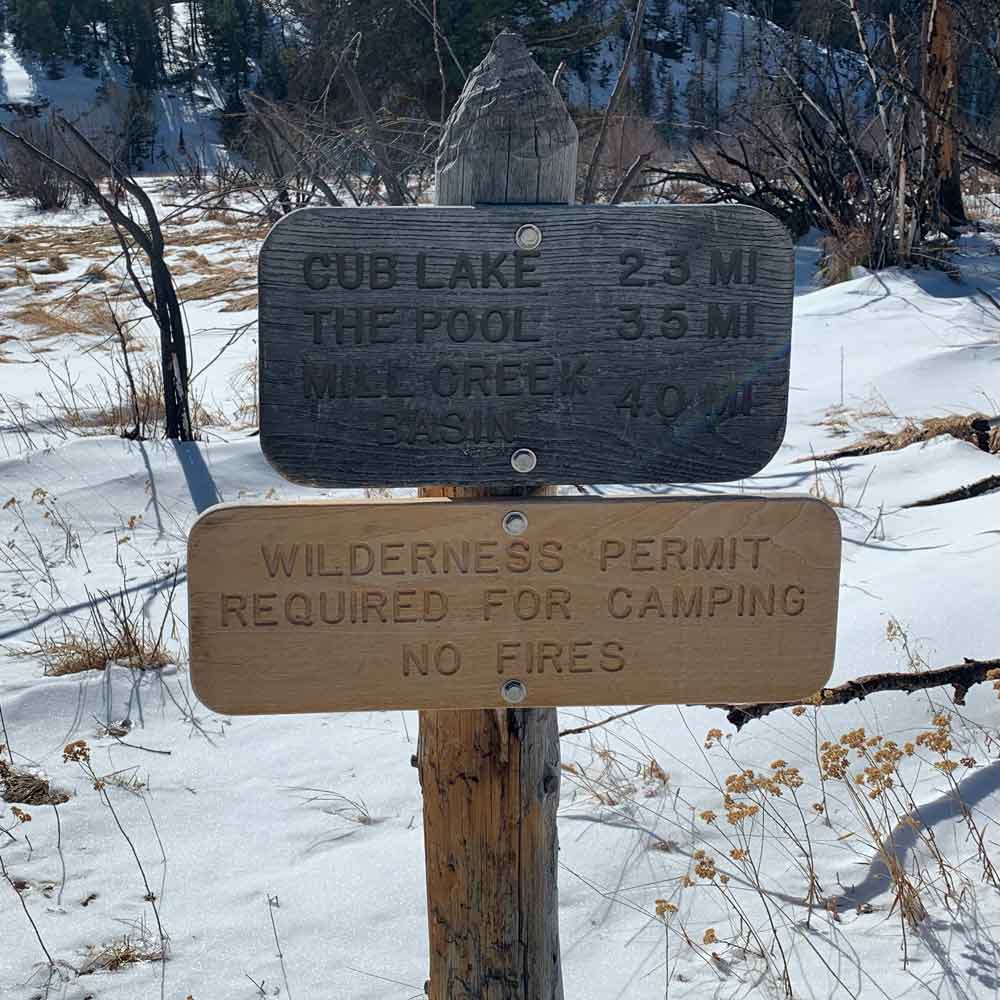
A return to one of my first childhood hikes, this time in the quiet beauty of winter
Cub Lake was one of the first hikes I did as a child in Rocky Mountain National Park. I first hiked it in 1986 with my grandparents and have returned several times since. However, I believe this was the first time I had hiked it in winter. Returning to a familiar trail in a different season always brings a new perspective, and I was curious to see how Cub Lake would look covered in snow. Trails that feel busy and lively in the summer often become quiet and peaceful in winter, and I was looking forward to experiencing that contrast.
It was a nice day in the park. The temperature was in the 30s, and there wasn’t much snow at the trailhead. The road to the trailhead was mostly snow-free, so getting there was easy. The sky was clear, and the air had that crisp winter feel that often makes for great hiking conditions. Although there wasn’t much snow at lower elevations, I knew conditions could change quickly as the trail gained elevation and moved into shaded areas.
For winter hikes, I always bring snowshoes and microspikes, deciding which to use if I’m not carrying both. Even when the trailhead appears dry, snow and ice can quickly appear farther along the trail. On this day, I decided to leave the snowshoes in the car and hike with just my microspikes. The trail conditions near the start didn’t seem to require snowshoes, and microspikes would provide enough traction if I encountered icy sections.
I also carry extra gear when hiking in winter because conditions can change at any time. Winter hiking in Rocky Mountain National Park can be both enjoyable and dangerous. Temperatures can drop quickly, winds can pick up, and storms can move in unexpectedly. Bringing extra layers, gloves, and other essential gear helps ensure that I am prepared for changing conditions. Being prepared also means being willing to turn around if necessary, something that is always important when hiking in the mountains during winter.
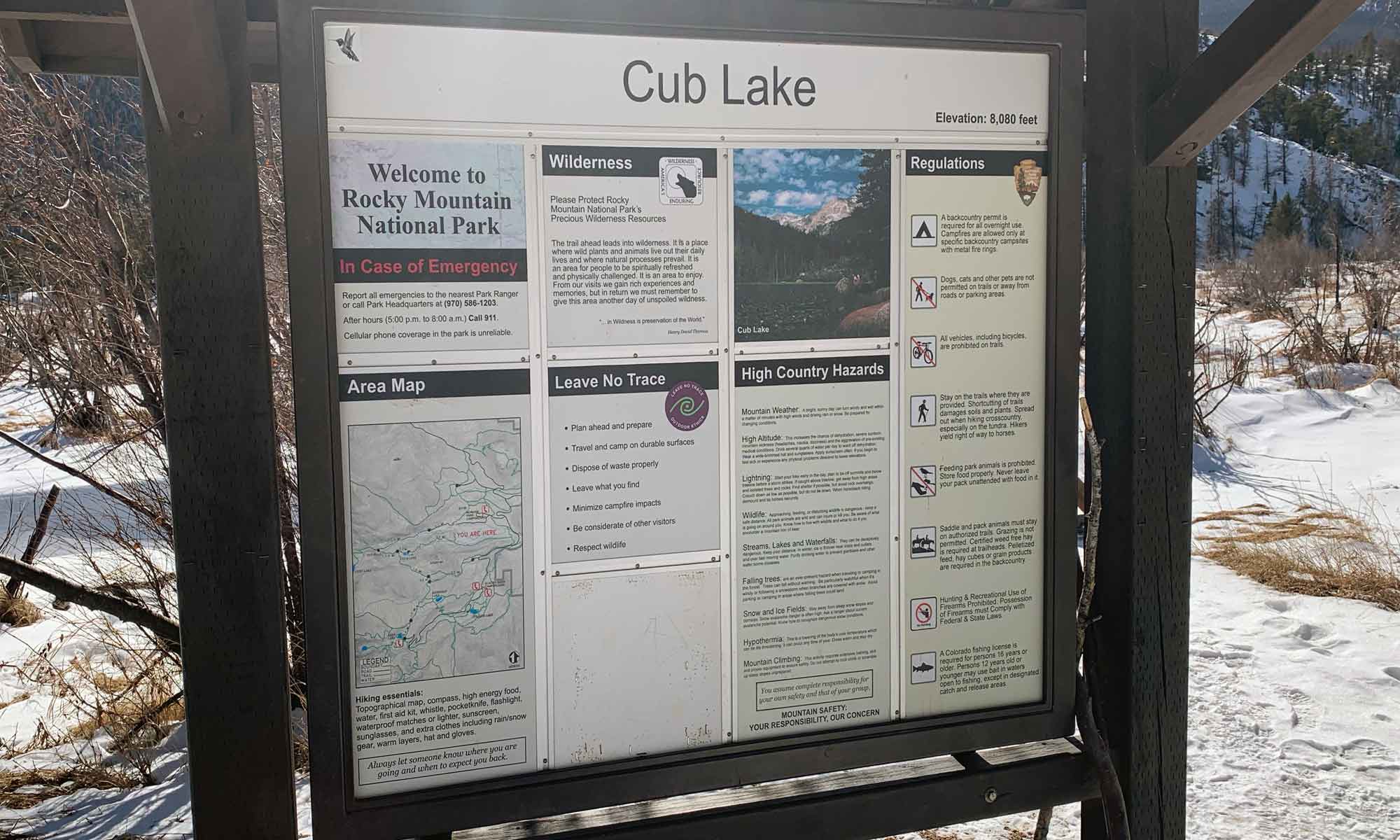
Cub Lake Trailhead Sign
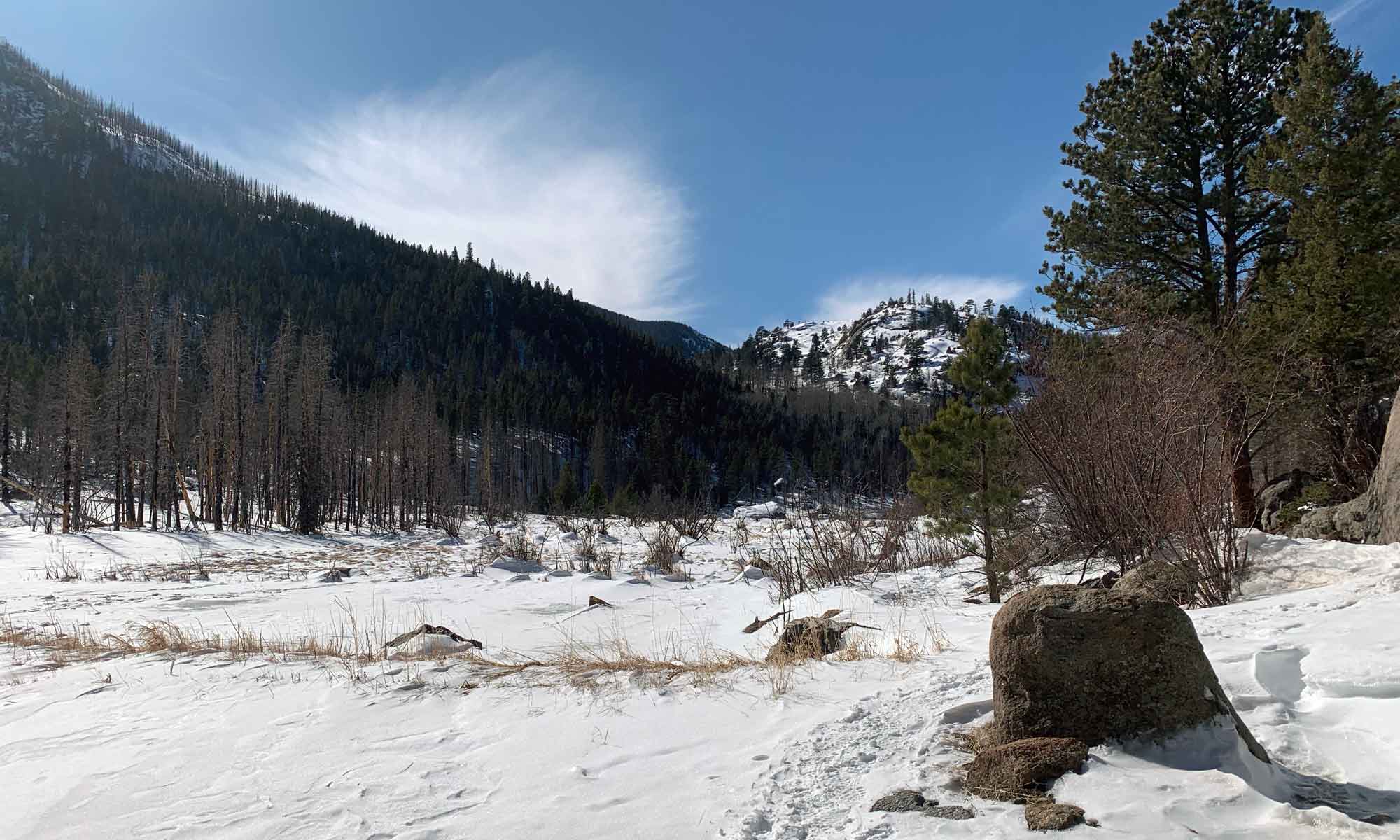
Hiking along the western edge of Moraine Park
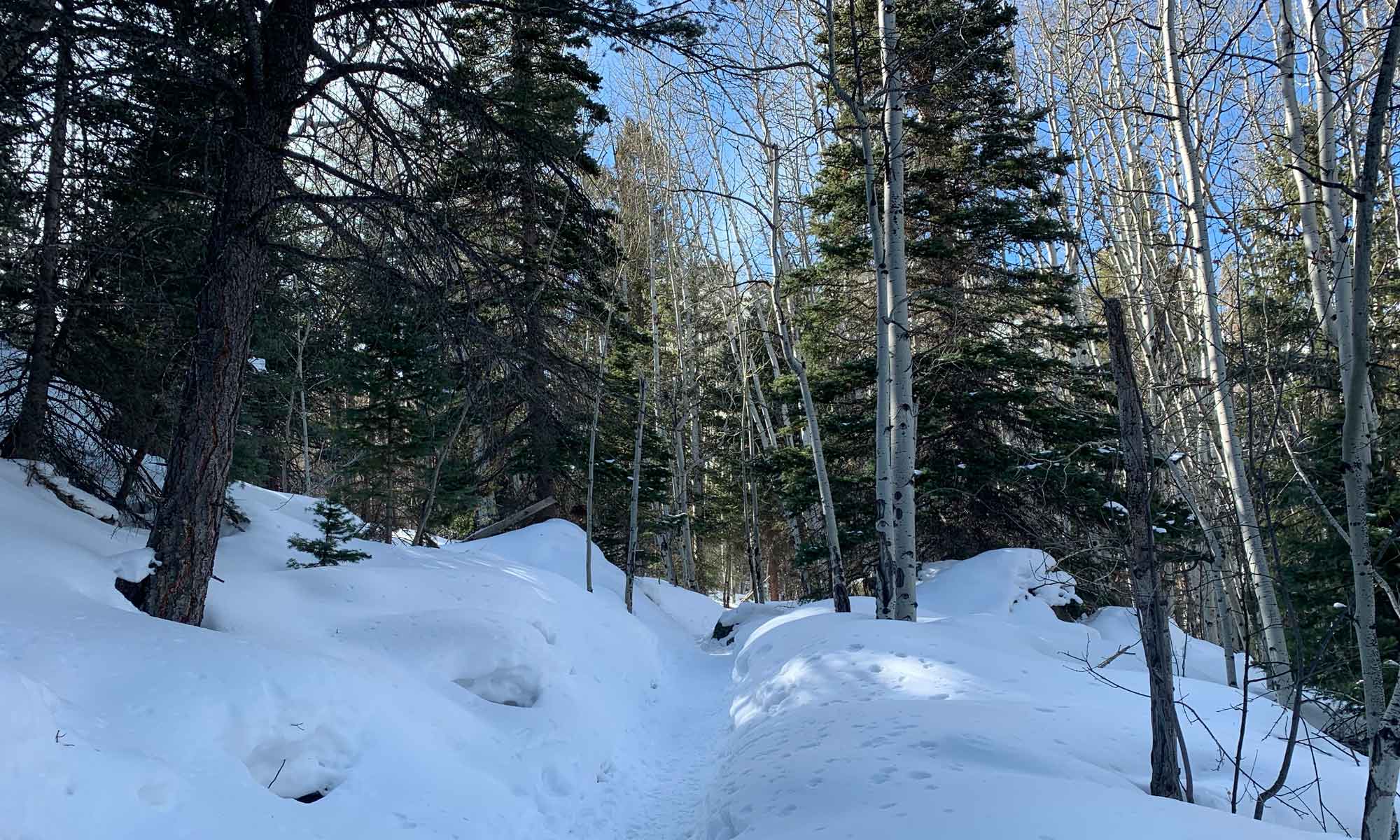
Climbing up through the trees, I never tire of this view.
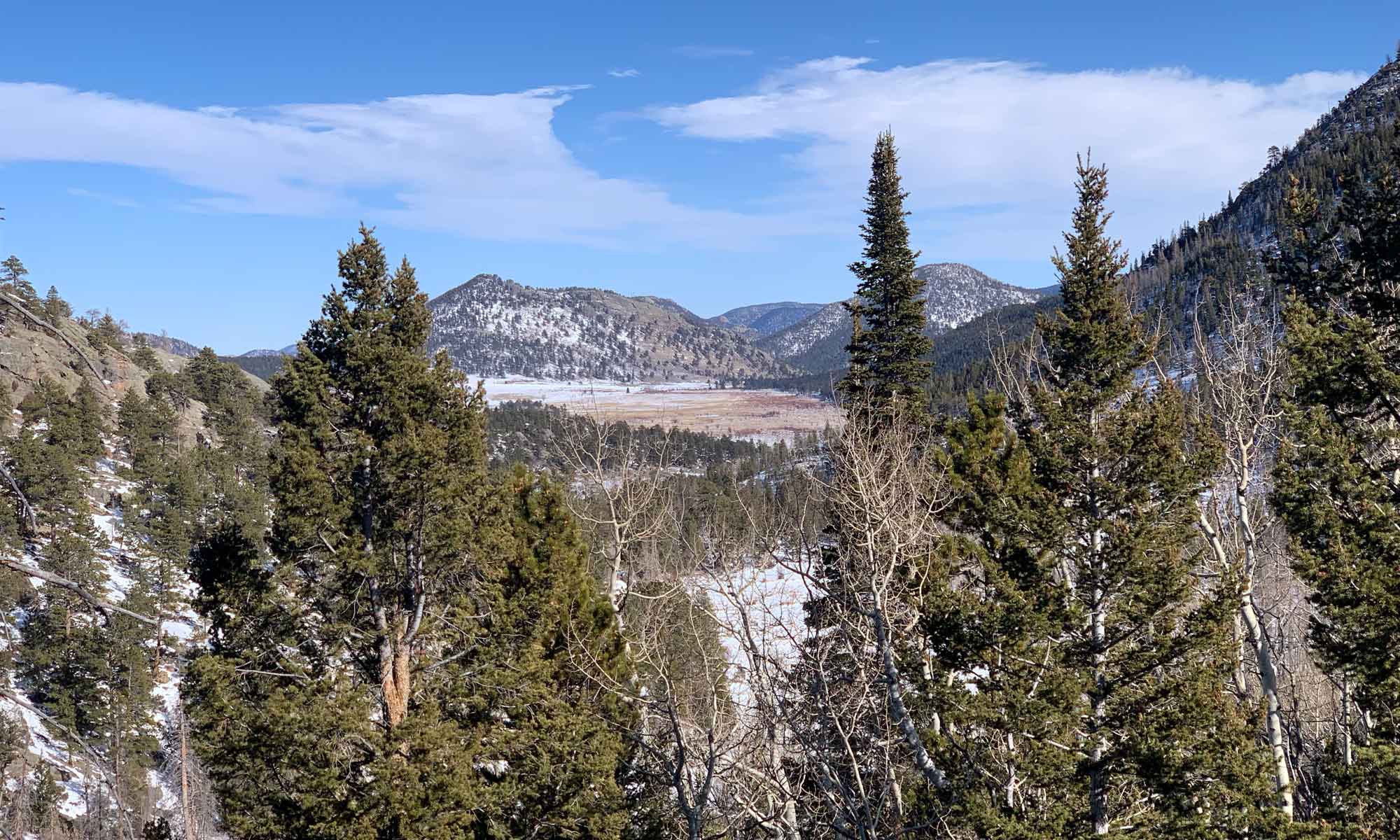
Looking back east at Moraine Park
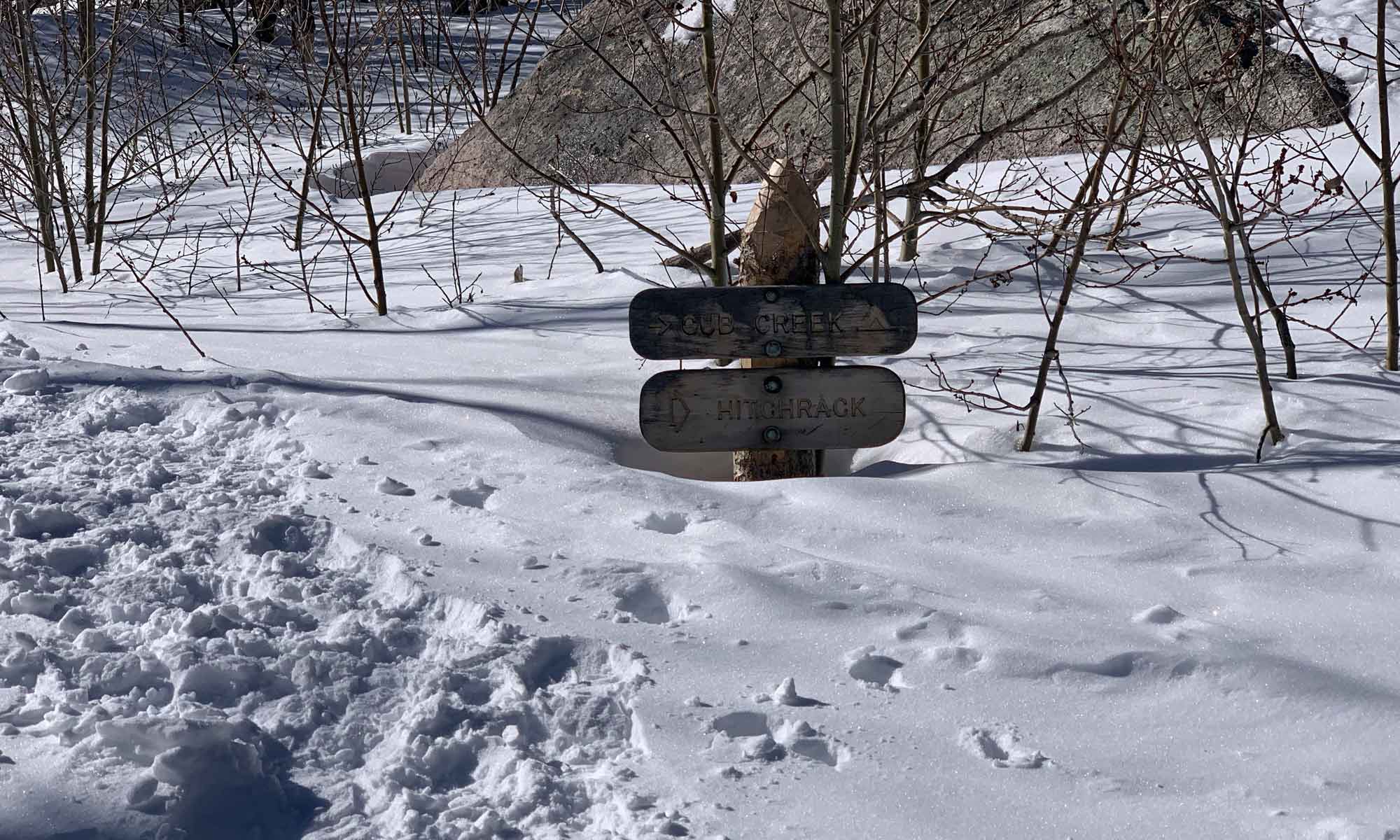
The snow was almost as high as the Hitch Rack sign.
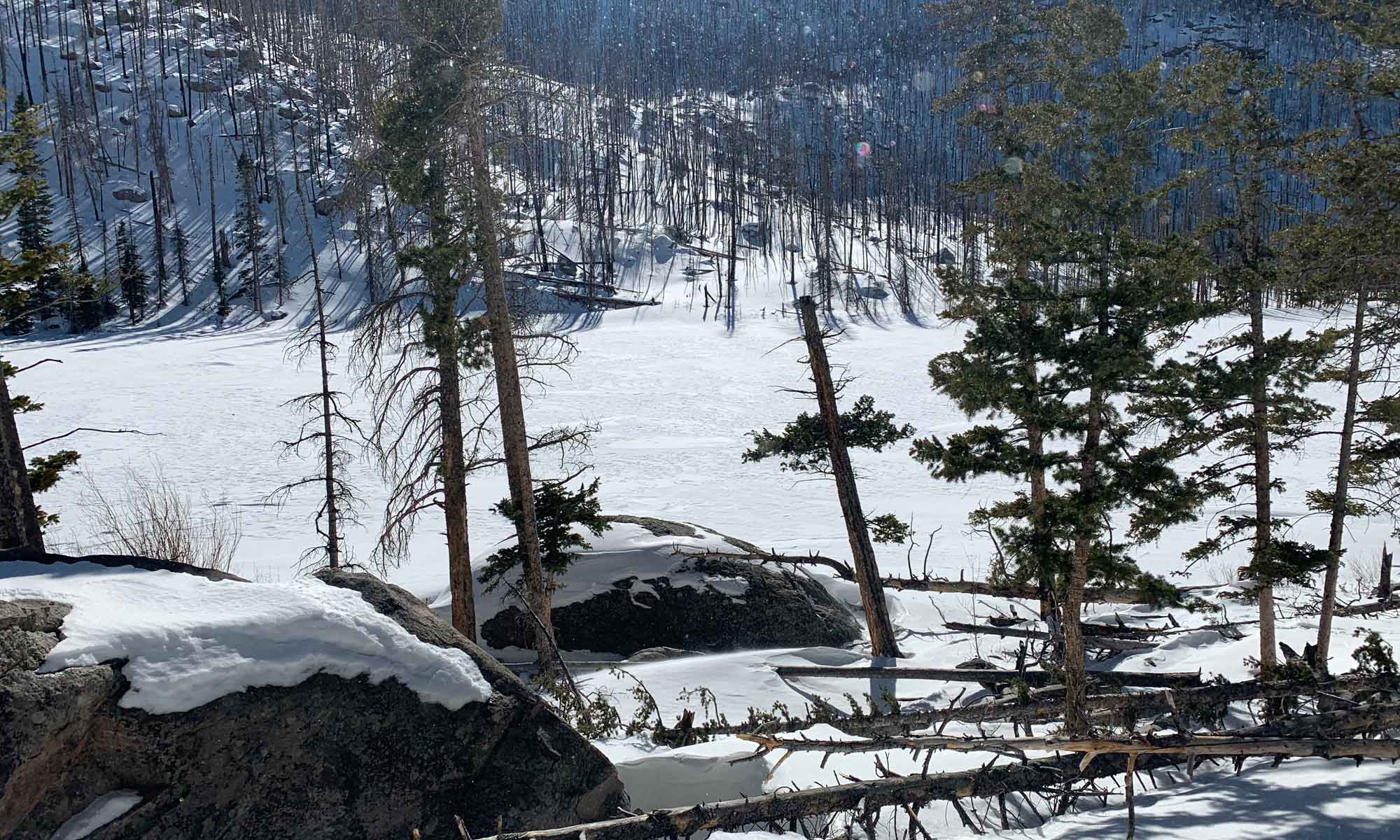
Cub Lake covered in a blanket of snow.
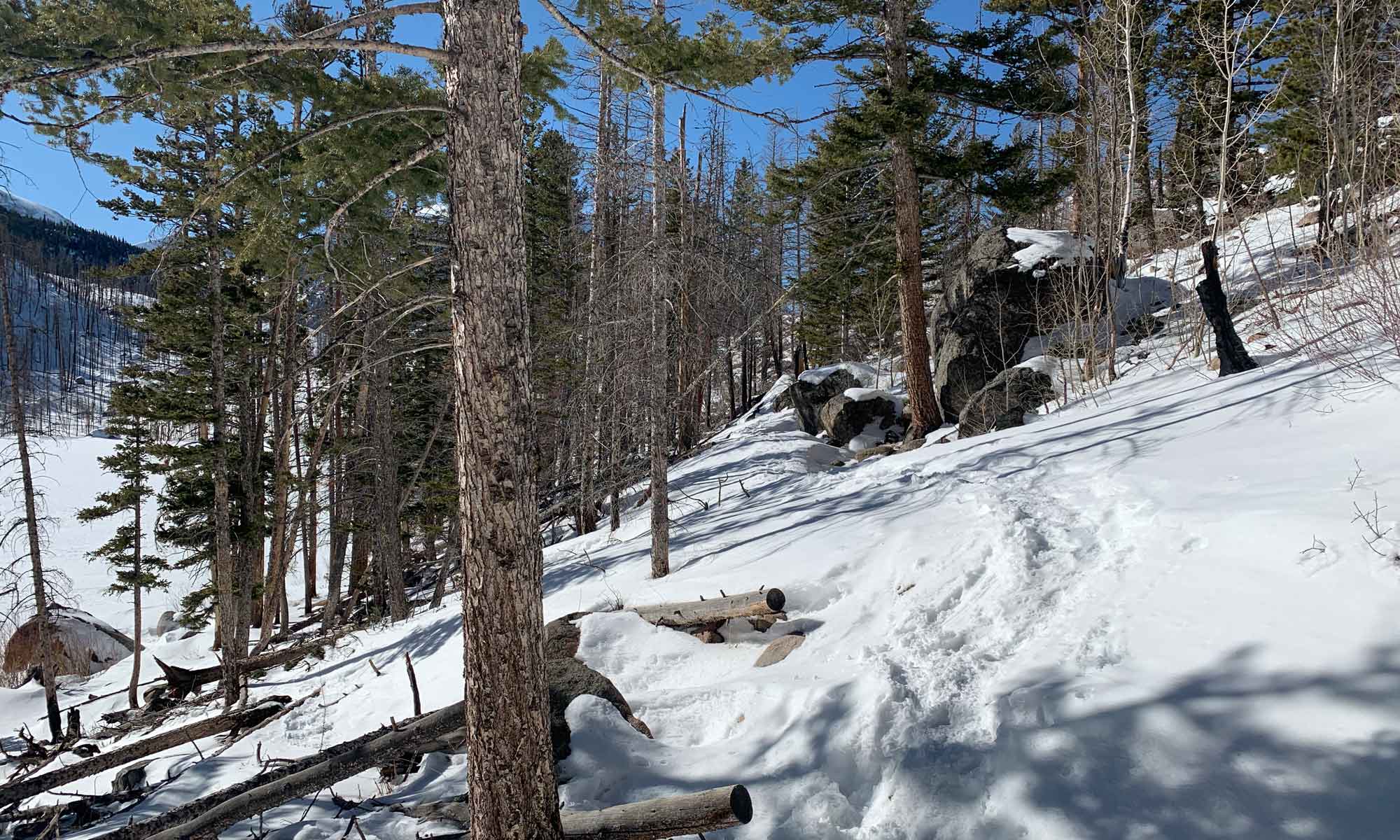
There was a lot of snow at Cub Lake
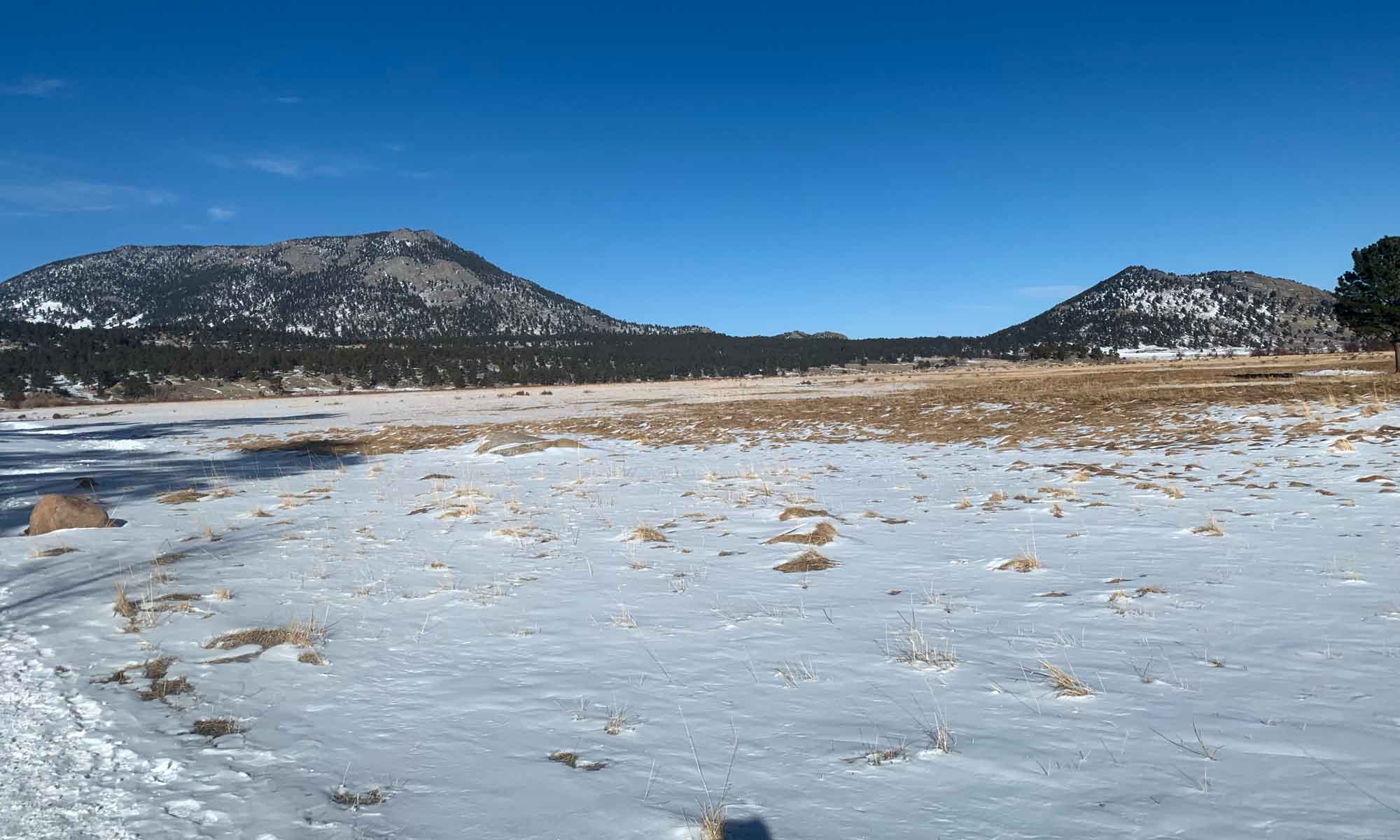
Looking east across Moraine Park
Returning to Cub Lake in winter brought back memories of hiking here as a child, while also offering a completely different experience. The quiet trail, snow-covered landscape, and crisp mountain air made this winter hike especially memorable. Even after many visits over the years, Cub Lake continues to be one of my favorite hikes in Rocky Mountain National Park.

