

Taormina
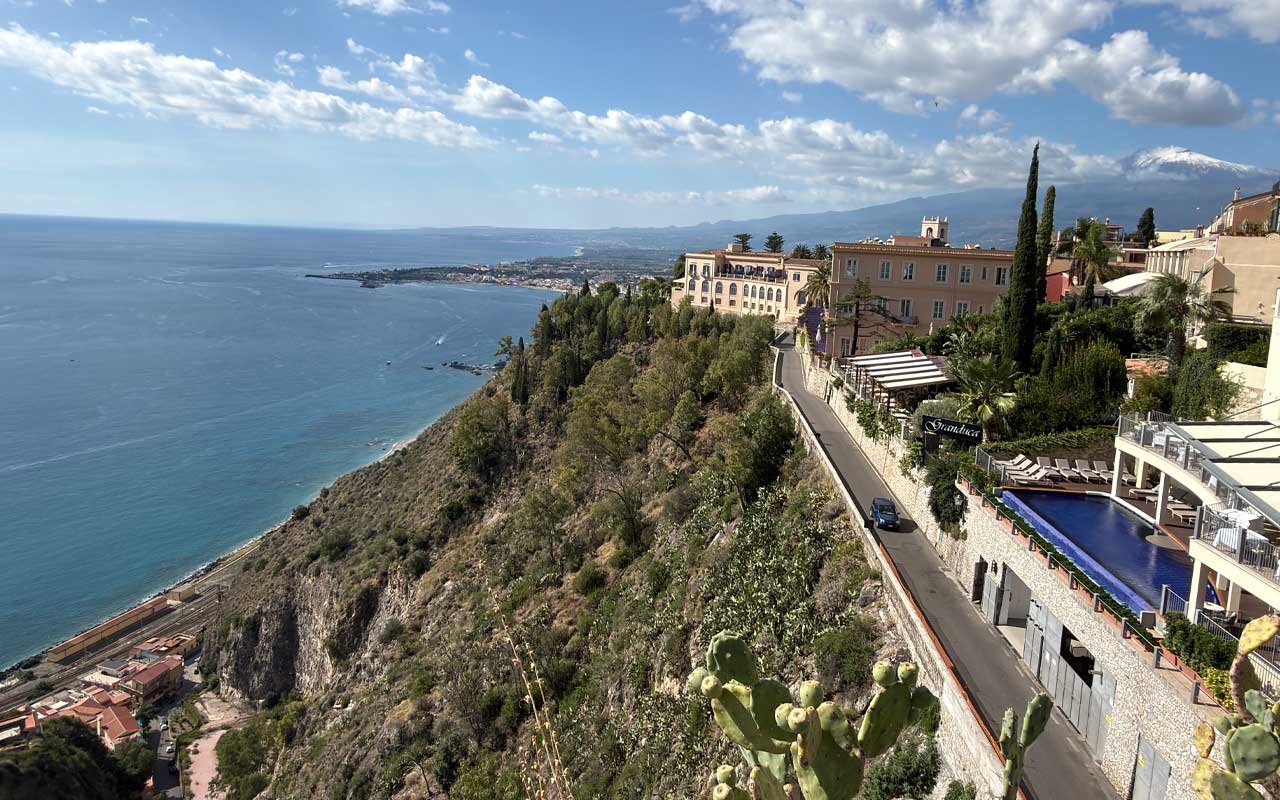
We docked in Messina, but our sights were set on the idyllic town of Taormina.
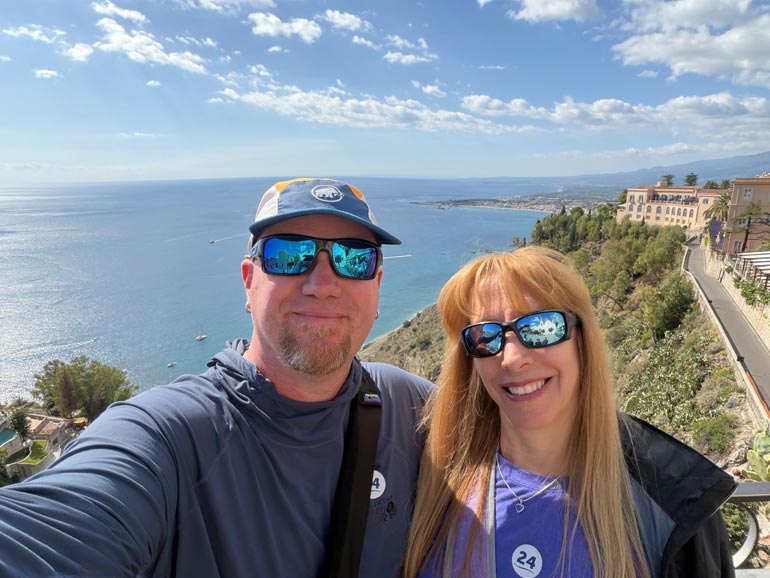
Overlooking the ocean from Piazza IX Aprile
Mount Etna
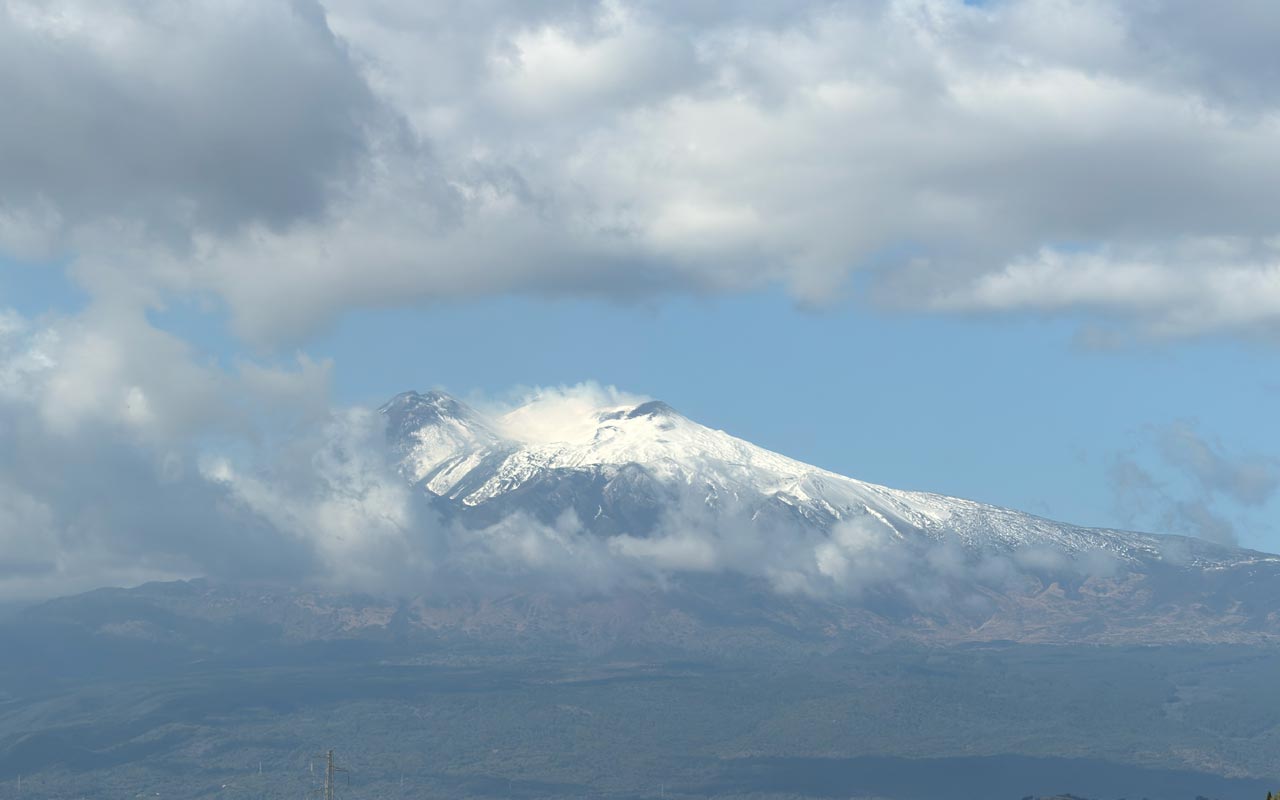
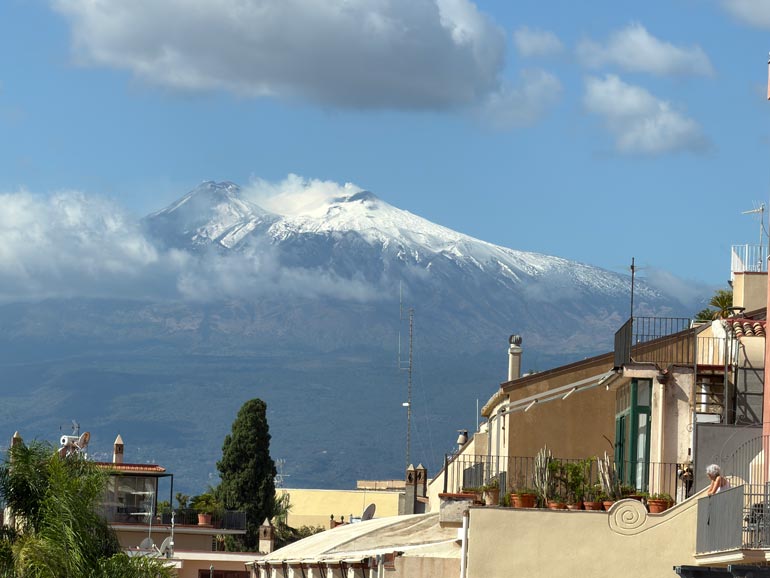
From almost every terrace in Taormina, your eyes are eventually pulled toward the smoky silhouette of Mount Etnarising beyond the Ionian Sea. Etna is a classic stratovolcano—built from layer upon layer of hardened lava, ash, and volcanic debris—giving it that powerful, symmetrical profile.
It remains one of the most active volcanoes in the world, frequently rumbling, steaming, and occasionally sending lava flows down its flanks. Sitting at roughly 3,403 meters (11,165 feet) above sea level—though its height changes slightly after major eruptions—Etna absolutely dwarfs Taormina, which sits perched at about 200 meters (669 feet) above the water.
From town, you feel elevated and dramatic… until you glance up at Etna and realize you’re standing on a balcony beneath a giant.
Walking the Corso Umberto I (The Decumanus Maximus of Taormina)

Visual reconstruction and Roman grid infographic created with Google Gemini (Nano Banana 2
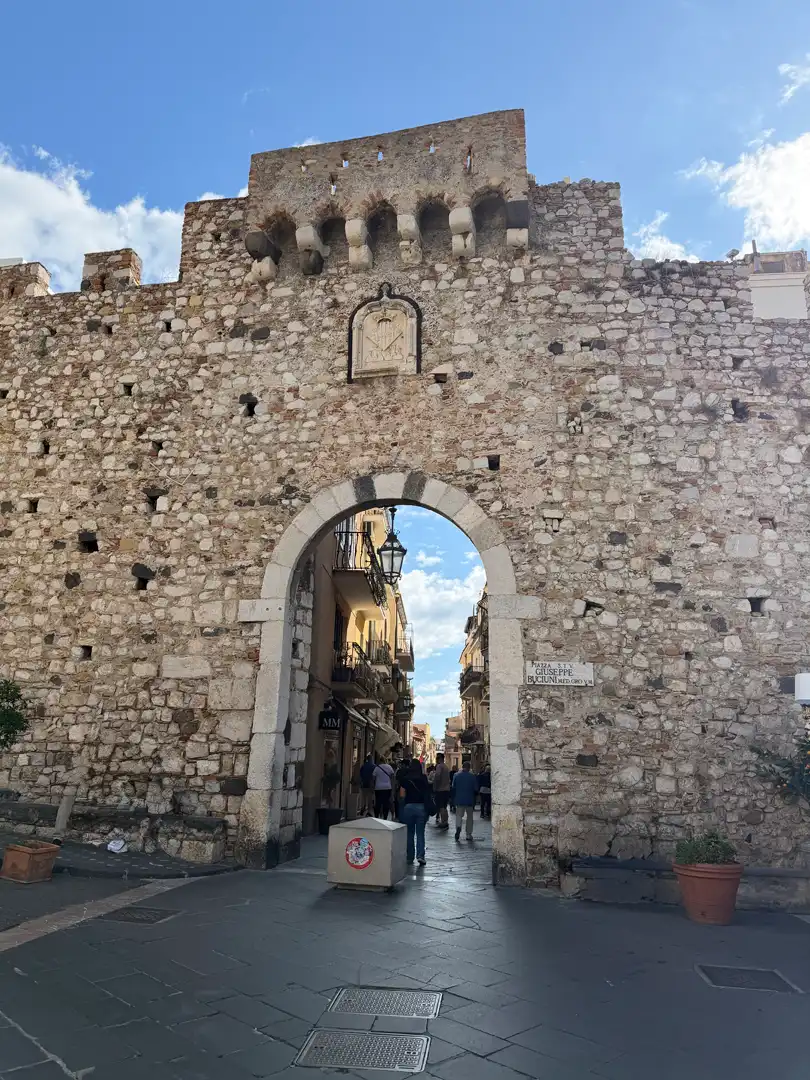
Porta Catania Gate
We entered Taormina through the stone arch of Porta Catania, stepping from the modern world into a street that has guided footsteps for centuries. As you continue along Corso Umberto I, you are likely tracing the line of the ancient east–west axis — the Decumanus Maximus — adapted to the hillside but still directing movement through the historic center. This line runs straight through town toward Porta Messina, forming the classic gate-to-gate alignment so typical of Roman planning.
But before it was a Roman Decumanus, this route likely functioned as a Greek plateia, a broad civic street, at the heart of Hellenistic Tauromenion. When the Romans arrived, they did not erase that structure. Instead, the Roman engineers adapted it by absorbing existing Greek routes and integrating them into their system of the Roman Grid.
Cardo Traveler Tip: Other cities where you can still trace the Roman street grid include Florence, Barcelona, and Split, where the Cardo Maximus still shapes the modern city.
Roman Street Grid
Ancient City: Tauromenium
Cardo Maximus: North–south streets through the historic center (theoretical)
Decumanus Maximus: Corso Umberto I axis (Porta Catania to Porta Messina)
Status: Traced through modern streets
Mapped on: Cardo Maximus Map
Piazza IX Aprile
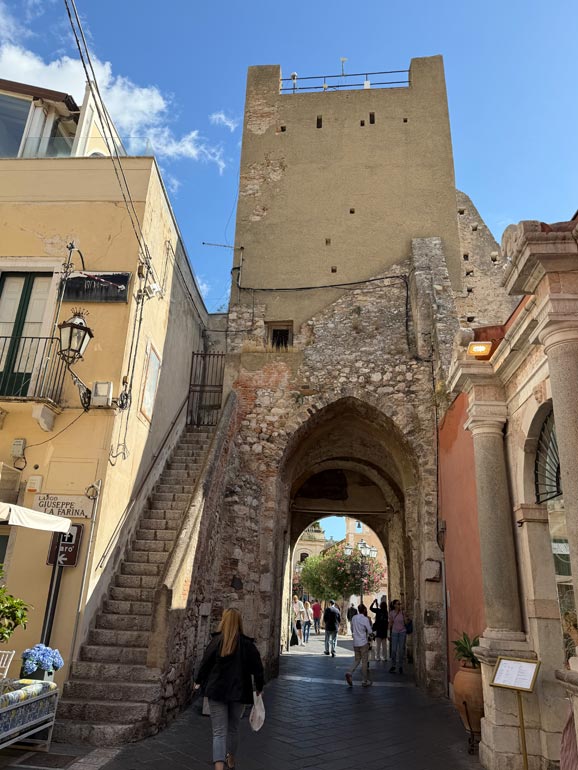
Porta di Mezzo
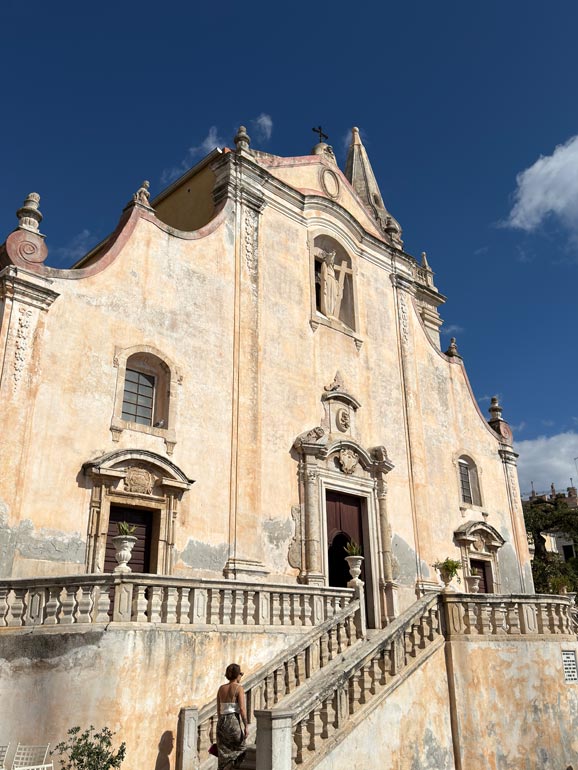
Chiesa di San Giuseppe
As we approached Piazza IX Aprile, we first passed through the Porta di Mezzo, a striking medieval tower that now serves as the gateway into the heart of Taormina’s historic center. What makes the tower even more fascinating is that it is built atop Roman Taormium stone dating back to the 4th century BCE, a tangible reminder that this hilltop town has been continuously inhabited for millennia.
Once through the gateway, your eye is immediately drawn to the Chiesa di San Giuseppe, the first large structure you encounter on the left as you step into the piazza. Its elegant baroque façade and soaring bell tower dominate the corner. It’s the kind of landmark that quietly tells you: you’ve entered a place where every building carries a story, from Roman foundations to medieval towers and beyond.
Standing in Piazza IX Aprile, you quickly understand why this terrace has long been the social heart of Taormina. Named for April 9, 1860 — the day news (mistaken, but celebrated) arrived that Garibaldi had landed in Sicily — the piazza became a symbolic gathering place for civic life. Framed by the medieval Porta di Mezzo, the baroque Chiesa di San Giuseppe, and the clocktower that once marked the boundary between the Greek and medieval quarters, the square feels like an open-air balcony suspended between centuries.
Then you turn toward the railing, and the view opens dramatically over the Ionian Sea. From here, the coastline curves toward Isola Bella, and beyond it the ancient maritime routes that once connected Sicily to the wider Roman world. In Roman times, nearby coastal settlements such as Naxos and Messina served as important ports, linking Tauromenium to trade networks stretching across the Mediterranean. While Taormina itself sits high above the water for defensive advantage, this panoramic perch reveals why the location mattered: control the heights, and you watched the sea.
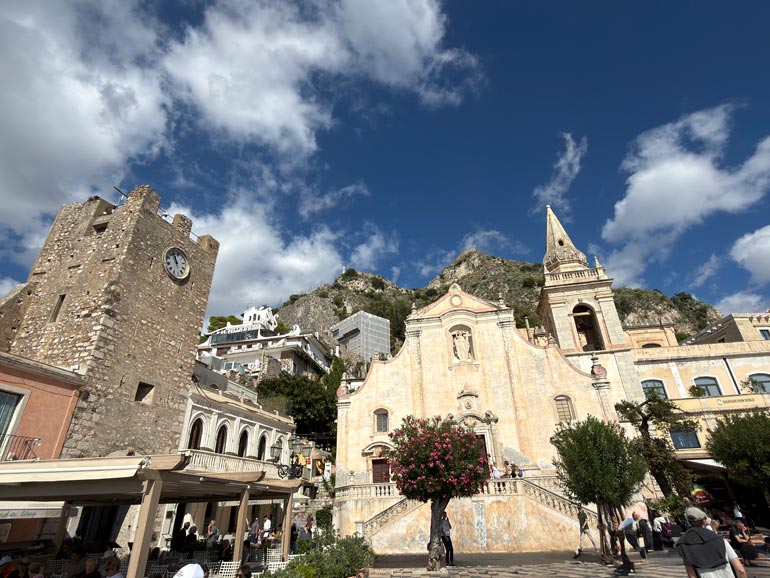
Piazza IX Aprile
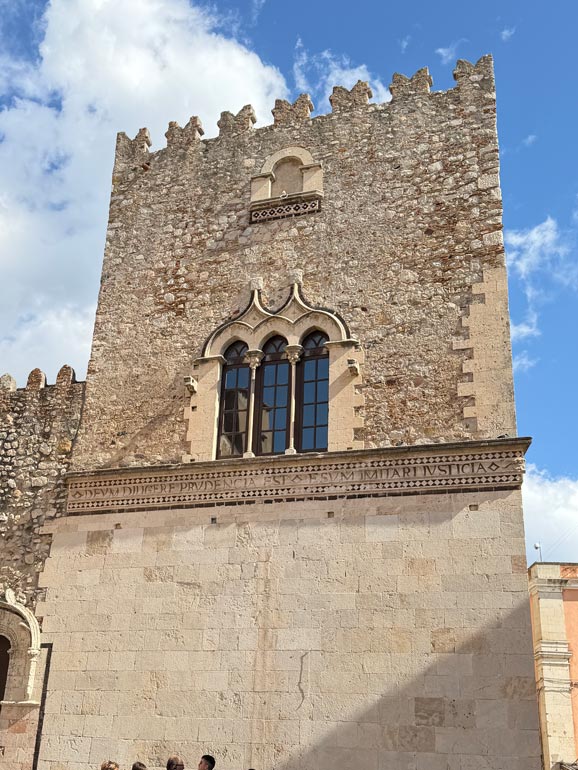
Corvaja Palace
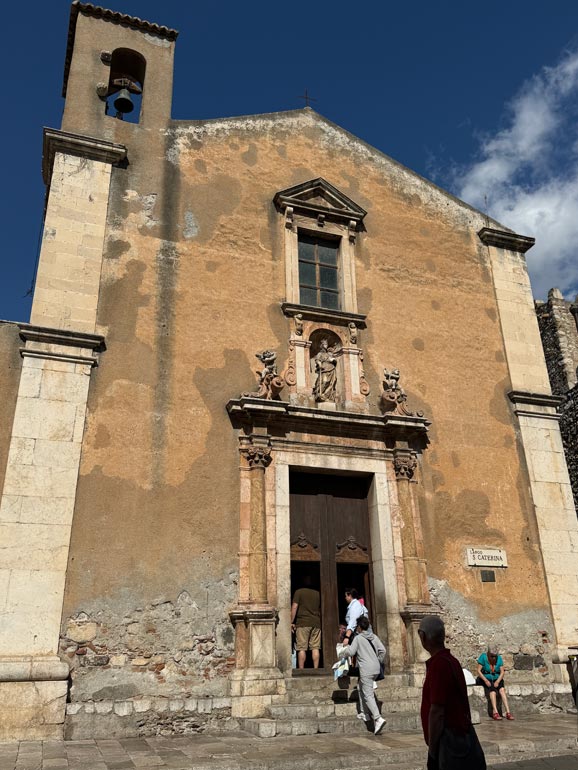
Chiesa di Santa Caterina d'Alessandria
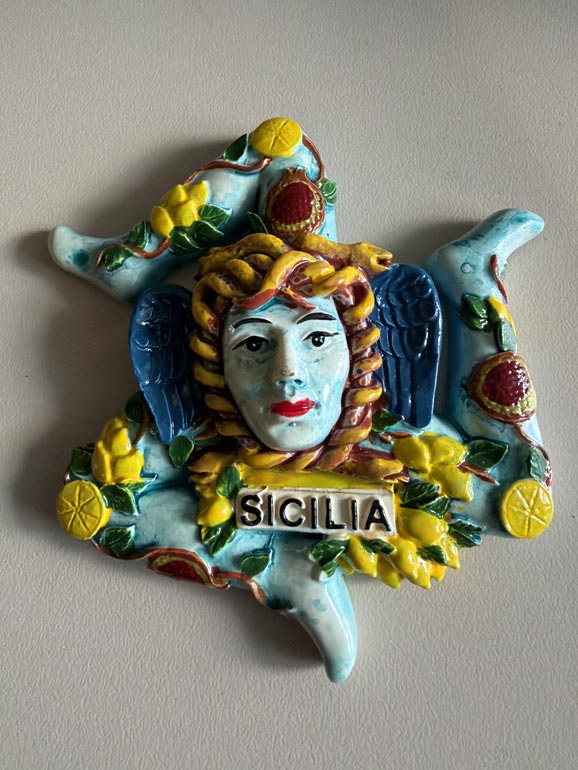
Trinacria - Medusa as the Protector
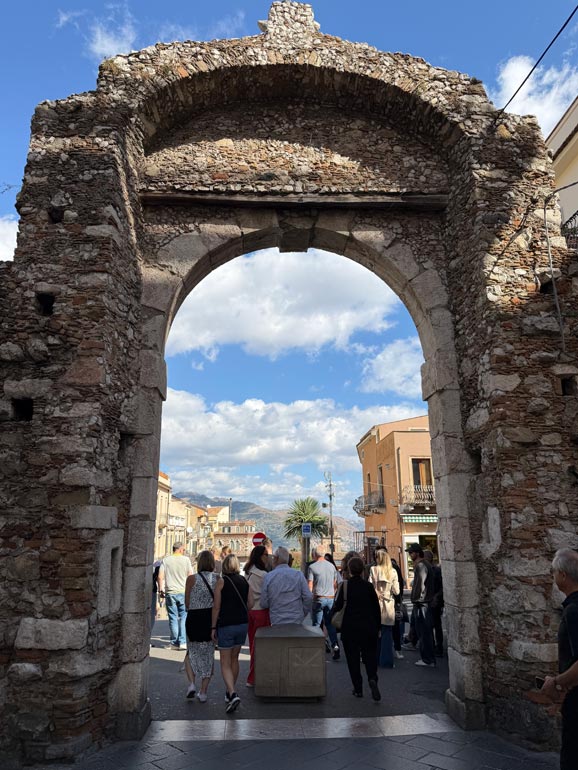
Porta Messina Gate
Walking out through Porta Messina, you pass beneath stone that once marked the fortified edge of the town. While the line of the street itself is ancient, the gate in its present form dates largely to the medieval period, when Taormina was under Norman control after the 11th century conquest of Sicily. The Norman conquest of Sicily reshaped the island’s defensive network, and walls and gates like this were reinforced to secure strategic hilltop towns overlooking the Ionian coast. These gates regulated who entered and exited, controlled trade, and could be closed in times of threat — serving as both protection and statement of authority. Together with Porta Catania at the opposite end of Corso Umberto I, Porta Messina frames the old east–west spine of the city, enclosing a street that has carried Greek, Roman, and medieval footsteps alike.
With Taormina’s ancient streets and stunning views behind us, we set sail toward Malta, eager to explore its historic cities and Mediterranean charm.
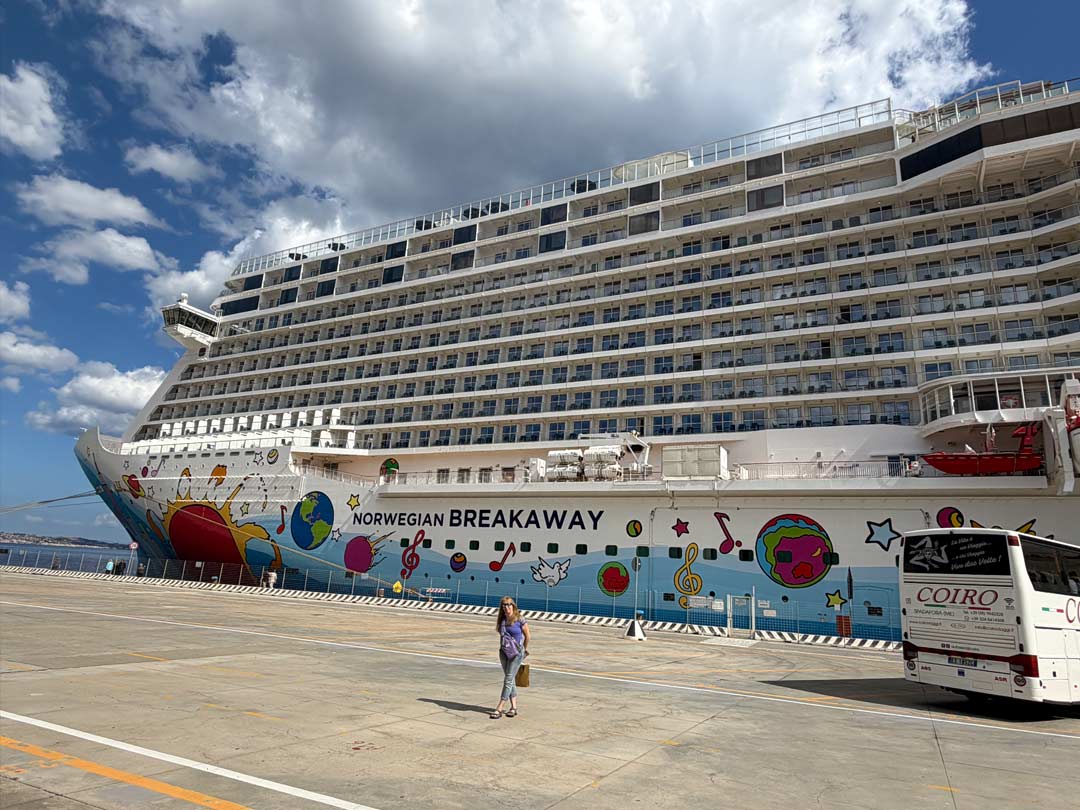
As our day in Taormina came to a close, we strolled along the ancient Decumanus, taking in the charming shops and cafés that line this historic street. The lively Piazza IX Aprile offered breathtaking views of the coastline, while the mighty Mount Etna loomed in the distance, a reminder of the island’s dramatic natural history. Every corner of Taormina seemed to whisper stories of the Greeks and Romans who once walked here, layered beneath medieval and modern life. With the sun setting over the Sicilian coast, we boarded the ship once more, ready to sail toward Malta and the next chapter of our Mediterranean adventure.
