

Rome


At the Spanish Steps

Our Day in Roma.
My favorite stop of our Mediterranean Cruise was the Eternal City. Our ship docked in Civitavecchia, and our guided tour bus whisked us into Roma. Our guide said something that turned out to be very true: there is something ancient in Roma every 100 meters. We started at the Spanish Steps, continued on to the Trevi Fountain, and walked toward the Colosseum — a moment I had been looking forward to for years as a fan of Gladiator. Standing before it in person, I felt a shiver imagining the gladiators, the crowds, and the spectacles that once filled the arena.
Walking through Rome felt different from any other stop on our journey. Here, the ancient Roman street grid was not something rediscovered beneath later layers — it began here. From the structured planning of the Roman Forum to the deliberate alignment of major thoroughfares, ancient Rome was organized around a network of major streets, including the Cardo Maximus and Decumanus Maximus, the main axes that shaped the layout of Roman cities across the empire.
Standing among the ruins near the Roman Forum, I began to see how this original Roman street grid became the blueprint carried to places like Split, Florence, and beyond.
Trevi Fountain


Trevi Fountain
Our first stop in Rome was the Trevi Fountain, one of the most famous landmarks in Italy and a must-see attraction in the historic city center. Completed in the 18th century, the fountain marks the end of the ancient Aqua Vergine aqueduct and showcases dramatic Baroque architecture centered on the figure of Oceanus. Despite the heavy crowds, seeing the Trevi Fountain in person was unforgettable. Like many visitors, we tossed a coin over our shoulders—a tradition believed to guarantee a return trip to Rome.
Walking the Cardo Maximus in Rome

Visual reconstruction and Roman grid infographic created with Google Gemini (Nano Banana 2
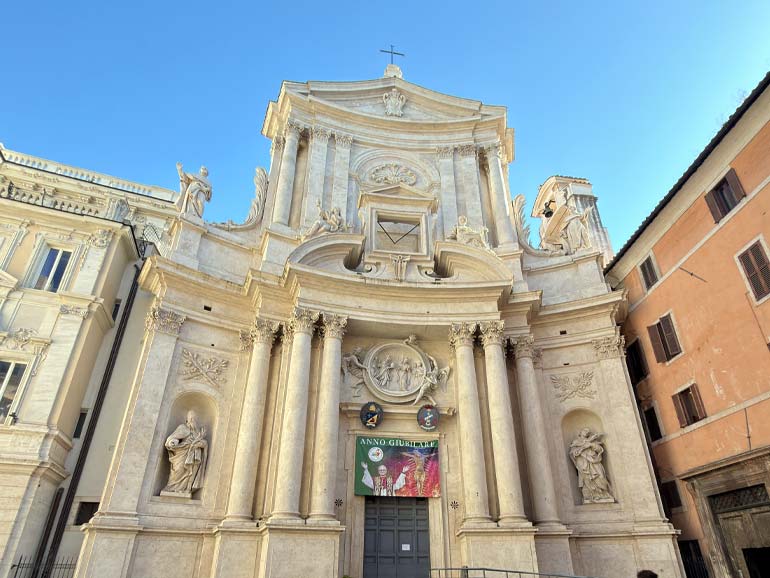
Photo of the San Marcello al Corso taken from the Via del Corso.
Cardo Maximus of Rome
In the heart of ancient Rome, the Cardo Maximus was the city’s main north–south artery, guiding movement from the gates through the forum and connecting civic, commercial, and religious spaces. Even though Rome grew organically over centuries and doesn’t follow a perfect Roman grid, the Cardo Maximus remained a key organizing principle, influencing the layout of streets that survive today
As I wandered through Rome, I walked down Via del Corso without even realizing I was following the ancient Cardo Maximus. While standing on the street, I took a photo of San Marcello al Corso, capturing its Baroque façade while crossing Via del Corso on our route from the Trevi Fountain to the Pantheon. Moments like these show why creating a detailed Cardo Maximus Map is so valuable: it allows me to trace the layers of history beneath modern streets, uncovering the routes that guided Roman citizens for centuries.
Roman Street Grid
Ancient City: Roma
Cardo Maximus: Via del Corso axis
Decumanus Maximus: Forum east–west routes (theoretical)
Status: Traced through modern streets
Mapped on: Cardo Maximus Map
Pantheon


Pantheon
Our next stop was the Roman Pantheon, one of the best-preserved ancient buildings in Rome and a masterpiece of Roman engineering. Originally built as a temple to the Roman Gods, including Jupiter, Mars, Venus, Mercury, Saturn and others, and later converted into a church, the Pantheon is famous for its massive concrete dome and central oculus. Like many popular attractions in Rome, it was extremely crowded, and with limited time we weren’t able to go inside. After tossing a coin into the Trevi Fountain, however, visiting the interior of the Pantheon is high on the list for our next trip to Rome.
Trajan Forum & Column


Trajan Forum & Column
Walking along the Via dei Fori Imperiali offered sweeping views of ancient Rome, including Trajan’s Column, Forum, and Market. Trajan’s Column was built in the early 2nd century to commemorate Emperor Trajan’s victory in the Dacian Wars. Trajan ruled as Roman emperor from 98 to 117 CE and is remembered as one of Rome’s greatest leaders, presiding over the empire at its largest territorial extent. From the avenue, you can look down onto the layered ruins of imperial forums and markets, where political, commercial, and daily life once unfolded at the heart of ancient Rome.

Colosseum


Colosseum
Walking around the exterior of the Roman Colosseum offers an unforgettable sense of scale and history. Built in the 1st century CE under Emperor Vespasian and completed in 80 CE, the Colosseum was used for gladiatorial contests, public spectacles, and dramatic displays of imperial power. Today, it remains one of the most recognizable symbols of ancient Rome and gained renewed fame as a central setting in the film Gladiator, where it served as the backdrop for the story of Maximus and Rome’s brutal arena culture. In honor of my late climbing partner Michael, because the soundtrack was our climbing music, I recorded the famous lines " My name is Maximus Decimus Meridius, commander of the Armies of the North, General of the Felix Legions and loyal servant to the true emperor, Marcus Aurelius..."
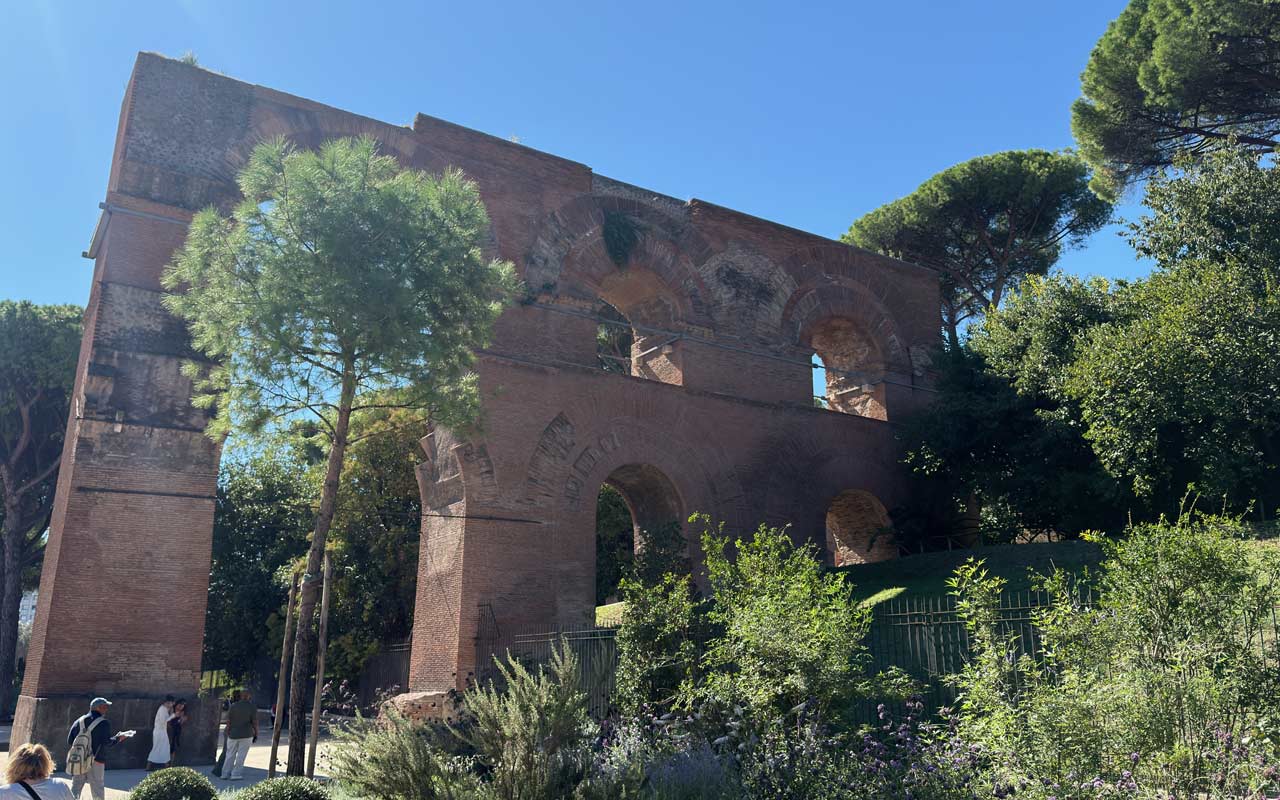
Nero Aqueduct by Palatine Hill
Ancient Egypt in Rome
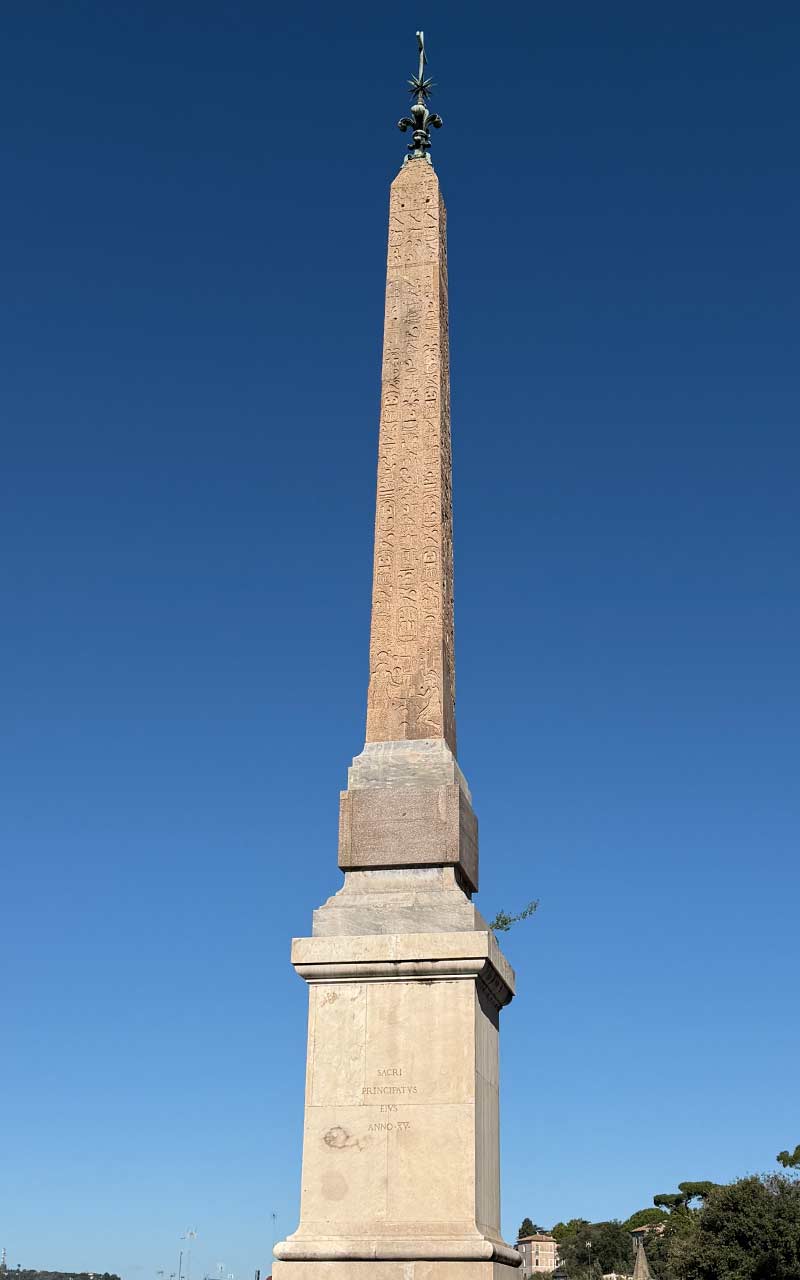
Obelisco Sallustiano
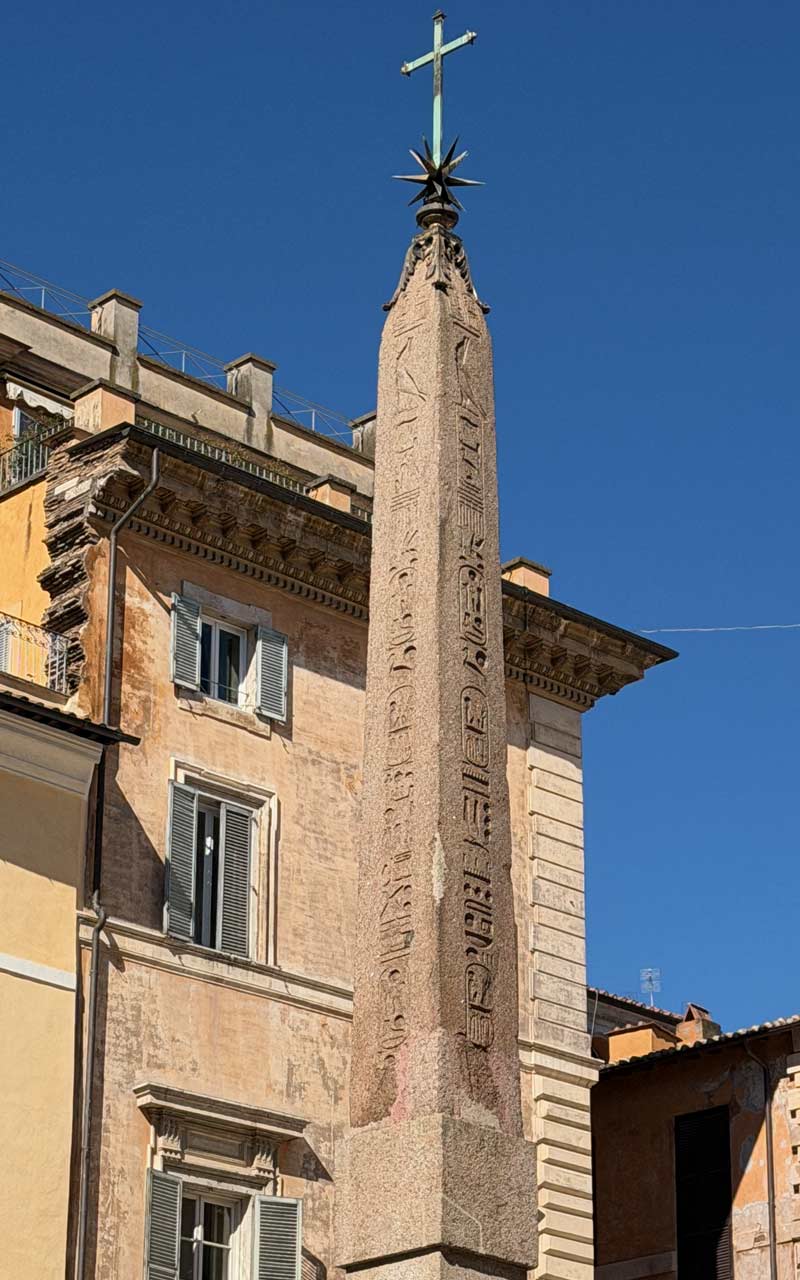
Obelisco Macuteo
One of our most fascinating discoveries in Rome was encountering ancient Egyptian artifacts woven into the city’s landscape. We saw two remarkable obelisks: the Obelisco Sallustiano and the Obelisco Macuteo. The Obelisco Sallustiano stands near the Spanish Steps and is believed to be a Roman-era copy of the Flaminio Obelisk. Nearby, the Obelisco Macuteo—often called the Pantheon Obelisk—sits beside the Pantheon and was originally commissioned by Ramses II (1303–1213 BCE) as part of a pair at the Temple of Ra in Heliopolis, offering a striking reminder of Rome’s deep connections to the ancient world.
Leaving the Eternal City behind, we sailed south toward Naples, eager to explore its streets and uncover ancient Roman ruins waiting to be discovered.

Leaving Rome was bittersweet after a day that felt like stepping back in time. Walking down the ancient streets of the Cardo Maximus, I could almost picture the city as it was two millennia ago — bustling with citizens, traders, and soldiers. Seeing the Colosseum in person was thrilling; as a fan of Gladiator, I felt a shiver imagining the spectacles that once took place within its walls. The Pantheon, the Arch of Constantine, and the ancient Egyptian obelisks scattered across the city all added layers to an already awe-inspiring experience.
Every step through Rome’s streets reminded me why this city is the ultimate classroom for tracing history’s footprints. With my mind buzzing from the wonders of the Eternal City, we now set our course southward — next stop, Naples.